
Sporting glory beckons for the Bay of Banderas, as Puerto Vallarta’s women’s soccer team is preparing for one of its biggest challenges of the season as it faces Zapopan in the semifinals of the 2026 Copa Jalisco.
There are highs and lows for the region’s tourist sector, as the Riviera Nayarit sees continued investment, but as passenger numbers at Puerto Vallarta International Airport continue to decline.
Puerto Vallarta women’s team reaches Copa Jalisco semifinals
The matchup has generated strong expectations as the two clubs were the top-performing teams during the group stage. Zapopan finished in first place overall, while Puerto Vallarta secured second, making this semifinal feel like a championship clash even before the actual final.
Puerto Vallarta advanced to this stage after an impressive performance against Lagos de Moreno in the quarterfinals. The coastal squad earned a 2-0 victory on the road in the opening leg and later secured qualification with a 1-1 draw at home. Their balanced attack and solid defensive play have made them one of the tournament’s strongest contenders.
Tournament organizers have confirmed this year’s Copa Jalisco finals will be played in a home-and-away format at the municipalities represented by the finalists.
Puerto Vallarta passenger traffic in April 2026
Passenger traffic at Puerto Vallarta’s international airport continued to decline during April 2026, reflecting the ongoing impact of the travel disruptions that began earlier this year. According to preliminary figures released by Grupo Aeroportuario del Pacífico, the airport experienced a 17% decrease in total passengers compared with April 2025.
During April, the airport handled approximately 542,600 travelers, significantly lower than the 654,100 recorded a year earlier. In the first four months of the year, Puerto Vallarta accumulated just over 2.46 million passengers, representing an 11.3% reduction compared with the same period last year.

Around 255,100 passengers arrived on national flights, a drop of 8.4% from 2025 levels. However, the decrease in international traffic was much more severe. International arrivals totaled 287,500 travelers, which represented a 23.5% fall compared with April of last year.
Nayarit tourism investment and growth
Nayarit continues to strengthen its reputation as one of Mexico’s fastest-growing tourism markets, supported by billions of dollars in upcoming investment projects across the state.
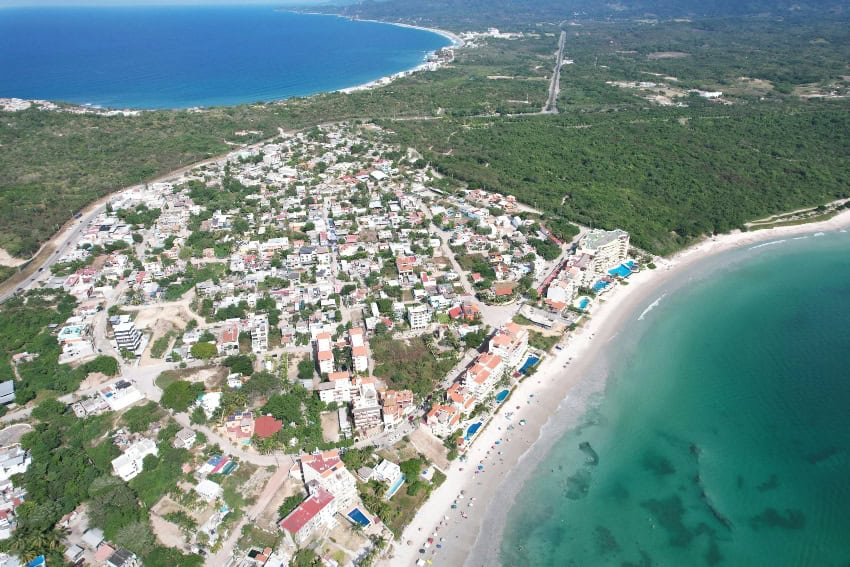
The state is expected to receive more than US $8 billion in tourism-related development through 24 major projects. Officials believe these investments will further position Nayarit as a key destination for both domestic and international visitors while expanding its economic opportunities over the coming years.
The projects are expected to generate significant economic benefits, including the creation of new jobs and growth in industries connected to tourism. Areas such as hotels, restaurants, transportation, retail businesses and construction are likely to experience increased activity as development moves forward.
In recent years, Nayarit has gained greater visibility thanks to destinations along the Riviera Nayarit and other coastal and cultural attractions. Officials believe that continued investment will help strengthen the state’s competitiveness within Mexico’s tourism industry and improve the quality of life for many residents through long-term economic development.
Clean drinking water for Potrero de la Palmita
Residents of the Indigenous community of Potrero de la Palmita, located in the Nayarit municipality of Del Nayar, now have access to clean drinking water after the completion of a new purification system promoted by Governor Miguel Ángel Navarro Quintero. The project is part of a broader effort to improve essential services in remote mountain communities across the state.
For many years, local families had struggled with limited access to safe water, making daily life more difficult and increasing health risks. The newly installed system was built with an investment of 13 million pesos and is expected to benefit more than 600 residents. The infrastructure includes a treatment and purification plant, submersible pumps, storage tanks and several public water access points distributed throughout the community.
The project is a long-awaited solution to a basic necessity, with leaders emphasizing that access to purified water will positively affect the health and daily activities of families living in the region. Authorities in Nayarit consider the project an important step toward reducing inequality in rural Indigenous areas.
Charlotte Smith is a writer and journalist based in Mexico. Her work focuses on travel, politics, and community. You can follow along with her travel stories at www.salsaandserendipity.com.
