
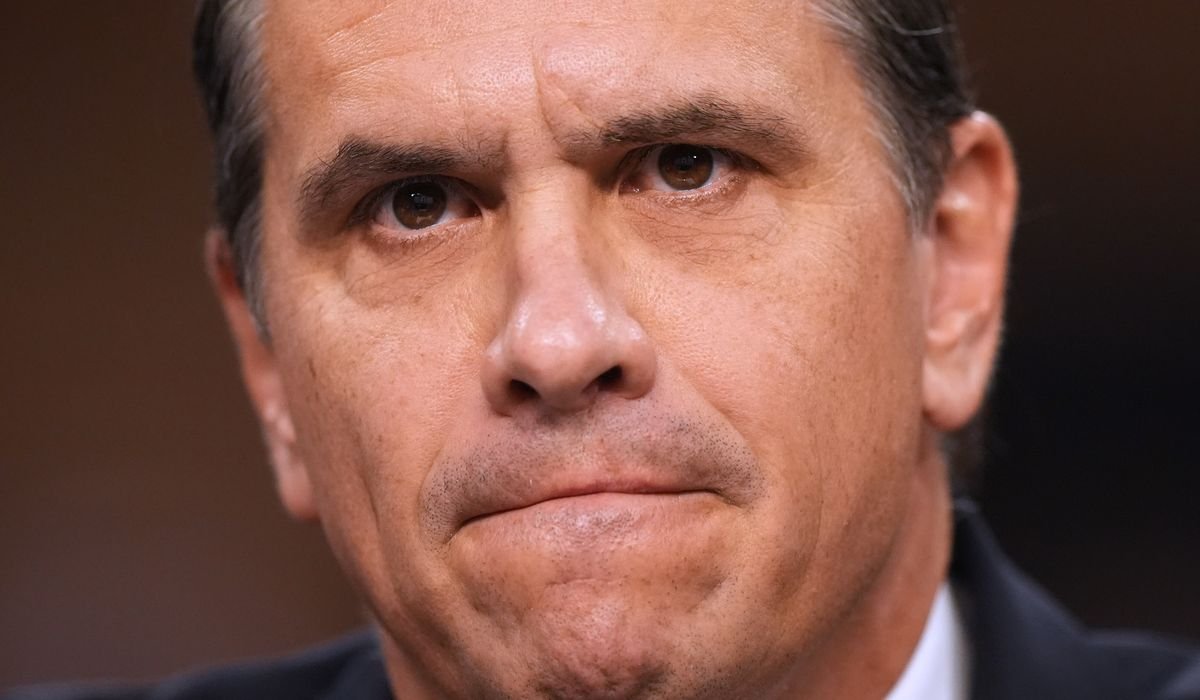
President Trump’s “anti-weaponization” fund has become the chief stumbling block to Todd Blanche’s confirmation as attorney general, with key Republicans saying they cannot let him be approved until the $1.776 billion idea is fully eradicated.
Mr. Blanche has told lawmakers that the fund is dead and he will not release any of the money.
Still, senators said the language of the deal, which Mr. Blanche signed off on as acting attorney general, could leave wiggle room for Mr. Trump to ask a court to enforce it.
One of those Republicans, Sen. Thom Tillis of North Carolina, said he would hold up any action until either Mr. Blanche renegotiates the settlement to make clear that the fund is expunged or Congress passes legislation to firmly nullify the fund.
“We need to have a fork stuck in the 1776 fund,” Mr. Tillis told reporters. “I want a renegotiated agreement that ends this forever. That is final.”
The senator said the Justice Department is negotiating on the matter.
He also said he would like Mr. Blanche to retreat on another part of the deal: granting Mr. Trump and his family protection from IRS tax audit claims stemming from past tax matters.
Mr. Tillis is a member of the Senate Judiciary Committee. Without Mr. Tillis or Sen. John Cornyn, another Republican who has signaled he is not yet sold on the nomination, Mr. Blanche’s nomination could languish.
Asked whether Mr. Blanche would cooperate, Mr. Cornyn told reporters: “Does he want to get confirmed or not?”
The Senate Judiciary Committee is slated to vote Thursday, just ahead of the Senate’s summer recess. If the committee does not act now, Mr. Blanche’s nomination could be pushed off until the fall.
Mr. Blanche has been running the Justice Department since the departure of Pam Bondi, whom he succeeded after serving as deputy attorney general.
The Justice Department acknowledged the negotiations in a statement and reiterated Mr. Blanche’s position that the fund has been eliminated.
“As Acting AG Todd Blanche said at the hearing, the fund is dead. This has been relayed before the House and Senate under oath and in multiple court filings,” the department said. “The department has been actively engaged with senators on language that will address their concerns about the Anti-Weaponization Fund, which does not exist and will not exist.”
Mr. Trump’s legal team secured the weaponization fund in exchange for dropping a lawsuit against the IRS over a contractor’s leak of the president’s tax information during his first term in the White House.
As envisioned, the fund would pay out to people whom the Justice Department targeted during the Biden administration.
The prevailing view was that much of the money would go to people prosecuted in the Capitol riot on Jan. 6, 2021, though Mr. Blanche insisted the recipients could be anyone with a plausible case.
Amid massive bipartisan outcry, Mr. Blanche told Congress in June that he had squelched the fund.
Senators from both sides feared that, unless the fund is eradicated by the courts or by law, Mr. Trump will seek ways to revive it. They want “tangible” action from Mr. Blanche to prevent that.
Democrats said the fund was part of a long line of decisions in which Mr. Blanche took questionable actions to advance the president’s political goals.
“If confirmed as attorney general, Blanche will continue to serve the interests of Donald Trump, not the American people,” said Sen. Richard J. Durbin of Illinois, the senior Democrat on the Judiciary Committee.
Chairman Charles E. Grassley, Iowa Republican, said ditching Mr. Blanche, who has been serving as acting attorney general for months, would derail the country’s progress toward lower crime rates.
“The Justice Department has thrived under his leadership,” Mr. Grassley said, and Mr. Blanche has “demonstrated his ongoing commitment to transparency and rule of law.”
Democrats have blamed Mr. Blanche for the department’s handling of releasing the Epstein files, saying it missed legal deadlines and ended up releasing identifying information about sex offender Jeffrey Epstein’s victims.
Mr. Blanche said the department did the best it could, making mistakes in 1% of victim redactions as it sorted through tricky cases in which victims were also perpetrators.
Among Republicans, meanwhile, even those who appeared to be strong Blanche supporters peppered him with questions about the Justice Department’s strategy on a lawsuit challenging the Biden administration’s 2023 FDA regulation eliminating the in-person dispensing requirement for mifepristone.
The Trump administration has said the 2023 Food and Drug Administration regulation was ill-considered.
Still, Mr. Blanche’s team has declined to side with Louisiana, which is leading a lawsuit challenging the Biden regulation as an assault on the state’s own abortion restriction law.
“How do you think we can get to some solution here?” said Sen. Josh Hawley, Missouri Republican.
Mr. Blanche said he would not comment on “litigation strategy” but added that they “are not defending what Biden did, and will not.”
He said Mr. Trump has been the most pro-life president in history and that the FDA should be allowed to finish its new review.
“We want to get to a good result, consistent with President Trump’s directives and priorities,” Mr. Blanche said.
