
Listen to this article
Estimated 4 minutes
The audio version of this article is generated by AI-based technology. Mispronunciations can occur. We are working with our partners to continually review and improve the results.
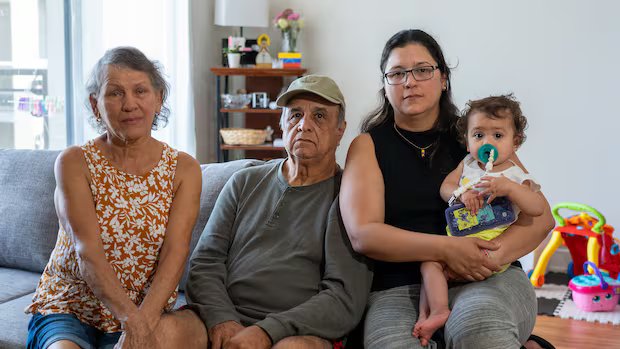
An Ottawa woman and her parents are grappling with the grief of losing loves ones — and the complications of moving ahead in their own lives — after the devastating twin earthquakes that struck their home country of Venezuela late last month.
Maria De Sousa has lived in Ottawa for the last two years after fleeing Venezuela a decade ago. Her parents, Carlos and Neyda De Sousa, were visiting her in Canada when the quakes hit the coastal South American country on June 24.
The confirmed death toll in Venezuela is more than 3,500 people, though an unofficial tally of the missing tops 30,000 people.
Both quakes hit the area where Maria’s parents live and severely damaged their home.
Carlos’s mother — Maria’s grandmother — was among those who died in the disaster.
“That night was the worst for us,” Maria recalled of what she learned from her family overseas. “[My aunt] was crying and she said, ‘Oh my God, the earth has just moved right now. It was so, so strong.’”
Maria’s grandmother, who was 94 and often sewed outside on a patio, was struck in the head when a wall collapsed at Maria’s parents’ home, the family learned. She died a few hours later.
Maria’s cousin died too after her apartment building collapsed.
“Sometimes I can’t believe it,” Maria said. “Sometimes I wake up and say, ‘Nothing happened in Venezuela. Everything is fine. My grandma is alive and everything is fine.’”

‘Challenging’ situation back home
In her parents’ city of Catia La Mar on Venezuela’s northern coast, the turmoil is immense, Maria said.
“The state is without water, without lights on … all the businesses are closed or damaged. So they have to try to find food and medications and they are trying to do this.”
Her parents don’t know what they’ll be returning to, she said, but know they have to delay going back because at their age, they can’t manage in a country that is going through such a tumultuous time.
Maria says the Venezuelan government didn’t react quickly enough after the earthquakes hit.
Kelsey Lemon, vice-president of international co-operation at the Canadian Red Cross, said the agency has been anticipating a crisis of this sort in Venezuela “for some time,” adding that situation in that country has been complex for many years “for social and economic and political reasons.”

The Red Cross was able to mobilize medicine and medical equipment relatively quickly from places like Panama, on top of providing beds, blankets and shelter kits, Lemon said.
“The challenges in this response have been extreme … primarily because of the disruption in the infrastructure and sort of the general chaos in the days and now weeks after the earthquake,” she said.
Some roads are still blocked and getting to some of the more remote communities has been “really challenging,” Lemon added.
Not enough meds to last
Maria is thankful her parents were with her when disaster struck because “if they were in Venezuela, it could be another [story],” she said.
But for them to stay in Canada is not without complications.
Both Carlos and Neyda have type 2 diabetes and only brought enough medication to last them the two months they expected to be in Canada.
They’re hoping to figure out a way they can get months’ worth of their pills before they eventually return home.
The Ontario government didn’t respond to CBC’s request for comment about what people should do if they have to remain in the province without access to medications.
