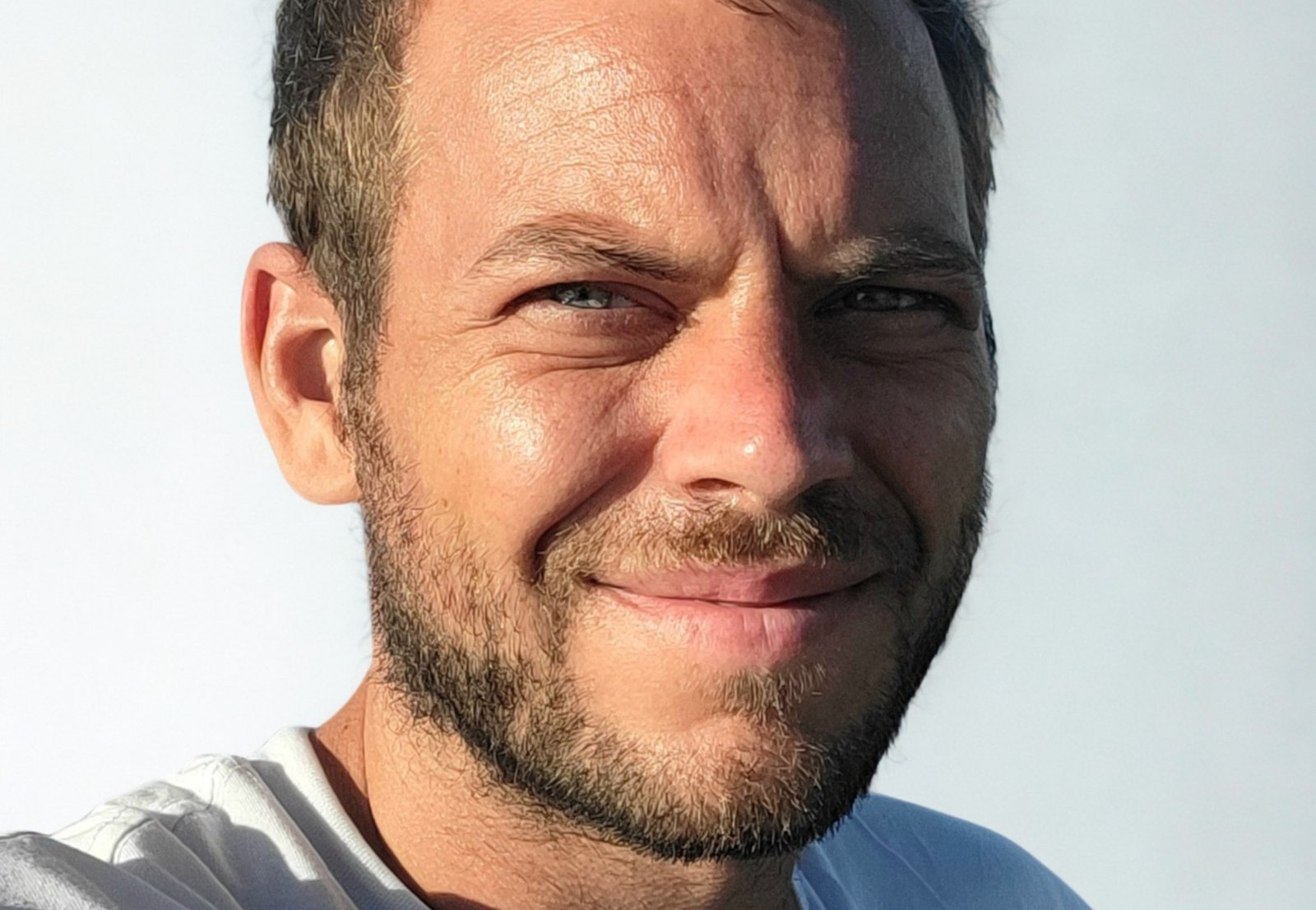
– We had the opportunity to learn more about the Liège- and Brussels-based company’s approach to distributing the works it champions
Founded in 2009, Liège- and Brussels-based O’Brother is a key player in the Benelux arthouse distribution landscape. For the April edition of our Distributor of the Month column, we spoke with Vivien Vande Kerckhove, of O’Brother’s general management and sales team, to learn more about the outfit’s approach to distributing both Belgian and international films.
Cineuropa: Could you begin by explaining the origins of O’Brother?
Vivien Vande Kerckhove: O’Brother was created by Jacques-Henri Bronckart, a producer for and founder of Versus Production. It’s a Belgian company that has produced a lot of homegrown films as well as co-productions. This year, they have two co-productions in competition at Cannes: Coward by Lukas Dhont and A Woman’s Life by Charline Bourgeois-Tacquet. They also co-produced The Electric Kiss, which will be the opening film. O’Brother was first created to distribute films from Versus, and I joined almost nine years ago as of this July.
At that time, we released between eight and 12 films per year, and we mainly had movies coming from Versus. It was, at first, a way to create the best releases possible for their films. We do more acquisitions year on year at markets in Venice, Berlin and Paris, at the Unifrance Rendezvous. In 2026, we will distribute between 22 and 24 films, which is more than double what it was nine years ago. We have about half of our line-up coming from Belgian producers. We work a lot with Artémis Productions, Tarantula, Frakas Productions and others. The other half of our line-up comes from acquisitions in the markets. At first, we mainly distributed French-language films, but we really want our line-up to be even more orientated towards international titles.
How do you split your team across the Benelux region?
Last year, we created our office in the Netherlands, which was an idea we had been brewing for several years. Our team now consists of five people on a day-to-day basis, whereas it was only three before. At the moment, we only have one person in the Netherlands, who is the managing director there. For six months, we also had an employee over there with her, and we will soon have more people – so I could say we have two people in the Netherlands. We also have a back office in Belgium because we share it with Versus Production. Jacques-Henri is still here, so we discuss some big-picture things with him.
What is your editorial policy, and what kinds of films are you looking for?
Our mission has always been to shed light on what Belgian film is, and I think our mission will stay this way. We clearly gravitate more towards arthouse films, but we are quite generalist in this area. We really like movies with social engagement. You can see that a lot in our line-up. We also enjoy genre flicks – that’s how we began to distribute Julia Ducournau’s films, beginning with Raw. We also managed to distribute other genre films like Talk to Me by the Philippou brothers. We also distribute first features, like Animale by Emma Benestan and Vincent Must Die by Stéphan Castang. However, sometimes when you have an opportunity to have a film for a bigger audience in your line-up, you can’t refuse.
Could you share a bit more about one or two recent successful campaigns?
I can speak about two movies that were very important for us; both were released at the end of 2025. One is a co-production, Thierry Klifa’s The Richest Woman in the World, which was out of competition at Cannes last year, starring Isabelle Huppert and Laurent Lafitte, who won the César Award for his role. We took more than 33,000 admissions in Belgium. We really enjoyed releasing it, as it’s a comedy from France with Huppert starring alongside other great thesps like Lafitte, Marina Foïs and Raphaël Personnaz. We had the opportunity to organise a lot of press with the cast and, in particular, with Isabelle, who came to Brussels to do press for two days. She’s very professional and gives a lot during interviews. The film was already fairly famous because of Cannes and because it is an adaptation of the story of the life of someone very well known in France, Madame Liliane Bettencourt.
We also had We Believe You, a Belgian film with a very low budget. It was the first feature by Charlotte Devillers and Arnaud Dufeys. They applied to a fund only for small-scale productions from the Film and Audiovisual Centre of the Wallonia-Brussels Federation. After we saw it, we knew we really wanted it in our line-up, even if it had a smaller release. It aligns with our values. It’s what O’Brother was made for. We had the great joy of seeing the film in the Perspectives section at Berlin, where it received a Special Jury Mention. Then it was at a lot of festivals in France and elsewhere. It won the biggest prize at FIFF Namur, the Bayard d’Or. We’re very happy to see that a lot of cinemas were really interested in showing this movie to their audiences after all this promotion. The best gift of all was that it won the René du Cinéma – the new name for the Magritte du Cinema – which are the Césars of Belgium [see the news]. We appreciated getting to take care of this little gem. Besides those two, we also distributed The Chronology of Water by Kristen Stewart and Vermiglio by Maura Delpero, for instance. We now have a more global line-up, even if French-language films still take up a bit more room than the international films.