
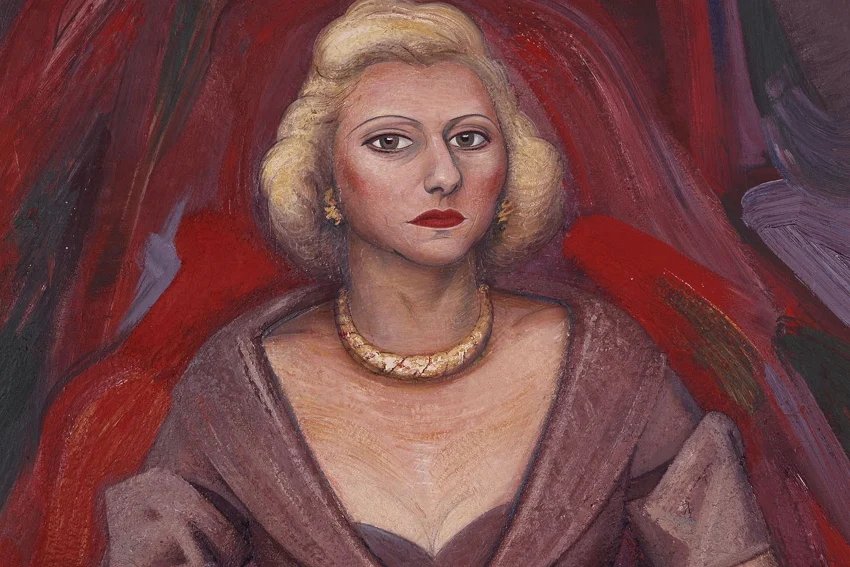
Amigos, you’ve seen the coverage of the Gelman Collection controversy, including the open letter from our colleagues Keith Rosenblum and Jesús Ibarra asking President Claudia Sheinbaum to expropriate and nationalize the works.
As an art historian, I’ve stayed out of this and other debates about expropriating, repatriating and nationalizing Mexican art, because these cases are the symptom of a much bigger problem.
Here it is, plainly: Mexico has claimed ownership of more cultural heritage than any government could afford to look after — and then locked out the only money that might have helped. We hold one of the largest bodies of tangible heritage in the world and maintain it on one of the smallest budgets.
That’s the result of decades of policy in which art and culture served as instruments of government, useful for encouraging national pride more than as a commitment to researching and preserving what actually makes up Mexico.
How Mexican culture works
Like anywhere else, culture here has two sectors. Private companies and individuals fund major art collections — Carlos Slim’s at the Museo Soumaya, FEMSA, Jumex — and pay for concerts, touring orchestras, films and plays.
Meanwhile, everything public begins at the Secretaría de Cultura, the cabinet-level ministry that coordinates every institute, museum, school, performing company and research center beneath it.
Mexico’s federal cultural heritage structure and its 2026 budget are divided into two main branches: the Instituto Nacional de Antropología e Historia (INAH), which safeguards, researches and teaches everything in this territory up to the 19th century; and the Instituto Nacional de Bellas Artes y Literatura (INBAL), which picks up in the 20th century.

Their budgets look similar, but the jobs aren’t: INAH covers almost four millennia of heritage across the national territory, while INBAL also runs 29 schools, the national conservatory, the ballet and the orchestras.
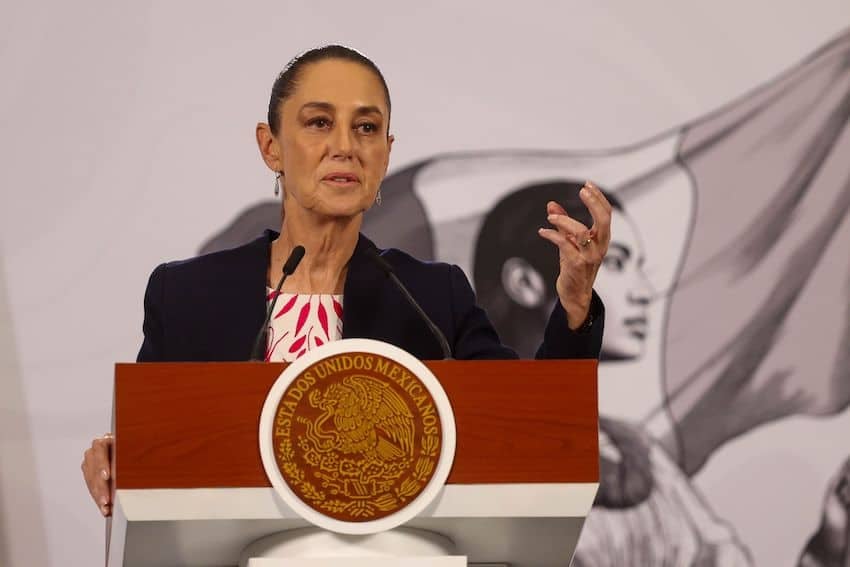
A dozen more agencies, from the film institute to public radio, divide what’s left.
Now the number that matters. The Carta Cultural Iberoamericana recommends countries devote 1% of public spending to culture. Mexico’s entire culture budget comes to 0.15% of federal spending.
No box office will ever be enough
INBAL’s largest program takes roughly 2.7 million pesos — 57% of the institute’s budget — with more than 95% going to salaries. INAH’s heritage protection program received 3.4 million pesos, roughly 77% of which was used for staff pay. What remains has to cover everything else, down to the electricity that keeps the air conditioning running.
You might assume that the current budget at least buys us a full accounting of what we own. Of 53,009 registered archaeological zones, INAH estimates the real number of sites holding remains at around 200,000 — we have registered a quarter of what we believe is out there.
And last October, the Auditoría Superior de la Federación found deficiencies in inventory and cataloging in more than 90% of the cultural assets it reviewed. We are not only failing to conserve our heritage; we don’t reliably know what we have.
‘But I pay for a ticket every time I go to a museum’
I learned the rule that governs all of this from Mericia Morales Curiel, one of the most important cultural managers working in Mexico and my professor: What a museum takes in at the door will never be enough to run a museum, let alone a cultural industry.
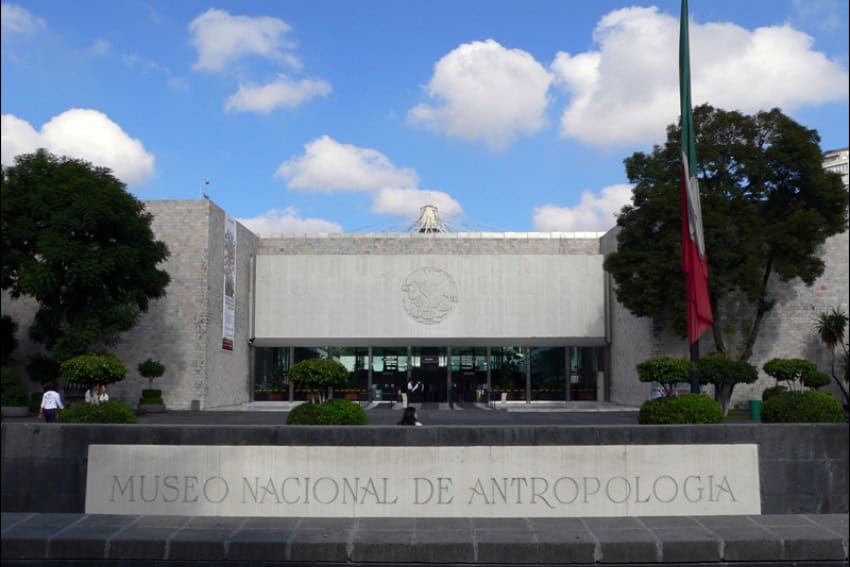
A museum is research, salaries, climate control, insurance, cataloging, conservation labs, education and security — a permanent running cost attached to objects that earn nothing on their own.
The Metropolitan Museum of Art spent more than US $402 million to operate in 2023-24. Admissions brought in US $53.3 million — 13%. The rest comes from an ecosystem that lets private industry and private citizens invest in it.
Here, there’s been a proposal to raise museum admission by as much as 223%. France ran that experiment. In January, the Louvre raised non-EU entry 45%, to 32 euros, expecting 15 to 20 million euros a year from 8.7 million visitors — barely a dent in its repair bill. France’s national auditors found the reason that bill exists: Between 2018 and 2024, the Louvre spent 105.4 million euros on art purchases and only 26.7 million on maintenance and safety compliance, allowing its security and infrastructure to decay. Their recommendation was to scrap the rule requiring the museum to spend 20% of ticket income on acquiring more art.
Back to Gelman
I feel torn writing this, but what good is owning a collection we can’t even afford to keep?
Our colleagues propose that Congress approve a budget under which, per Article 27, the state pays the collection’s holder what his property is worth: US $350 million. That is roughly 43% of Mexico’s entire annual culture budget, and more than INBAL’s total for the year. Add insurance, which recurs annually. And add a bank: The collection is pledged as collateral on a US $150 million loan from Banco Santander, which holds first claim on the paintings if the loan isn’t repaid.
They also assume no court would overturn a claim involving Frida Kahlo. In July, the Supreme Court agreed to review whether the 1984 decree protecting her work is constitutional at all, after INBAL denied Banco Ve por Más permission to permanently export “Autorretrato con medallón.” Article 16 of the 1972 law says privately owned artistic monuments may be exported with a permit. The absolute ban isn’t in the law. It’s in the decree.
What the law actually delivers
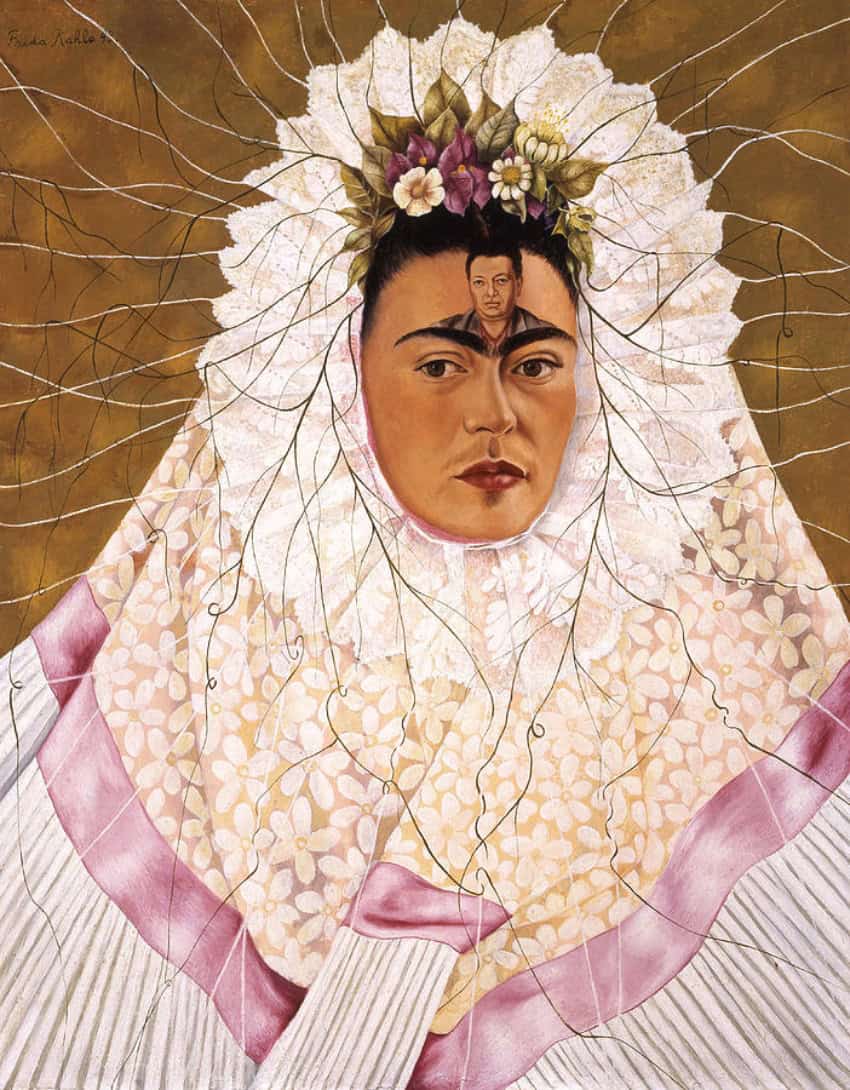
By decree, the entire body of work of 10 artists is a monumento artístico — among them Diego Rivera, José Clemente Orozco, David Alfaro Siqueiros, Remedios Varo and Kahlo. Wherever it hangs, the state guarantees it “belongs” to all Mexicans.
Article 33 goes further: It claims the work of Mexican artists wherever in the world it was made, although it does not grant extraterritorial jurisdiction or ownership over works created or held entirely abroad under foreign law.
In practice, it delivers almost nothing. Madonna owns at least two Kahlos, among them “My Birth.” When the Detroit Institute of Arts spent more than a year trying to borrow it for a major Rivera and Kahlo show, she declined, and that was the end of it.
A work we call national heritage hangs in a private home abroad, and the country it supposedly belongs to has no standing to see it, inspect it or ask about its condition.
The decree bans permanent export from Mexico. It brings nothing home and obliges no one to show you anything. The promise is real in law and hollow in practice.
A reminder, and a lesson
How many of you have visited archaeological sites and found interpretive panels you could barely read, in Spanish only, with a guide explaining that the information is out of date? Or seen banners outside a museum because the workers are protesting their conditions? I’m not judging: For what heritage on this scale costs, these institutions perform real miracles.
And here is what makes the arithmetic absurd: In 2023, Mexico’s cultural sector generated 2.8% of national gross domestic product and employed 1.4 million people. We are not subsidizing a luxury; we are underfunding an industry.
There is a solution, and it isn’t asking the president to expropriate anything. Pago en especie, codified in 1975 from an idea that Siqueiros pitched in 1957, lets artists settle their taxes with their own work — a national collection built out of the tax code. It is 51 years old officially, and we have built nothing beside it since. Finishing what Siqueiros started would take four things:
Extend pago en especie past the artist’s studio
Let heirs and collectors settle inheritance and capital gains obligations with declared works, independently appraised and transferred to public collections.
Make giving deductible in a way that isn’t punitive
Donations are capped at a small share of the previous year’s income and sit inside an overall cap. Lift that ceiling for works given to public institutions.
Create a conservation fund
Seed it with a share of the fees the state already charges for export permits and international loans, and match it with corporate contributions. A company can sponsor a stadium; it should be able to sponsor the restoration of a Rivera and be named for it.
Turn the declaratoria into a bargain instead of a bill
Offer owners technical assistance, shared restoration costs and clear export rules in exchange for enforceable commitments to exhibit the work here.
The collectors are already here — the Soumaya, FEMSA and Jumex, as well as the ones we never see. What we have never built is a legal way for any of them to help keep the rest of it alive.
So let’s legislate again — not for a single collection, but to protect our patrimonio from looting, the black market, neglect, decay, and from failing to train the next generation of researchers, historians and restorers.
Let what makes us proud be the sharing of these works and their histories. Not merely the fact that they sit on Mexican soil, quietly falling apart in a warehouse.
Maria Meléndez writes for Mexico News Daily in Mexico City.
