
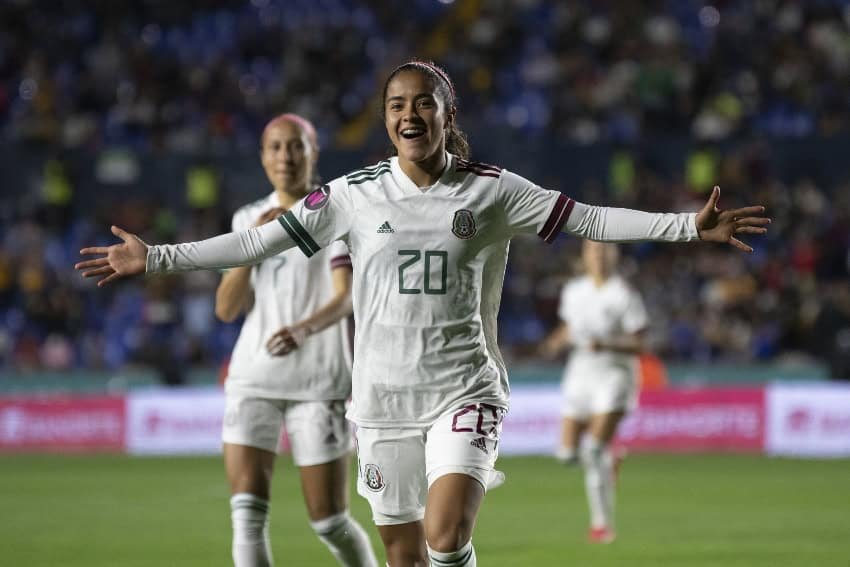
With the 2026 edition of the men’s World Cup behind us — in which Mexico became the first country to host the sporting event on three separate occasions (1970, 1986 and 2026), leaving an indelible impression on fans worldwide who openly celebrated Mexico’s culture, gastronomy and spirited fandom — the “summer of North American soccer” is coming to a close. Well, sort of. It’s not completely over.
Luckily for fans of fútbol (also known as fút or balompié in Mexico), on-pitch action will resume with a different set of national heroes, as Mexico and the rest of the globe prepare for the upcoming 2027 Women’s World Cup.
World Cup qualifying has already begun
Though the tournament won’t actually take place until next summer — hosted in Brazil, marking the first time the FIFA women’s edition will take place on Latin American soil since debuting in 1991 — the race for the trophy is already underway.
Last winter, World Cup qualifying games began; this fall, North American qualifiers, which determine which teams from the region will compete in the World Cup, will conclude.
Here’s a look at Mexico’s national women’s squad and how they have fared so far on their historically arduous journey for sporting glory.
A history of women’s professional soccer in Mexico
Like all women’s sports around the globe, Mexico’s Liga MX Femenil is relatively new and lags behind its male counterpart league in terms of financial support, national investment, media coverage and, as a result, fandom. Despite those barriers, it has been celebrated as a highly successful effort.
The league was announced in late 2016 and officially played its first game in 2017. Since then, it has quietly developed into one of the world’s leading women’s leagues, with the Associated Press reporting that “women’s pro soccer is thriving in Mexico” and The New York Times citing it as the most-watched women’s league on the planet.
That said, it hasn’t been a path without systemic and cultural resistance. Instances of gender bias, sexism and a massive gap in pay and resources have endured. Last summer, Mexican men’s national team legend and former superstar Javier “Chicharito” Hernández was fined by the Mexican Football Federation for demeaning comments on social media that portrayed women as “failing” and “eradicating masculinity,” prompting a response from President Claudia Sheinbaum. In 2023, former Club América Femenil player Scarlett Camberos chose to leave the team and country due to excessive sexual harassment and cyberstalking.
Liga MX Femenil and the birth of the FIFA Women’s World Cup
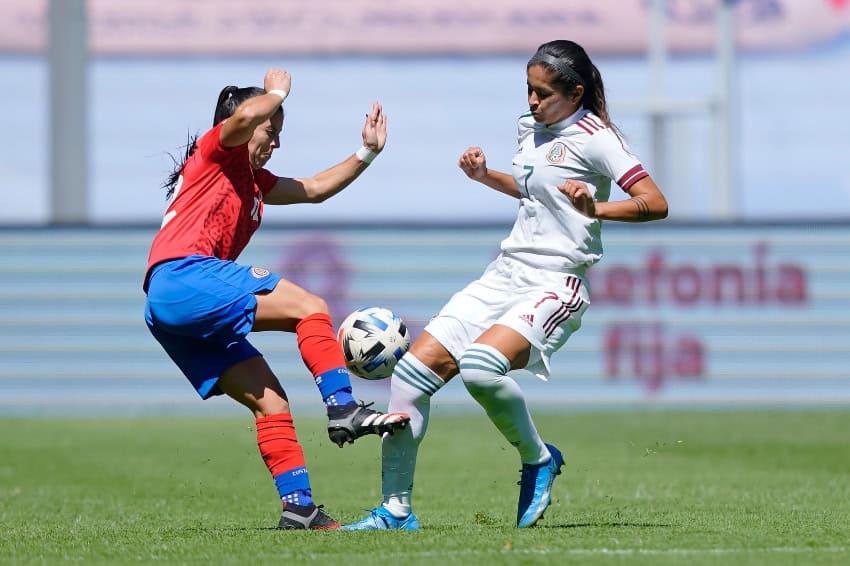
Though Liga MX Femenil — both its successes and its accentuated reminder of Mexico’s machismo — is relatively nascent, pro women’s soccer in Mexico can be traced back to 1970. Before FIFA’s involvement, an unofficial Women’s World Cup existed as a series of international events independently sponsored by various nations. In those times, Mexico finished in third place at the 1970 World Cup in Italy and ended as runner-up in the largely erased 1971 World Cup in Mexico. It is estimated that the 1971 final at Estadio Azteca drew 110,000 fans. Unofficial tournaments continued throughout the 1980s under non-FIFA-sanctioned entities like the Chinese Taipei Football Association.
Pressure for an official FIFA Women’s World Cup mounted, crescendoing in 1986 when Norwegian delegate Ellen Wille famously urged FIFA to legitimize a women’s tournament in a speech that “changed the course of women’s football,” according to the BBC. In 1988, FIFA organized a trial tournament, the FIFA Women’s Invitation Tournament in China. Overwhelming success resulted in the debut of the official Women’s World Cup in 1991 in China.
Surprisingly, since the FIFA era of the World Cup began, Mexico’s women’s team hasn’t shown much promise. That is finally changing.
The road to the 2027 World Cup is off to a perfect start
In February, Mexico’s women’s team kicked off its World Cup campaign in the preliminary qualifying rounds of the Concacaf W Championship. Concacaf is the Confederation of North, Central America and Caribbean Association Football, representing one of FIFA’s six continental governing bodies, which divides competition into regional tournaments that funnel teams into the World Cup every four years. Under this format, all North American, Central American and Caribbean teams face off, with the four quarterfinal winners earning direct berths to the 2027 FIFA Women’s World Cup in Brazil.
Currently, Mexico is among the remaining eight North American countries with a chance to secure a World Cup ticket this year. It can do so by defeating Haiti on Nov. 28 at Texas Health Mansfield Stadium in Texas.
Mexico’s women haven’t reached a World Cup since 2015. Unlike the Mexican men’s national team — which has qualified 18 times dating back to 1930 — the women have appeared only three times (1999, 2011 and 2015). While the Women’s World Cup has taken place only nine times compared to 23 for the men, El Tri Femenil has struggled to assert regional dominance, holding a 33.3% qualification rate compared to the men’s nearly 80% rate over a much longer period.
A thus-far ‘flawless’ qualifying journey
However, this World Cup cycle is proving to be different: Mexico’s women have been perfect in their qualifying run, an unprecedented feat. In 2023, Mexico also went undefeated for the first time at the Pan American Games in Santiago, Chile, en route to claiming its first gold medal, proving this current team’s success is no fluke.
El Tri has topped Group A of the Concacaf W Championship qualifiers with a flawless 12 points — going unbeaten in four matches and scoring 36 goals while conceding zero. That places them among the continent’s strongest units and makes them favorites to advance. While they have primarily played lower-ranked competition — such as Saint Vincent and the Grenadines, which Mexico defeated 14-0, and Puerto Rico — the core of the 2023 Pan American Games roster remains intact, leading many to consider this the best women’s team Mexico has ever fielded.
‘The Sorceress’ and other Mexico stars to watch
The roster is headlined by Lizbeth “La Maga” Ovalle (whose nickname translates to “The Sorceress”). Having debuted professionally in 2017, the winger — originally from Aguascalientes, who gained fame as one of Mexico’s top scorers with Tigres UANL — set a record in 2025 by signing a US $1.5 million contract with the Orlando Pride of the National Women’s Soccer League, making it one of the most lucrative deals in women’s soccer history. That same year, Ovalle won the FIFA Marta Award for “Best Goal of the Year” at The Best FIFA Football Awards ceremony for her spectacular “scorpion kick” goal.
Behind Ovalle, Mexico boasts a depth of experience and skill with team captain Rebeca Bernal and the formidable striker Charlyn Corral, one of Mexico’s all-time leading goal scorers. Complementing the veteran leadership is “Concacaf Best Young Player” award winner Alice Soto, a 19-year-old dynamic midfielder who debuted professionally at age 13 and has been scoring in Liga MX Femenil ever since.
Why upcoming qualification matters
Against Haiti, Mexico can automatically claim a direct spot in the 2027 World Cup. A loss would send the team to a playoff round for a second chance.
Haiti is coming off its inaugural appearance in the 2023 Women’s World Cup in Australia and New Zealand. Les Grenadières, as they are known, are a rising team led by attacking duo Melchie Dumornay and Nérilia Mondésir, supported by a defense that has allowed only one goal during qualifiers.
Though the Women’s World Cup does not begin until next June, the matches will stream on Netflix for the first time, with Mexico’s women primed for their deepest run in tournament history. Furthermore, the 2031 Women’s World Cup will be co-hosted by Mexico, the United States, Costa Rica and Jamaica, marking the first time Mexico will host the FIFA women’s event.
Until then, El Tri Femenil hopes to deliver the nation its first World Cup trophy — regardless of gender.
Alan Chazaro is the author of “These Spaceships Weren’t Built For Us” (Tia Chucha Press, 2026), “Notes from the Eastern Span of the Bay Bridge” (Ghost City Press, 2021), “Piñata Theory” (Black Lawrence Press, 2020), and “This Is Not a Frank Ocean Cover Album” (Black Lawrence Press, 2019). He is a graduate of June Jordan’s Poetry for the People program at UC Berkeley and was selected as a Lawrence Ferlinghetti Poetry Fellow at the University of San Francisco. His work can be found in NPR, The Guardian, SLAM, GQ, L.A. Times, and more. He is currently based in Veracruz.
