
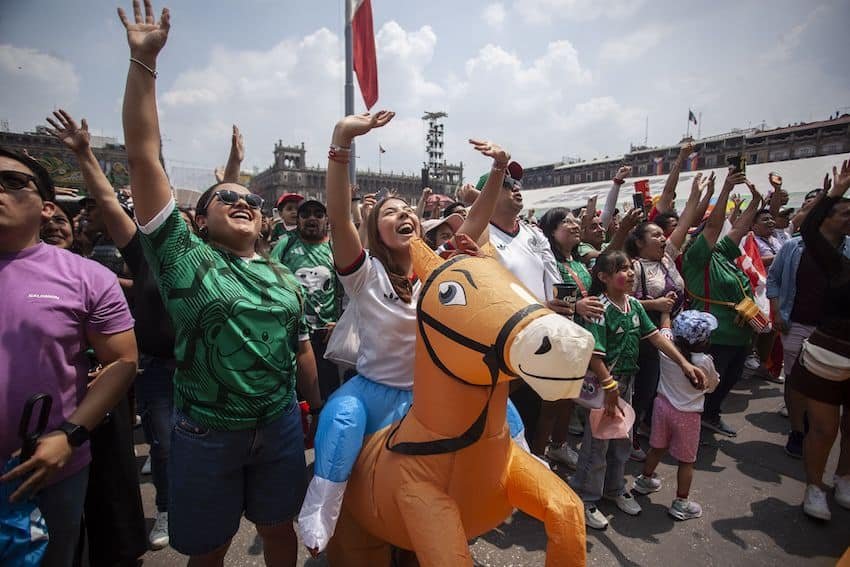
Mexico has welcomed a windfall of 17.5 billion pesos (US $1 billion) in the first 13 days of the 2026 FIFA World Cup, stemming mainly from tourism, consumption and services linked to the tournament, the Confederation of National Chambers of Commerce, Services and Tourism (Concanaco Servytur) said.
According to Octavio de la Torre, head of Concanaco Servytur, this amount does not include the 5 billion pesos (US $286 million) corresponding to the sale of match tickets.
How El Tri’s perfect group stage created World Cup magic in Mexico: A dispatch from CDMX
De la Torre explained that although the economic boost is mainly concentrated in the three World Cup host cities, including Mexico City, Guadalajara and Monterrey, it is their goal that the economic benefits reach nearby cities.
He said that places like Zacatecas, Oaxaca, Hidalgo and Puebla have seen an increase in tourism during the tournament.
Meanwhile, head of the Mexican Institute of Finance Executives (IMEF) Gabriela Gutiérrez told the newspaper El País that although economic activity has increased in restaurants, lodging, transportation and retail, it’s important to keep in mind that the volume of activity is not equal to profitability.
“We have seen increased occupancy of infrastructure, but what still needs to be evaluated is how much of that spending actually stays in the local economy and how much filters out to international chains, digital platforms or imported goods,” Gutiérrez said.
Initial estimates from Concanaco indicated that the World Cup would generate a total economic benefit of 65 billion pesos (US $3.7 billion dollars). However, Gutiérrez said this figure should be understood as an estimate of total spending, not necessarily as a value retained within the Mexican economy.
“A significant portion of this impact will be the reallocation of Mexican household spending towards bars, restaurants, supermarkets, transportation and sporting goods,” she said. “It’s real economic activity, but not necessarily new income for the country. It’s the same money moving faster, with more excitement and with greater sectoral concentration,” she concluded.
Mexico News Daily
