
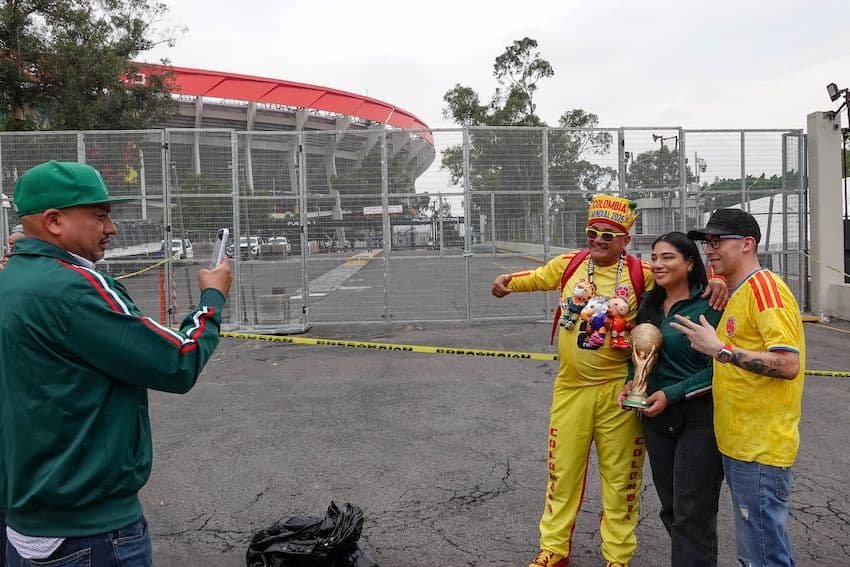
The World Cup has yet to generate the anticipated windfall for Mexico, with hoteliers in particular reporting that occupancy over the weekend had fallen well short of the expected 80%.
Hotel occupancy in Mexico City — one of the nation’s three host cities — was approximately 65%, according to the Mexican Employers’ Confederation in Mexico City (Coparmex CDMX).
“The World Cup began in a city with structural problems that were not resolved ahead of time: traffic congestion, failures and saturation in public transport … road closures, demonstrations … pressure on public services, water supply problems and a high dependence on informal employment,” Coparmex said in a statement.
Monterrey and Guadalajara — the other host cities — have had similar results, signs of which had become apparent weeks ago.
The Mexican Hotel Association of Nuevo León said Monterrey hotels recorded just around 60% occupancy, whereas the Jalisco state Tourism Ministry reported that Guadalajara hotels saw barely 50% occupancy rates.
Coparmex said that rates may improve as the tournament progresses, but it questioned the original expectations as ambitious estimates. Before the global soccer tournament began, the government had announced that it expected 5.5 million visitors during the World Cup and a resulting economic boon of 60 billion pesos (US $3.5 billion) as overly ambitious.
Those lofty estimates, along with the 80% occupancy seen for the hotel sector, “may be concentrated in large chains, platforms, hotel zones and tourist corridors, but thousands of small businesses face closures, access restrictions or a decline in customers,” Coparmex said in a statement.

It also expressed concern about the quality and timeliness of the projects carried out by the Mexico City government, saying that in the months leading up to the World Cup, merchants, residents and commuters “complained of a myriad of problems, including dust, noise, closures, delays, pedestrian hazards and decreased income.”
In closing, Coparmex stated that it is eager to collaborate with the authorities through dialogue, planning and respect for businesses, but at the same time criticized some of the strategies that the government has already implemented, in particular official requests that businesses allow employees to work from home during the tournament.
“Measures such as working from home, closures or changes in schedules can be useful at specific times, but they should not become the permanent solution to structural deficiencies in mobility and public services,” it said.
With reports from La Jornada, Expansión and El Universal
