
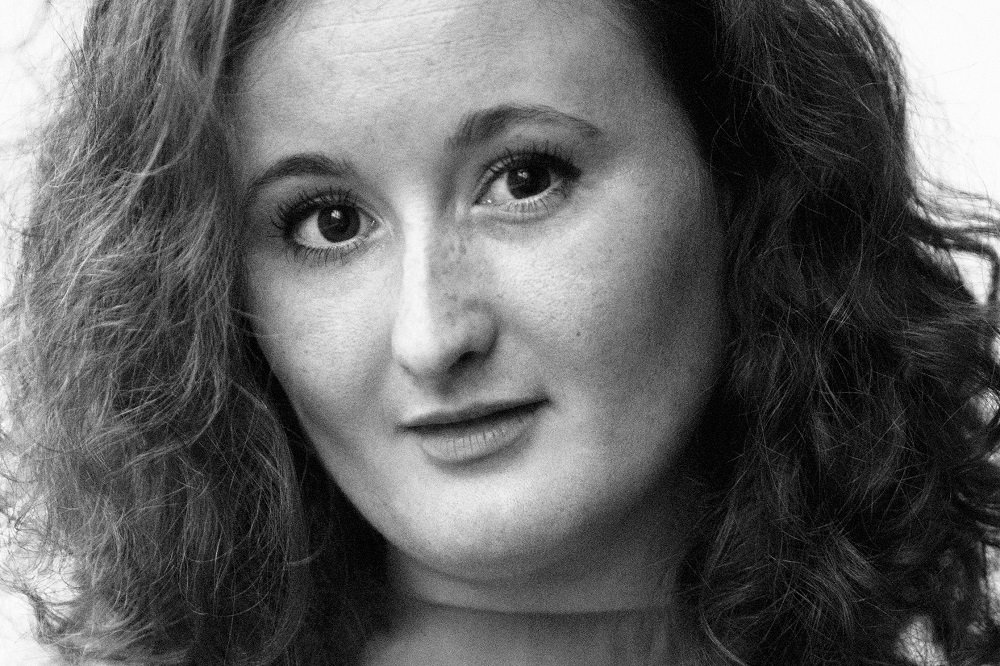
“If I feel I’m in deep water, I know the project is important and worth fighting for”
– The Danish producer discusses discovering her vocation at Super16, her ongoing collaboration with Isabella Eklöf and the need to defend independent, risk-taking filmmaking
(© Mathias Broe)
The career path of European Film Promotion’s Danish Producer on the Move, Maria Møller Kjeldgaard, grew out of an early fascination with the building blocks of cinema, before taking shape through film studies and the independent film school Super16. Her slate with Manna Film brings together fiction and documentary projects marked by strong personal voices, artistic ambition and a willingness to explore difficult, complex territory.
Cineuropa: How did your path into producing start? Was it through film school, on set or somewhere less obvious?
Maria Møller Kjeldgaard: Already during primary school, making shorts with my friends, I was drawn to the magic building blocks of filmmaking and how they can come together in so many different ways. Like many others, I originally thought I wanted to become a director, but after a one-week primary-school internship on the shoot of Pusher 2, following Nicolas Winding Refn, my intuition told me it wasn’t the right path for me. But it wasn’t until I was doing Film Studies at university that I even considered becoming a producer. And it was not until I was studying at Super16 that I really discovered what the role of a producer is and how it ignited my drive. I love the process of building something from the first idea all the way to meeting an audience, combined with the close and inspiring collaborations with directors, scriptwriters and the whole creative team, while trying to make the impossible possible.
What projects are you currently focusing on, and which ones are you hoping to move forward during Cannes and the Marché du Film?
I’m bringing Isabella Eklöf’s fourth fiction feature, The Von Sydow Murders, to Cannes, which will be the third film we’ve worked on together, and I’m really excited about it. In parallel with Isabella working on her DOGMA 25 film, Mr Nawashi, this year [see the news], we’re developing and financing this project, and hopefully, we’ll be able to establish some new collaborations, but also nourish existing ones, during Cannes.
It’s a 1932 true-crime love story unfolding amidst one of the most scandalous crimes in Sweden: a five-person murder-suicide in Stockholm’s upper classes, experienced from the point of view of a young woman. Like Isabella’s previous films, Holiday (premiered at Sundance) and Kalak (premiered at San Sebastián), the part-chamber play, part-road movie will explore power structures, generational trauma and the boundaries of love.
Additionally, I am finishing Selma Sunniva’s fiction feature debut and film adaptation, Girl Beast, a Lolita story told from the female perspective. Furthermore, I am in production on Frigge Fri’s second documentary feature, Land of Forever, a late-bloomer coming-of-age doc.
Otherwise, I have a slate of documentary and fiction features in development that all seek to experiment with film language and storytelling, led by talents with a strong personal voice and artistic vision. These include a queer vampire film, CMA, also by Sunniva; See You, an online found-footage horror film by Kristian Sejrbo Lidegaard; Sweetheart, a psychological drama with thriller elements by Cecilie McNair; A Slow Development, a portrait of a queer older generation by Vibeke Bryld; Fear of an Ending, a documentary about immortality through AI by Alexander Rahnami Mannstaedt; and Daniel Meets God, a documentary about a young Catholic priest, faith and the need to belong, by Agnes Trier and Selma Sunniva.
What does Cannes represent for you at this stage: a marketplace, a meeting point or something else?
Filmmaking is about people and the business of people, so Cannes is definitely a unique meeting point for me, both to establish new collaborations and to nurture existing ones in a way that is simply not possible through a screen.
What are the main challenges you have faced along your producing path?
To keep on believing and fighting for independent artistic film within the reality of a changing industry that is becoming less and less willing to take risks, both creatively and financially. To me, film and filmmaking are about opening doors into new worlds, to challenge and to offer a different perspective from what you thought you needed. At a time that’s becoming more and more polarised, and where controversial or heated issues might be difficult and sometimes impossible to talk about, I believe that we, as filmmakers, have an ability, but also a responsibility, to explore and offer perspectives that are not black and white. To avoid predictability. To stay curious. To insist on complexity.
The biggest “Mount Everest challenge” I have encountered as a producer so far was my second fiction feature as a producer: Eklöf’s film adaptation of the acclaimed Danish novel by Kim Leine, Kalak, exploring the relationship between Denmark and Greenland through a personal story. It ended up becoming a six-country co-production shot in Greenland on 16 mm, which had its risks. But besides the production challenges, it was tricky to tackle a story and a topic full of nuances that, in many ways, could be considered controversial. It was a sensitive dance from beginning to end. But if I feel I’m in deep water, I know the project is important and worth fighting for. You can’t necessarily change people with a film, but you can hope, or at least aspire, to kindle a dialogue.
Denmark has a strong production culture and track record. Does that create pressure, or does it open doors? And what about public backing? What works, and what can be improved?
We have one of the most privileged support systems and general conditions for filmmaking in Denmark. At the risk of sounding spoiled, my experience is still that even in Denmark, artistic film is very much under pressure, and it is becoming more and more difficult to produce and finance it.
As is the case globally, I see a tendency among stakeholders to be less and less willing to take risks, and more and more likely to lean towards already-known formats and proven successes. This concerns me deeply at a time when it is more vital than ever to defend and fight for the future and survival of independent and risk-taking filmmaking, both artistically and financially.
