
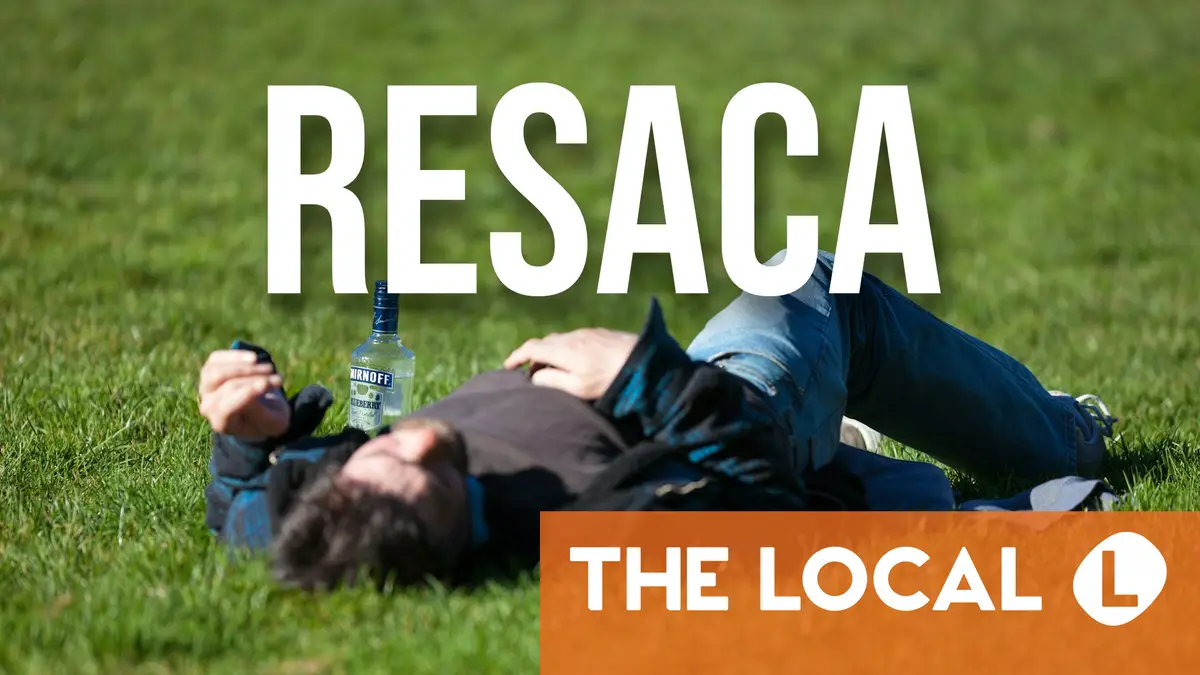
Had too much to drink? Then you probably have ‘resaca’.
Una resaca is the Spanish word for a hangover, that horrible feeling you get in your body after a night of heavy drinking.
Someone who is hungover would use the adjective resacoso or resacosa to describe the state they’re in, or say tengo resaca (I have a hangover) or estoy de resaca.
In case you were wondering, the title of the popular American comedy movie ‘The Hangover’ was translated for Spanish audiences as Resacón en Las Vegas (Big Hangover in Las Vegas).
Interestingly, other Spanish-speaking countries in Latin America don’t use resaca but instead ratón (in Venezuela), cruda (Mexico), caña (Chile), guayabo (Colombia), goma (Costa Rica, Panama, El Salvador, Honduras) or chuchaqui (Ecuador).
A hangover isn’t the only meaning resaca has in Spanish; it can also refer to an undertow, the strong undercurrent flowing seaward beneath incoming surface waves.
We guess that’s how having a booze-fuelled hangover feels: being swept off your feet and dragged towards an unpleasant sensation.
Resaca can also describe that feeling of coming down to earth after a big high, even if no alcohol was involved. Spain’s Royal Academy of Language describes it as a “situation or state that follows a major event” – La resaca del éxito (The aftermath of success).
Examples:
Tengo una resaca monumental. Ya no bebo más en la vida.
I’ve got a huge hangover. I’m never going to drink again.
Ten cuidado con la resaca del mar que es muy traicionera.
Be careful with the sea’s undercurrent as it’s very treacherous.
Aunque el Barça esté de resaca trás ganar La Liga, le quedan dos partidos por jugar.
Even though Barça is still coming down to earth after winning the league, they have two matches left to play.
