
“We are losing the ability to listen to people who think differently from us and to actively engage in dialogue”
– CANNES 2026: The Romanian director tells us more about his new film, initially portraying an intimate family conflict but gradually saying something much bigger about contemporary society
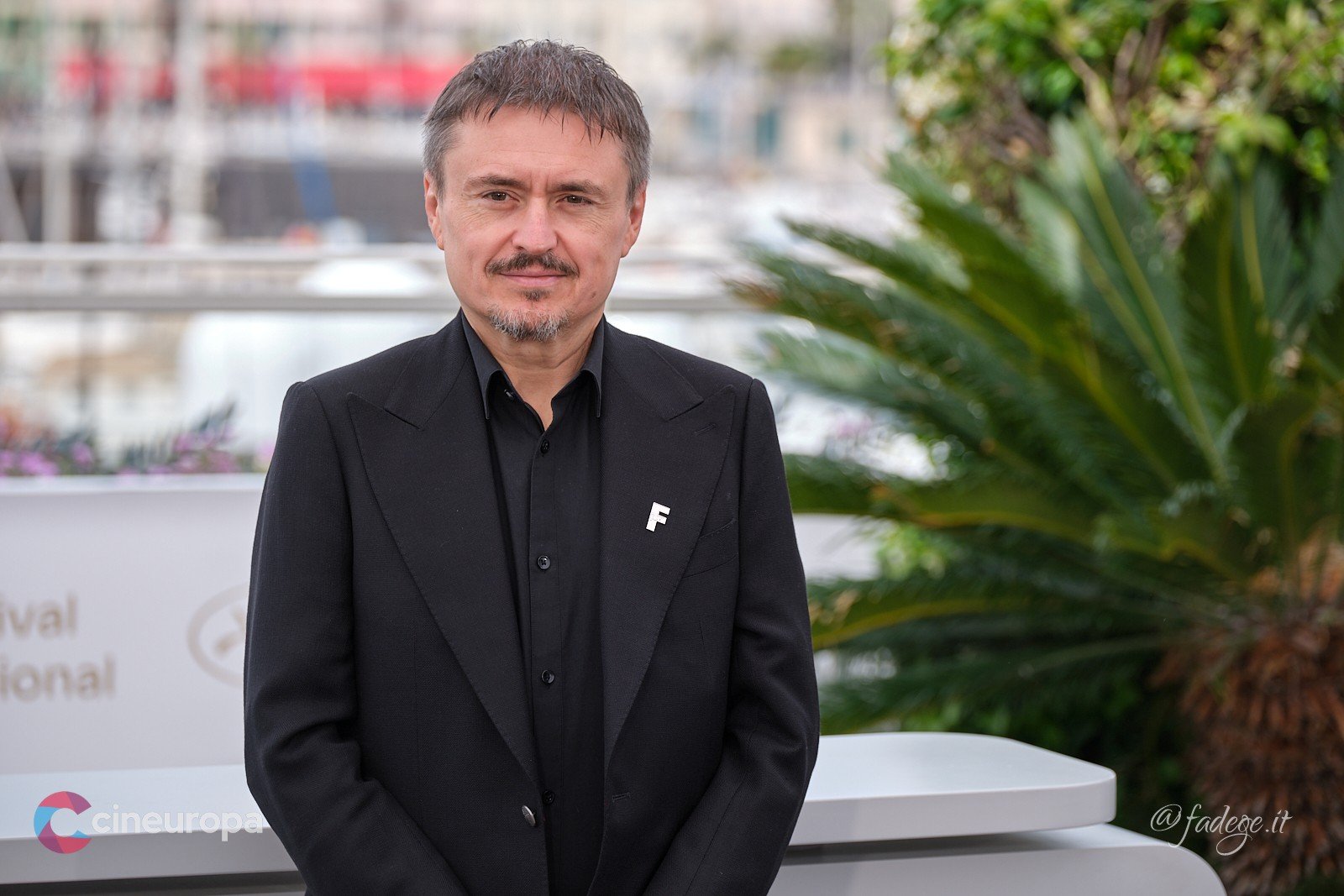
(© 2026 Fabrizio de Gennaro for Cineuropa – fadege.it, @fadege.it)
Romanian helmer Cristian Mungiu has premiered Fjörd in competition at the Cannes Film Festival. We pressed him for some more details on his new film.
Cineuropa: Fjörd begins with an intimate family conflict but gradually says something much bigger about contemporary society. Where did the idea originate?
Cristian Mungiu: Around ten years ago, I kept reading articles about immigrant families in Nordic countries, especially Norway, losing custody of their children after conflicts with the authorities. The cases came from everywhere: Romania, Poland, India, Africa… What interested me was the clash of values, the impossibility of finding a simple truth. Everybody believed they were morally right.

I felt this conflict became very visible in societies that were developed enough to accept criticism and debate. I’m not interested in providing answers or telling the audience who is right. I’m interested in doubt because I think we are losing the ability to listen to people who think differently from us and to actively engage in dialogue.
The movie eschews simple moral positions, yet it creates a strong sense of empathy towards the family. How difficult was it to maintain neutrality while writing a story so deeply shaped by persuasion and manipulation?
I think this sympathy towards the family is inevitable. Families are emotional, intimate and vulnerable, while institutions naturally feel colder and more distant. I tried very hard not to judge the characters. While writing, I constantly checked the balance between the different perspectives. I spoke with families, lawyers, journalists, NGOs and judges, but accessing the institutional side was much harder because the Norwegian child protection services initially refused to talk to me.
Later, I was allowed to observe trials and speak with people inside the system, although I never got access to the actual case files. That’s why I never claim that the film shows “the truth”. It shows conflicting perspectives and the impossibility of fully understanding what happens inside a family. I also wanted the audience to remain aware of how easily reality can be manipulated emotionally. There’s a moment near the end where the daughter confronts her parents, and suddenly, the certainty you had before becomes unstable again. For me, the real question is not who wins morally, but how society functions when people fundamentally disagree about values.
Your filmmaking style feels deeply connected to the ethical position of the movie. Could you give an example of how your camera and staging choices shape the way the audience observes the characters?
Yes; I believe the ethical position of a film also exists inside its form. My cinematic language is built around reducing manipulation as much as possible. I don’t use non-diegetic music, and I avoid cutting because every edit is already an interpretation.
I prefer scenes to unfold in real time. I want the viewer to feel that reality exists independently of the filmmaker. The courtroom scenes were a good example of this approach. Usually, courtroom dramas rely heavily on editing and reverse shots, but here, everything depended on choreography and mise-en-scène. The actors and camera had to move very precisely. Hopefully, this creates a different kind of tension in the debate without breaking the continuity of observation.
You work with quite a few young, non-professional actors in the film. How did you approach directing them?
The young actors were difficult to cast because they needed to be trilingual and emotionally very natural. We searched within Romanian communities in Norway and even found a boy coming from a very religious family. I was very grateful that the parents trusted the project. I try not to overload actors with concepts, especially younger actors. I don’t want them to perform “meaning”; I want them to remain truthful inside the moment.
Why was it important to place the story inside such a small and isolated community?
There is something about silence in small communities. People avoid open conflict because everybody knows one another. The landscape itself reflects this emotional restraint. The water is still, the people are polite, and tensions remain beneath the surface.
We experienced something very Norwegian during the shoot. We found two neighbouring houses that were perfect for filming, but the neighbours hadn’t spoken to each other for ten years. Our Norwegian producers kept politely leaving notes instead of knocking on the door directly. When we finally met the owner, he was perfectly friendly. He simply said nobody had initiated a conversation. After the shoot, the neighbours became close again. Sometimes people are separated less by hatred than by silence.
The film often contrasts broad ideological questions with very mundane gestures, the fragility of bodies and the smallness of human existence. Why was this contrast important for you?
We behave as if we are immortal, even if we know we are not. People can become unreasonable when they are convinced that all the truth belongs to them. I think we can make the world a better place by remaining humble, and accepting that some things are bigger than us and cannot be completely controlled or solved. Then it also becomes easier to enjoy the small moments in life.
I think Western societies are also struggling with this today. There is a desire to correct historical injustices, which is understandable, but sometimes, we try to solve things by silencing or punishing people instead of communicating with them. The first step should be acknowledging that differences exist and trying to find ways of living together despite them.
