
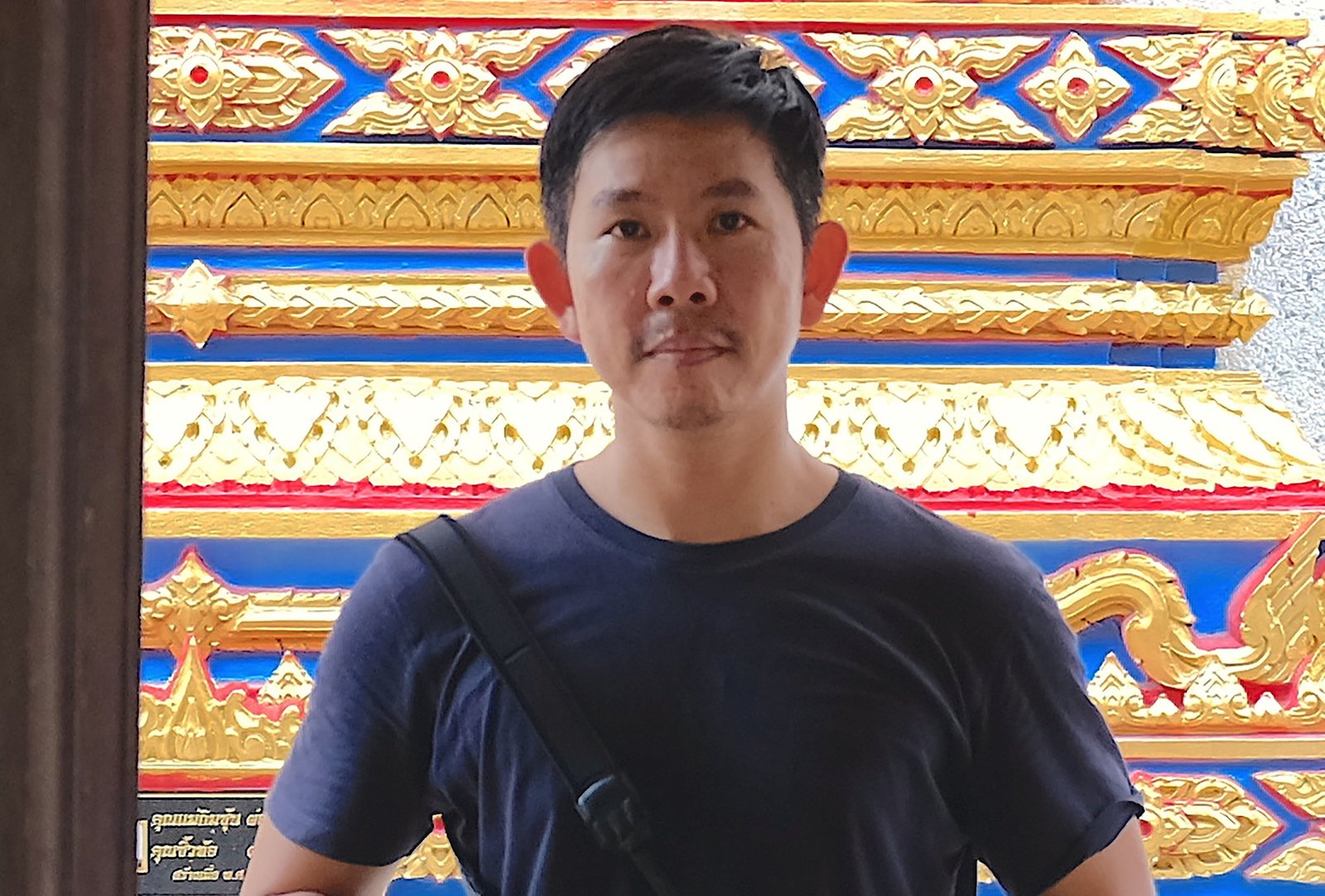
“It was almost like recreation for us – instead of going to a beachside hotel, we went to the temple”
– CANNES 2026: The Thai director picks apart his personal story about a family visiting nine Buddhist temples in order to gain merit for their grandmother
(© Kick The Machine Films)
A new name in Thai cinema was introduced at the 79th Cannes International Film Festival, as Sompot Chidgasornpongse presented his debut feature, 9 Temples to Heaven, in the Directors’ Fortnight. He spoke about his personal story about a family visiting nine Buddhist temples in order to gain merit for their grandmother, and also about his filmmaking mentor, Apichatpong Weerasethakul.
Cineuropa: Despite the big changes that Thailand’s been through in a short time, in terms of technology and infrastructure, some things from older times still remain as they were, with the Buddhist culture at its heart and centre, wouldn’t you agree?
Sompot Chidgasornpongse: Very much. My family was religious, and going to the temple was common for me. It was almost like recreation for us – instead of going to a beachside hotel, we went to the temple. It’s like this for many people, to this day. The film is a way of reimagining my own journey to the temples with my family, so it’s very personal. But of course, as I’ve developed it over the years, many things have changed in the script, and characters that used to represent members of my family have become something else. Especially when I cast the actors, they became more themselves than my own relatives.
We encounter monks, receiving donations and offering advice on how to best gain merit, all of them with very different personalities. The Buddhist monk, not least the Thai one, is certainly a fascinating, at times also unexpected, personality.
The Buddhist monk is first and last human, as human as the rest of us, especially for Thai Buddhists. I haven’t been a monk, but I could have been, even for a day. It’s very different from the Christian religion, where the monk really has to be dedicated to it. In Thailand, you put on a robe. One day, you’re a layperson; the next day, people are bowing down to you; the next day, you can be a layperson again. When you’re ordained as a monk, there’s a certain protocol that you have to remember, but you don’t have to get into the real spirit of being a monk. You just remain human.
Some of the monks in the film could also be seen as fairly entrepreneurial.
That’s what it’s like in temples in Thailand. They make a lot of money, and of course they pay no tax. And in order to enable the temple to survive, they come up with many strategies along the way in order to persuade people to make donations. It’s a kind of consumerism, or capitalism.
As profane as that sounds, it simultaneously comes across as something that elicits sympathy, in a funny way.
Absolutely, and I wanted to capture this complexity in the film. The temple is not only a place for spirituality; it can certainly also be a place for other things.
Can you talk about the number of temples in the title, the figure of nine?
It had to be nine because nine is the lucky number. Rama IX was the Thai king who ruled for the longest time, for 70 years, and because of that, the number nine has become almost religious. So, the temple trip takes in nine stops at nine temples.
Families are, of course, a universal entity and are portrayed in films from all over the world; despite its Thai-ness, your movie has the feel of some Japanese films about families.
And one of my biggest influences is Yasujirō Ozu, whose films I love so much, so there’s definitely something there. I also like Edward Yang from Taiwan and the current Iranian cinema, where everyday life is portrayed in humane and simple ways.
Apichatpong Weerasethakul is credited as a producer on 9 Temples to Heaven. What was his involvement here, and when did your collaborations with him start?
Apichatpong is my mentor, my boss and my brother. I came to him with my portfolio as an Architecture graduate and applied as an intern, with no filmmaking experience. I’ve worked as his assistant now for 23 years. He visited my set two times and also gave me comments on the script. He said, “I trust that you’re going to make the film you want to make.” And I definitely have.
