
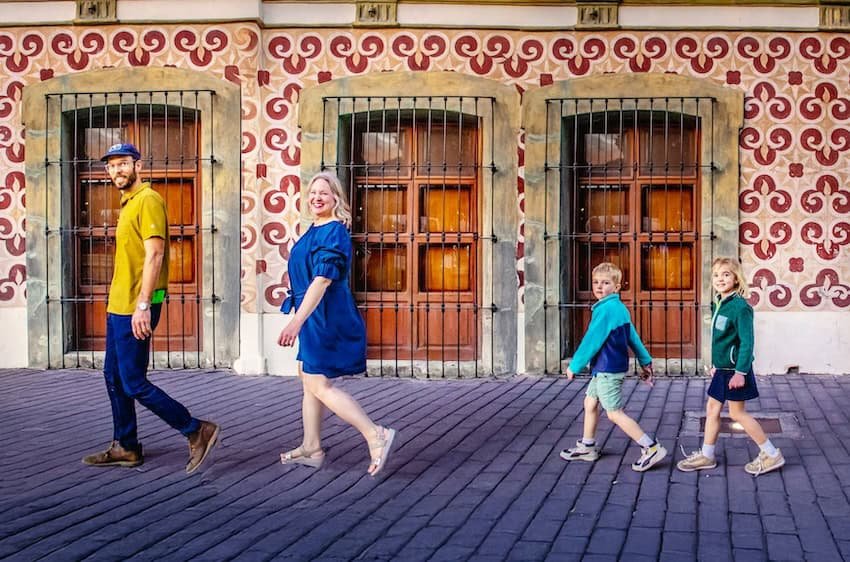
If you’re a regular Mexico News Daily reader, there’s a good chance you’ve considered moving to Mexico, already have or know someone who is living there. If that’s the case, you’ve probably read countless articles about what life is like as an expat. But one perspective that is rarely talked about is what it’s like, as a kid, to grow up as one.
By now, you’ve heard all about me, my Mexican upbringing and my thoughts on safety in the U.S. But I think it’s important to share the experiences of other young immigrants as well.
San Miguel de Allende is known for its large international community. According to the flight deal scanning platform Going, around 10% of the city’s population is foreign. The available resources for the expat-curious often focus on what it’s like to move to SMA, retire there or build a life in Mexico as an adult. What often gets overlooked is the experience of the children in those families. Growing up between two cultures comes with its own challenges, benefits and questions of identity, yet these perspectives are rarely part of the conversation.
Some families even wait until their children have grown up before making the move, believing Mexico isn’t the right place to raise kids. But is that assumption fair?
For families considering a move to Mexico, understanding what that experience is like for their children is just as important as understanding it for themselves. The best way to do that is by hearing directly from those who grew up as immigrant children.
With that in mind, I interviewed one of my closest friends, a former classmate and my twin brother. We all grew up in Mexico, but our experiences as expat kids were far from the same.
Isabella Mena
My close friend, Isabella Mena, has had a much different experience than mine. Mena has Ecuadorian and Venezuelan roots and spent most of her childhood in Los Angeles before moving to Mexico during the pandemic.
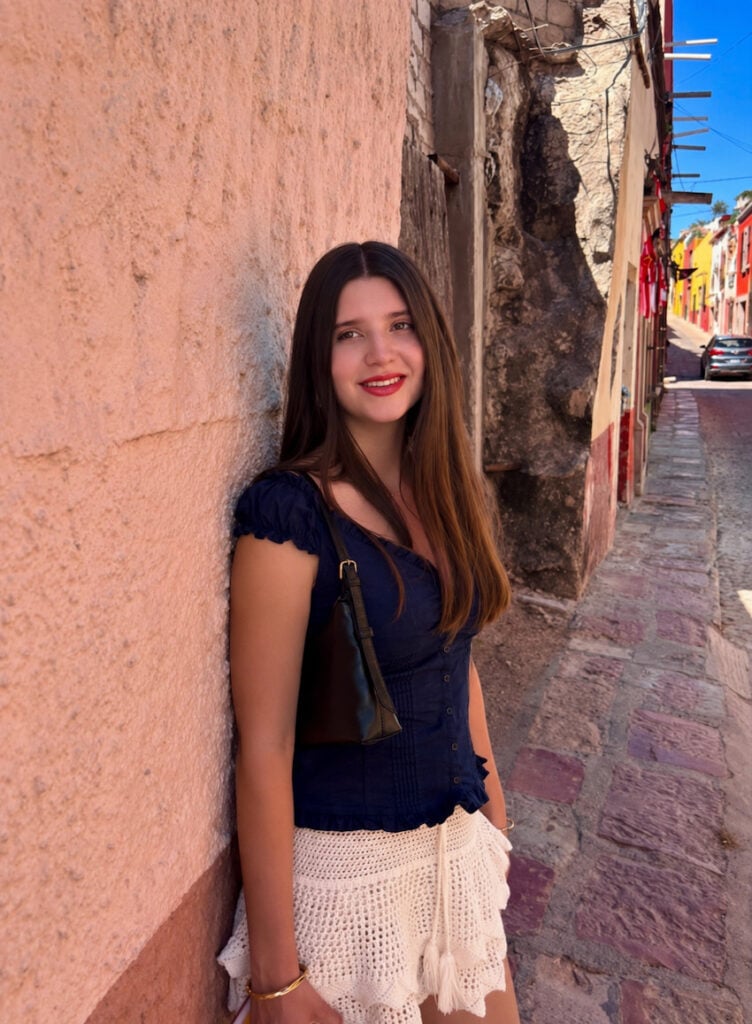
Mena was 11 when her father was offered a job in Querétaro. With the pandemic worsening the already high cost of living in Los Angeles, her family decided to move approximately six years ago. She never got to say goodbye to her friends properly and she attended online school, making her first year in Querétaro unimaginably isolating.
Everything changed when her family met a group of foreign kids in San Miguel de Allende. They quickly fell in love with the city’s vibrant international community and the beautiful colonial architecture. This prompted them to move there.
One of the biggest differences between Mena’s life in the U.S. and in Mexico is the pace. In Los Angeles, she commuted up to two hours to school and rarely saw friends outside of class. In Mexico, her social life flourished.
“Here, everything is slower,” Mena said. “Everyone is just enjoying life.”
She believes San Miguel’s community has made her more social and outgoing than she would have been if she had stayed in the United States.
But her experience hasn’t been entirely positive. She recalls a time shopping in Querétaro, when a store manager heard her father’s Venezuelan accent and told him he wasn’t welcome in Mexico and should return to his country. Mena described it as a heartbreaking experience her family will never forget.
Growing up across cultures has complicated a simple question: Where is she from? Four countries represent her. Born in the United States to a Venezuelan father and Ecuadorian mother, Mena feels guilty when she simply tells people she’s American because it leaves out important parts of her identity. And now, she’ll have to explain how Mexico is part of her too.
As college approaches, Mena expressed concern that graduating from a Mexican high school could complicate her U.S. college and scholarship options. So she has decided to complete her senior year through an online school based in Los Angeles. She hopes to attend university in the U.S. or perhaps add another country to the collection by studying in Spain or Italy.
Sadly, that means leaving behind the friends and community she found here. But she doesn’t expect it to be goodbye forever. Mena hopes to travel and experience other parts of the world before potentially returning to Mexico later in life, maybe even to raise a family.
“I think this is a wonderful place to raise kids,” Mena said. “Life is for enjoying, not just surviving.”
Tristan Jackson
My former classmate, Tristan Jackson, was born in Maryland, but doesn’t fully recall living there. His parents first discovered San Miguel while backpacking through Latin America and originally viewed the city as a place to retire. After Jackson was born, they decided not to wait.
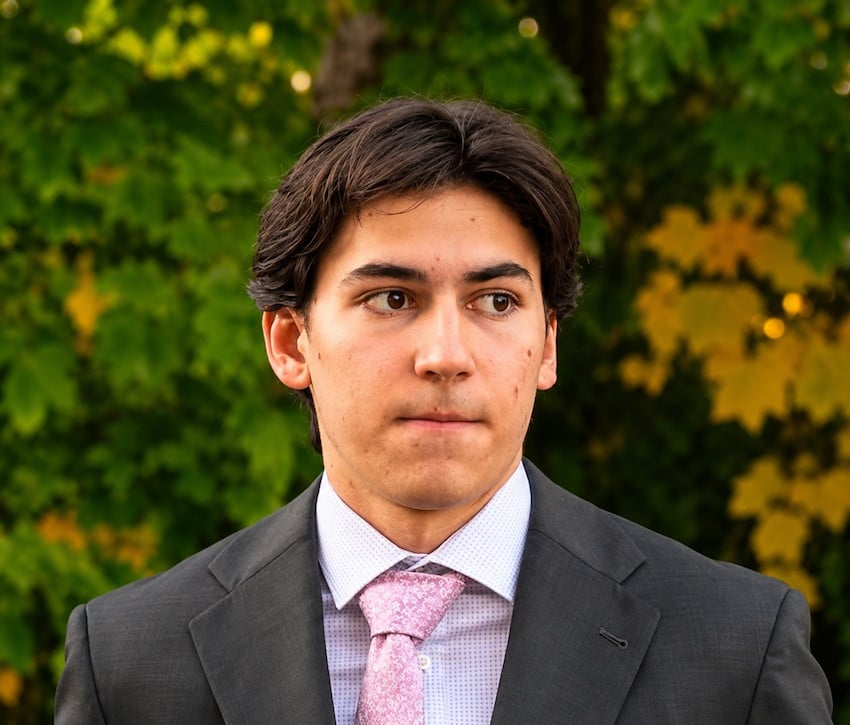
Jackson was four when his family moved to San Miguel, where he would go on to spend his entire childhood.
Throughout his time in San Miguel, he told people he was originally from the United States. Occasionally, he felt like the odd one out, so saying he was American seemed like the easiest answer. But upon leaving Mexico, his response became more complicated.
“I couldn’t really talk about the U.S. at all,” Jackson realized. After spending his childhood there, Mexico was actually the place he knew best.
That became even clearer when he transferred to a school in Washington for his senior year of high school. While Jackson tried to pass as American, peers assumed he was Mexican after hearing that he grew up there. Ironically, Jackson felt more connected to his classmates in Mexico than to his American ones.
Even traditions he grew up experiencing reflect the same divide. While his family celebrates Thanksgiving and an American Christmas, Jackson viewed the Fourth of July as a celebration for a country that didn’t even feel like his own. Día de los Muertos, on the other hand, became a tradition he genuinely connected with and looked forward to celebrating.
“If I had to say which one is more meaningful to me, Día de los Muertos or Fourth of July, I would definitely pick Día de los Muertos,” Jackson said.
Growing up abroad also gave Jackson a stronger sense of comfort with the unfamiliar. Having already learned he could belong somewhere other than the country he was born in, traveling somewhere new didn’t feel foreign, especially when he could speak both Spanish and English.
However, belonging anywhere comes at a price; having a fixed “home” becomes complicated.
“I don’t really feel specifically at home anywhere,” Jackson said. Then again, he doesn’t necessarily consider that a bad thing. Instead of fitting completely into one place, he’s capable of fitting into many.
If you’re concerned that raising your child in Mexico could limit them academically, Jackson’s experience may put you at ease. He used to worry that he wasn’t getting the same education he would have in the U.S., but after attending high school in both countries, those fears proved unfounded. He felt perfectly caught up with his classmates in Washington.
The most prominent difference was the college application process. His teachers in Mexico wrote fewer U.S. college recommendation letters so that they could give him a more personal, unique endorsement than teachers juggling dozens of students. He felt like having unique experiences during his upbringing in Mexico also helped him stand out from other applicants.
It worked out pretty well: Jackson will attend Princeton University this fall. Talk about a great data point.
Jackson believes the biggest mistake foreign parents can make when moving to Mexico is staying within an American bubble. Surrounding yourself with the familiar can limit growth and opportunities, the very things parents may fear their children will lose by moving abroad. Jackson believes families should send their children to local schools, meet people in the community and embrace where they are living.
“If you’re gonna do it, do it,” Jackson said.
Lazar Golden
Thankfully, I only had to walk across the hall for this next profile.
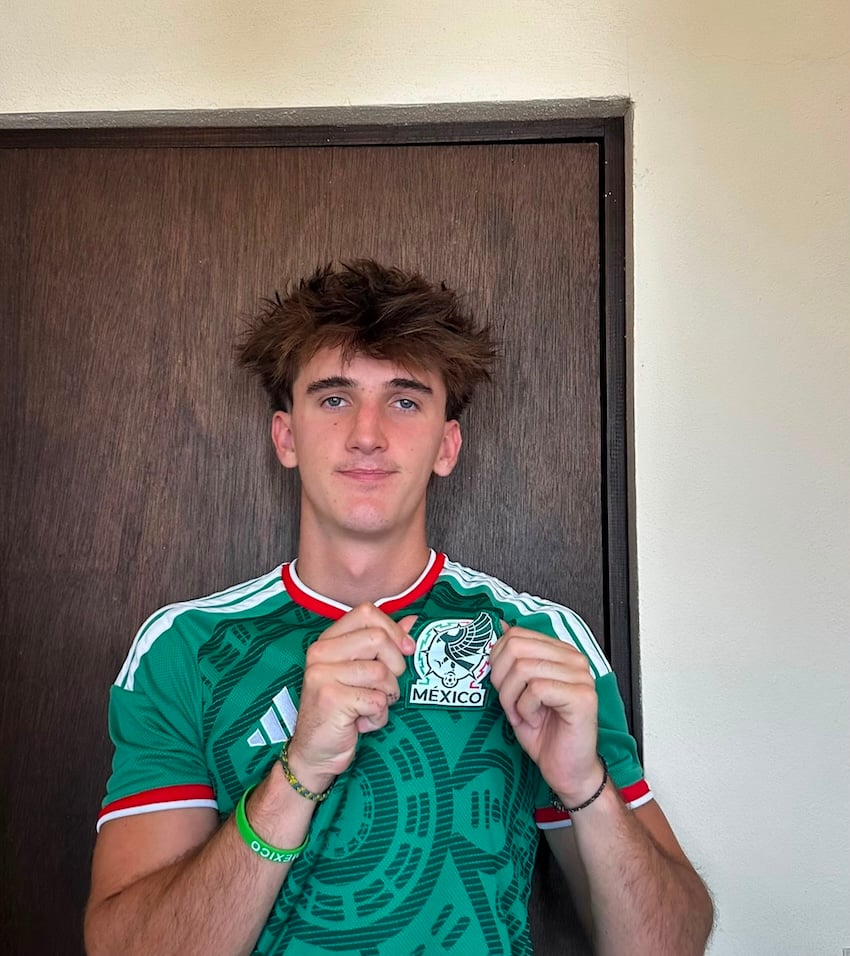
My twin brother, Lazar Golden, was only six months old when our family packed up our cramped Manhattan apartment and moved into a beautiful family residence in San Miguel de Allende. And just like me, he would go on to spend the next 15 years calling Mexico home.
When asked where he is from, Golden immediately thinks of San Miguel. He considers himself both Mexican and American: American by nationality, but Mexican in culture and customs.
“The way I was raised, the friends I met and the way their families took me in gave me a connection to Mexican culture that’s reflected in who I am,” Golden said.
For Golden, soccer provided a real sense of community. It gave him his closest friends and taught him how to work through challenges with utter determination.
But after moving to the United States, Golden noticed differences in how sports are played. Soccer in the U.S., he says, is faster, more physical and more competitive. In Mexico, it’s more technical and focused more on having fun.
The greater difference was access. In the United States, Golden found better-maintained fields, equipment and facilities, as well as easier access to a wider variety of sports. In Mexico, where soccer dominates, pursuing a less popular sport can require considerably more effort.
Academically, the transition wasn’t seamless. Golden initially struggled with math and English because some concepts and terminology were taught differently in Mexico. Still, he doesn’t believe those differences outweigh what his Mexican education gave him. Growing up around people from different economic backgrounds has made him more aware of inequality and appreciative of the opportunities he has.
More importantly, the community he found in Mexico taught him the concept of generosity. He and his friends would buy pizza or ice cream for children selling things outside stores countless times.
“It’s almost like a family,” Golden said. “Wherever you go, if someone has been nice to you, they’re like family to you.”
So, should parents worry that moving to Mexico will limit their children’s academic or athletic opportunities? Golden’s answer is both yes and no. Certain resources and facilities are undeniably easier to access in the United States, he says, particularly in sports. But access and opportunity aren’t necessarily the same thing.
“If you’re motivated, you can find the people or the place to practice that sport,” Golden said.
But when I asked if he wished our family had stayed in New York, he didn’t hesitate.
“No, I don’t,” Golden said. He credits Mexico, and particularly the people he grew up around, with making him who he is today. “I wouldn’t be myself if I didn’t grow up in this place.”
Zella Golden grew up in San Miguel de Allende and is a senior in high school in Marin, California. Golden is completing an internship with MND.
