
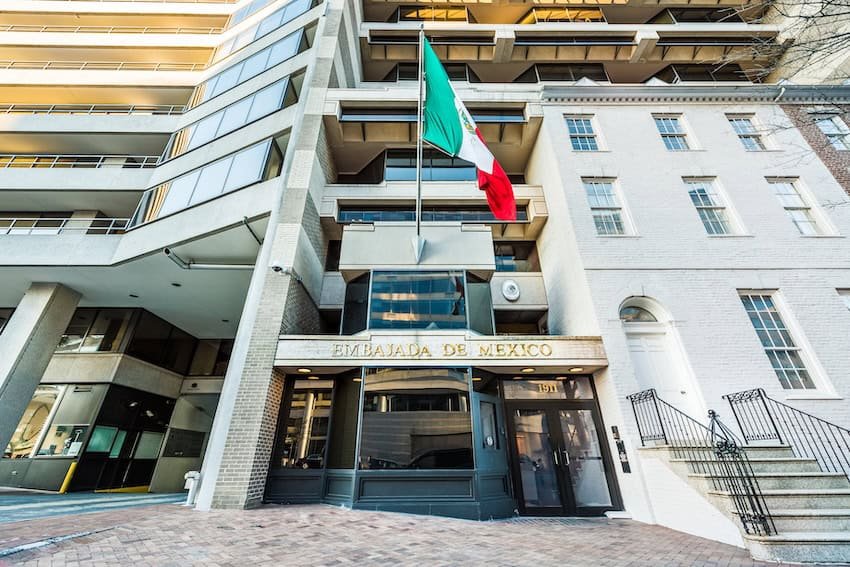
Amigos, starting in September, I am leaving Mexico City for Washington, D.C. I’m going to work at the Mexican Embassy’s (Embamex) Mexican Cultural Institute, which means that as of next week, I will become a public servant.
To be honest, it’s not something I ever could’ve imagined doing. As my life began to take shape, I decided I would pursue art, culture and creating things that people could enjoy. Politics and government were distant spheres that, in my head, belonged to people like my sister and my fiancé, who studied political science and public administration.
If someone had told me five years ago that I would end up working for the Mexican government, I would have laughed very hard.
So, before we go any further, I’m telling you first, because you should know where I stand when you read my work.
Why I write the way I write
Now for a confession that brings clarity to the rest of this.
I don’t like talking about politics with friends or family because it always ends in a terrible row. In each of those discussions, somebody invariably says “I saw it on [blank] news channel,” or “I read it in [such-and-such] paper.”
From that point on, nobody is listening to the discussion anymore. We’re all just weighing what we think of the outlet.

That is how media works, and I don’t much like it.
Made in Mexico and the US: 250 years of a bilateral relationship
While I was studying for a journalism degree – a degree I never ended up obtaining – one of my professors, Enrique Mandujano, repeated the same mantra every class: “You are not the readers’ mother. It is not your job to tell readers what to think. Just lay out the facts, in order, and let each reader do what they want with the information.”
On days when a significant national story broke, he would buy a newspaper from every outlet and ask us to identify how they were steering public opinion, from loaded adjectives to a seemingly arbitrary selection of which facts made the cut.
It’s thanks to Mandujano that I can spot the moment a news outlet or particular journalist dresses up a political position as absolute truth. Beyond the fact that I don’t think that’s journalism, it doesn’t strike me as ethical.
I hope that shows in the opinion pieces I’ve written for this outlet.
Opinion: A World Cup loss can’t sap the country’s incurable optimism
I have deliberately avoided, to the best of my ability, pointing at, judging or grading this country’s public figures — not because I lack opinions, but because handing them to you was never my intent.
Which is why I love writing for Mexico News Daily. It gives me the opportunity to promote Mexican culture through columns like “Taste of Mexico” and “Made in Mexico,” while also trying to give you a balanced view of other subjects that matter here, because I’m convinced that the more information you have, and the less spin, the easier it is to take part in the conversation and get involved with Mexican communities.
Embamex and the institute
My job here at MND isn’t going anywhere. But I’m taking on a new responsibility inside the most important international relationship Mexico has.
And my work at the embassy — specifically, its Mexican Cultural Institute — is a continuation of what I’ve been doing here: making visible the cultural ties that bind our communities on both sides of the border, always in the hope of strengthening them.
That’s the job: Getting Mexican culture in front of as many U.S. eyes as possible.
In future columns, we’ll navigate our shared history and investigate how the two cultures have shaped each other. For now, however, a hint of what’s to come.
Going north
We call work chamba. My favorite retelling of the story suggests it comes from the American Chamber of Commerce in Mexico, which ran a job board. Essentially, people went looking for work at “the Chamber,” which then became chamba. The Real Academia Española (RAE) says it comes from old Portuguese. So the etymology is almost certainly against me, but I’m keeping the story anyway.
It’s not just chamba either.
Without the cattle tradition we inherited from colonial times, John Wayne would have looked very different. The rope, the saddle, the wide brim, the vocabulary — buckaroo is vaquero, lariat is la reata, mustang is mesteño, hoosegow is juzgado. The most American figure in the world is, in a way, speaking Spanish.
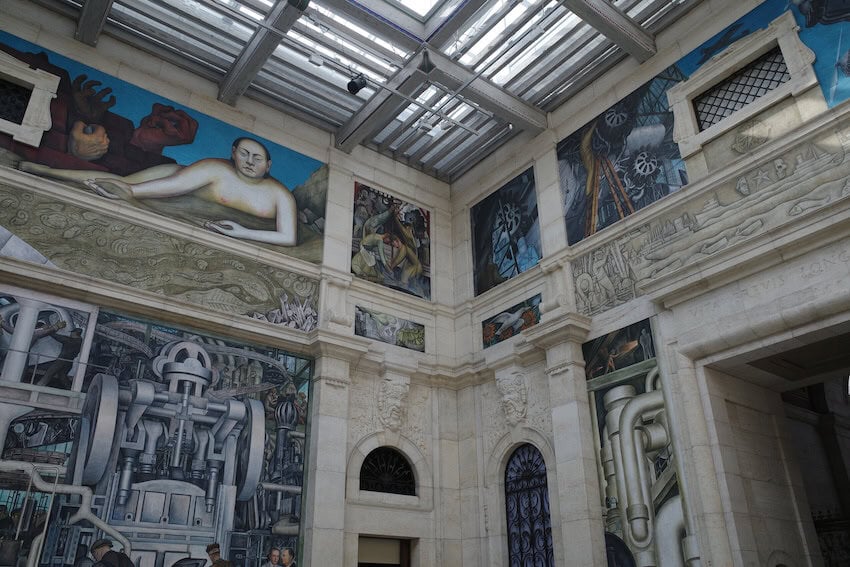
Meanwhile, the economic need of Mexican artists during the early 20th century resulted in Mexican murals scattered across the United States. Diego Rivera painted Ford’s assembly line in Detroit in 1932, paid for by Edsel Ford himself.
And they say that if Santa Anna hadn’t taken chicle to the United States, Thomas Adams could never have built the chewing gum empire he built.
Going the other way
The United States’ cultural dominance over the past century is unmistakable, evidenced by our love of baseball and the fact that our Golden Age of cinema was partly financed with American money during the Second World War.
A good number of the Mexican writers I admire spent time in the United States and came back devoted to Beat authors such as Alan Ginsberg and William S. Burroughs, as well as poet T.S. Eliot. If you read closely, you can see exactly where those influences sit.
The rest of the confession
It also shows up in me. As a girl born post-NAFTA, I could often be found dressed head-to-toe in Limited Too and Nikes, spending my afternoons watching MTV and singing an entire Britney Spears or Red Hot Chili Peppers album with the same devotion I bring to a ranchera. Not to mention the Ella Fitzgerald, Carole King, Chicago, Glenn Miller, and Chet Baker that echoed throughout my home and that of my grandparents.
Yes, I was clearly an urban kid, with a household economy that allowed the occasional trip north.
And now that I’ve confessed to part of my very fresa upbringing — that’s our word for a certain kind of privileged Mexican childhood — I’ll confess the rest.
I am approaching my new role with new eyes and more information, and with full awareness that on both sides of the border these exchanges come from a place we rarely talk about: a person moving away from where they were born.
Those of us who move often do it because we’re looking to improve something. Maybe a career, maybe studies, maybe a financial situation, or safety, or chasing the love of your life.
But I’m convinced nobody leaves home because they are entirely happy in it.
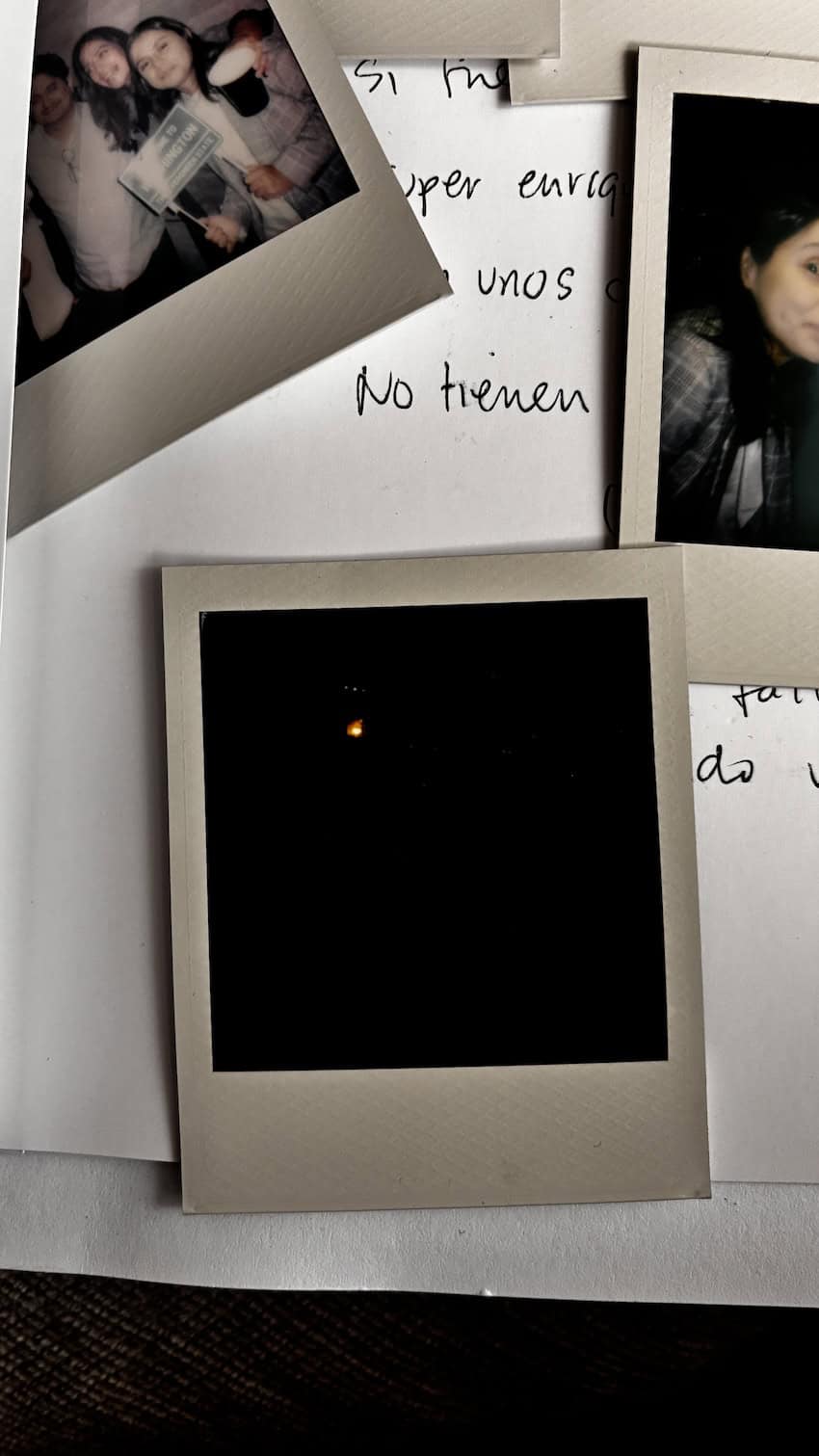
And I should acknowledge that my route out is one of privilege and ease — a stamped visa and the support of the enormous community Embamex represents.
There are millions who cannot tell the same story, and out of respect for them I intend to work relentlessly toward a society that is more empathetic and more collaborative than the one I found.
That, in the end, is what the institute is for, and I’ll have more to say about it here.
These past weeks, everything I love has been very loud: my country, my culture, my family, my food, my friends, my street, my doormen, the morning walks with my dog that turn into an hour of gossip with the neighborhood.
Even the truck that rolls past shouting “se cooooompran colchooooones, tambores, refrigeradores” — the one I have hated this entire time but will apparently miss.
Leaving all of it here, on this side of the border, I find myself asking the question I want to ask those of you who were brave enough to go looking for something better: What did it take to feel at home again?
I always get a small thrill from seeing your names in the comments. Tell me there.
María Meléndez is a writer and art historian. She works at the Mexican Cultural Institute of the Embassy of Mexico in Washington, D.C. Her columns for Mexico News Daily are written in a personal capacity and do not represent the Embassy.
