
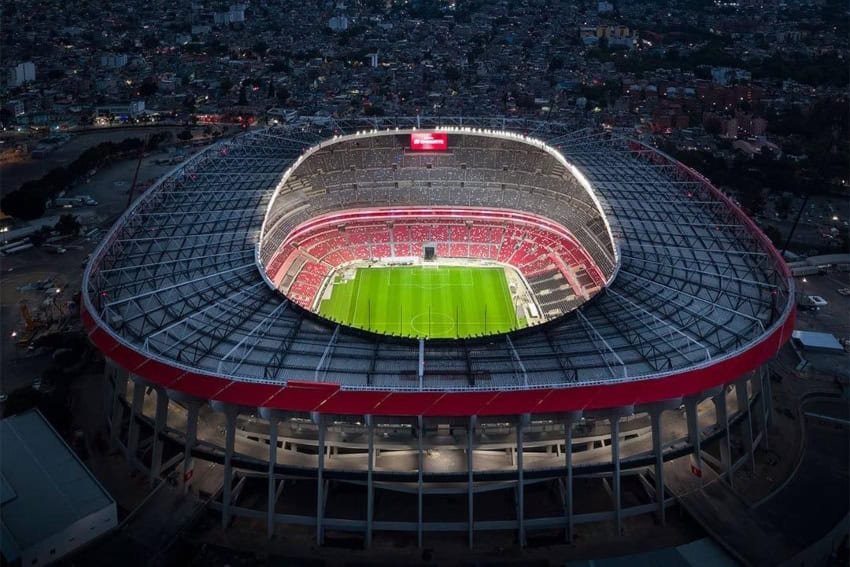
We are less than two weeks away from the start of the 2026 FIFA World Cup, which will be played across three nations: Canada, the U.S. and Mexico. While the tournament is being jointly staged, this is, for better or worse, the U.S.’s event. They will stage 75% of the games and every match from the quarter-finals onwards. Mexico will at least have the honour of opening the tournament when the home team steps into Estadio Azteca to play South Africa on June 11.
Back in 2017, 49 stadiums put forward bids to be considered as a World Cup host, and there was considerable competition between venues in Canada and the U.S. Mexico, however, had already settled on its three stadiums. Mexico City would be an obvious choice, and there were two stadiums in the capital big enough to stage games. The Estadio Olímpico Universitario, though, was never a serious contender, despite a special place in sports history as the venue for the 1968 Olympics. It’s still decorated with the iconic art of Diego Rivera and the 1968 Olympic design team, and anybody returning to the stadium for the first time since those Olympics would struggle to see anything that had changed. Today, the Estadio Olímpico Universitario looks more like a museum than a modern sports arena, and the capital’s nomination was always going to be the Azteca.
Estadio Azteca and World Cup history
Estadio Azteca sits on the edge of the Coyoacán district of Mexico City and hardly needs an introduction. It is the largest stadium in Latin America and the eighth-largest association football stadium in the world. More than size, Estadio Azteca is a place of soccer legends. It was here that Maradona destroyed England in the 1986 World Cup, first with his “Hand of God” goal, then with his dazzling run that took him past four players, events still celebrated by plaques and memorabilia around the stadium.
It was here, in the Azteca, that Pelé played in his second World Cup final for the magnificent Brazil team of 1970, and here where Italy and Germany fought out their 4-3 extra-time epic described as “the match of the century.” Nor are the stadium’s memories limited to football. There have been musical superstars from Michael Jackson to Bad Bunny and, outshining them all, a visit by Pope John Paul II.
Renovation and naming dramas
As Mexican soccer fans will be aware, Estadio Azteca was closed in May 2024 for a major upgrade. On the outside, little has changed, and indeed, many of the interior improvements are not obvious. It is a credit to the original architects that a stadium that was designed in the early 1960s still looks so good. The World Cup renovations, which have already cost US $75 million, include a new pitch, a capacity increase to up to 90,000 seats, new LED screens and sound systems and an upgrade of the security cameras. When Mexico steps out to play South Africa on the tournament’s opening afternoon, Estadio Azteca will become the first stadium in the world to have staged games in three different men’s World Cup tournaments.
Work for the World Cup was essentially complete by late March, with the formal handover to FIFA taking place in May. Along with the handover came a renaming for the duration of the tournament: Mexico City Stadium, instead of Estadio Banorte, the corporate sponsorship deal given during renovations. However, since FIFA forbids such corporate sponsorships during the World Cup, what fans will still call Estadio Azteca is now Mexico City Stadium until the event is completed on July 19.
The renovation work, meanwhile, was both slow and controversial. Around 200,000 people live in the vicinity of the stadium, including many crowded into the historically working-class neighbourhood of Santa Úrsula Coapa. There have been grumbling and protests that the renovations have caused local prices to rise and will interfere with the area’s often limited water supply.

Estadio Akron is now Guadalajara Stadium for the World Cup
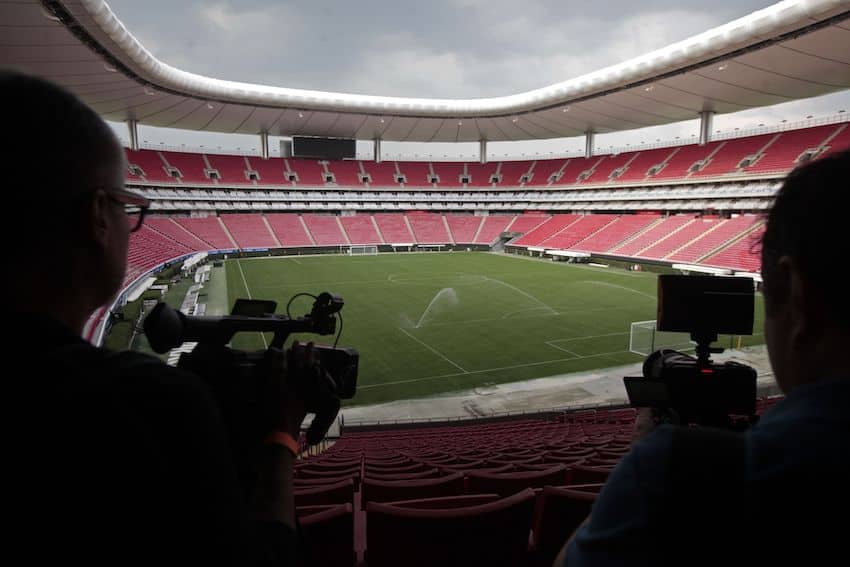
Guadalajara, noted for tequila, mariachi and a rich soccer culture, was always going to be a venue, just as the modern Estadio Akron was always going to be preferred to the historic Estadio Jalisco. Indeed, Estadio Jalisco has aged so badly that it was not even considered suitable as a training base for any national teams. The Estadio Akron is the result of the desire of CD Guadalajara (better known as Chivas to its fans) for its own stadium. The design concept was a brave gamble, a stadium that would resemble a volcano, with the white roof that seems to float on top of the main structure representing the clouds of smoke. Work started in February 2004, but financial problems and other issues delayed the completion.
It was July 2010 before the stadium opened, with Guadalajara beating Manchester United in an exhibition game. Estadio Akron might have opened late and run over budget, but the volcano theme has worked, and the result is one of the most striking stadiums in the world. It has been home to some big nights since then, including the 2010 Finals of the Copa Libertadores and the 2011 Pan American Games opening and closing ceremonies. While Guadalajara only has four World Cup matches, it does have a couple of big draws. On June 18, Mexico will play South Korea, and eight days later, Uruguay meets Spain in what should be one of the most competitive of the group stage games.
However, as with Estadio Azteca, Estadio Akron will be renamed Guadalajara Stadium during the World Cup to comply with FIFA’s ban on corporate sponsorships.
How Monterrey became the third venue
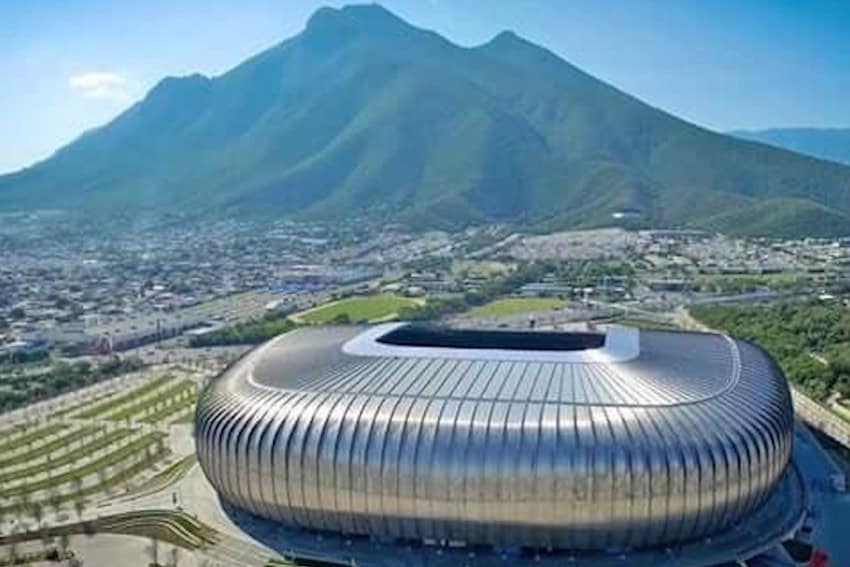
The decision on a third venue must have been closer, with Puebla in with a chance. The city is the fourth most populous metro area in Mexico. It is an underestimated tourist center with a World Heritage historical old town and is noted for its low crime rate. Estadio Cuauhtemoc in Puebla was big enough for World Cup games and had undergone a major renovation in 2014-2015. However, that work had not been made with a World Cup tournament in mind, and the feeling was that Estadio BBVA in Monterrey was the superior stadium.
Monterrey Stadium, as it will be known during the World Cup, is the fourth-largest stadium in Mexico, holding 51,000 spectators. At US $200 million, it is also the most expensive sports arena in the country, but the city got value for its money. Walking through to your seat, there is a bit of a “TARDIS effect,” in that it feels bigger on the inside. However, take in the aerial view from a drone, and you see what an impressive building this is. The stadium is also noted for its green setting, being surrounded by grass and forested areas, and with the peak of the Cerro de la Silla towering above the complex. This “green image” is not just for show; the design has won praise for its efficient water management and eco-friendly energy usage.
Soccer history in Monterrey
Many local fans still remember the opening game when two-time European champions Benfica played local football club Monterrey for the eighth edition of the Eusébio Cup. The home side won 3-0, and since then, there has been plenty to cheer about. The club has traditionally done well in regional competitions, and wins in the CONCACAF Championship took them to three World Club Championships, where they twice finished an honorable third, as well as reaching the knockout stage of the expanded 2025 tournament.
There was some disappointment for local soccer fans when the World Cup fixtures were announced, particularly that none of Mexico’s games will be played in the city. Indeed, the stadium only gets four games, and the group matches involving Tunisia, Japan, South Africa and Sweden are not going to set the world alight. Similarly, Monterrey’s participation ends on June 29 with a round of 32 match.
Bob Pateman lived in Mexico for six years. He is a librarian and teacher with a Master’s Degree in History.
