
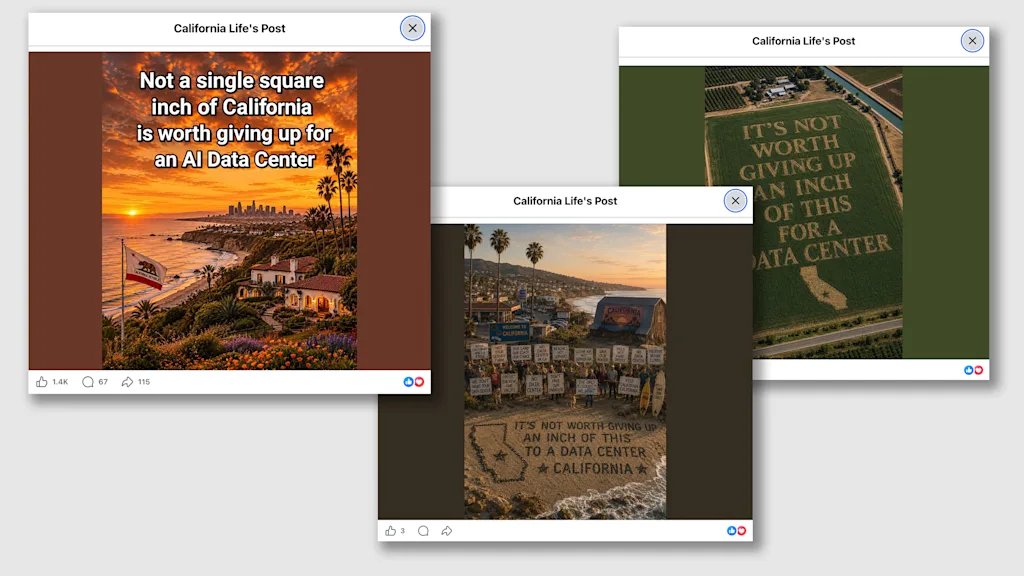
Like much of Facebook nowadays, the “California Life” Facebook page is full of AI slop. There are generated images of highway patrol officers holding up a groundhog and lengthy road signs detailing California quirks.
And in between those are posts that admonish AI data centers.
“It’s not worth giving up an inch of this for a data center,” reads one image, in which the words look carved into a field of crops.
“Not a single square inch of California is worth giving up for an AI Data Center,” reads another posted the very next day, the text floating above a generated image of the California coast, the state flag in the foreground.
A third post shows that same text scrawled in the California sand, a crowd of protesters holding up signs like “Clean Air Not Sever Air.”
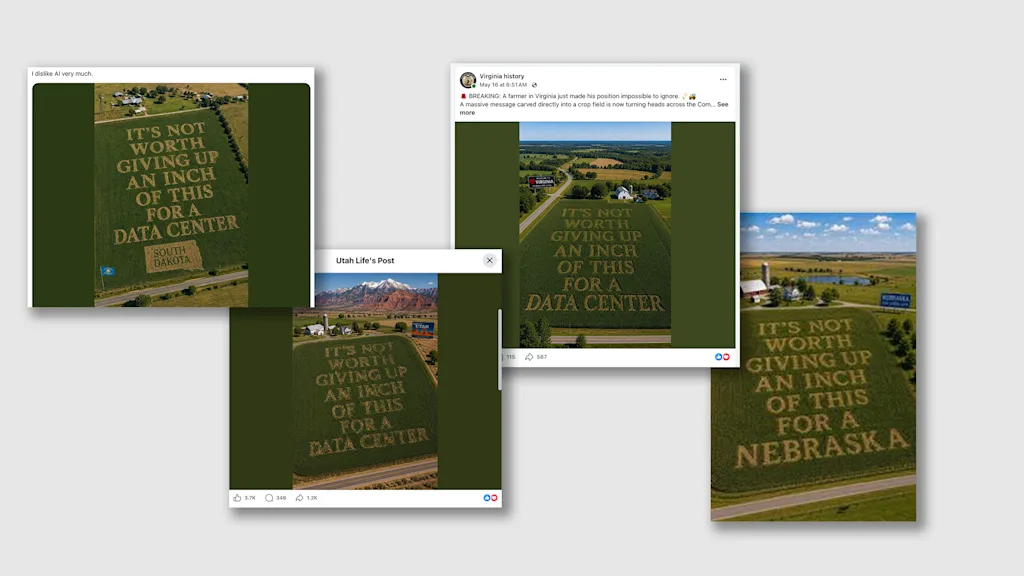
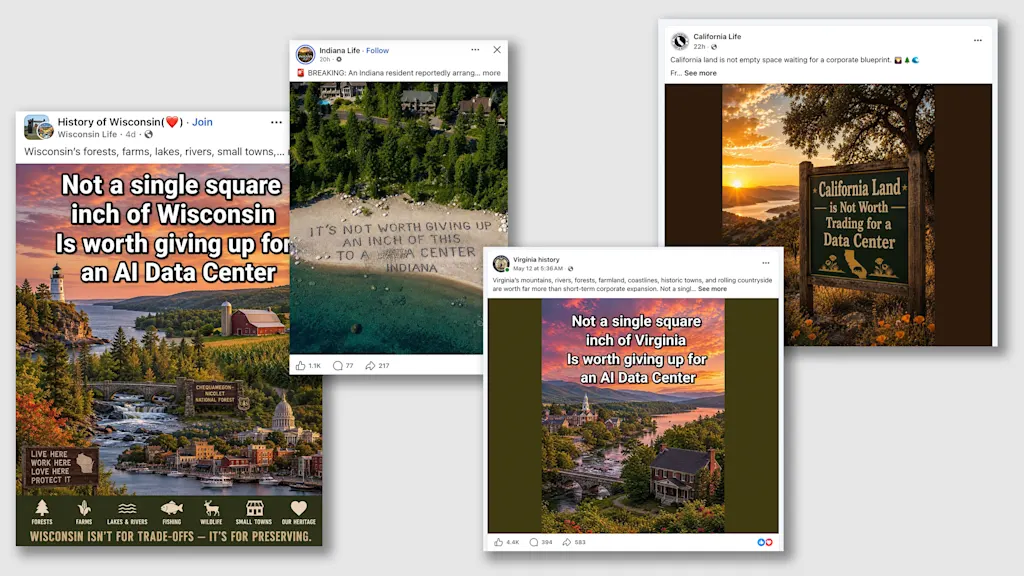
It’s not just California slop pages speaking out against data centers. Similar posts—many with identical wording, and similar imagery—appear on pages for multiple other states.
The format of the phrase carved into a crop field has also been posted on pages for South Dakota and Utah (and likely more).
Some of the comments on these posts are quick to call out the irony of using AI to make anti-AI data center content.
At the same time, some don’t see the concern.
”So what?” one comment reads. “If he can do that now, doesn’t that prove the point that MORE Ai centers are NOT needed?!” (How likely that these comments are AI is unclear, though real humans do seem to frequently interact with Facebook’s flood of AI images.)
The posts are even drawing attention outside of Facebook.
“‘The masters tools cannot dismantle the master’s house’ applies to AI slop that is anti-AI or anti-data center. Just draw it in mspaint it’s going to be better,” one user wrote on Buesky, referencing Audre Lorde’s 1979 essay about how systemic change can’t be achieved through the same patriarchal, racist frameworks that led to the oppression in the first place.
Over on X, one user this week got thousands of likes after pointing out that “bot farms have figured out that anti-data center posts on FB are good for engagement.”
Factory farming
The posts likely aren’t meant to actually be a tool against the encroaching takeover of AI and its data centers. Content farmers, which have long dominated certain corners of Facebook, frequently post about anything that will get engagement.
But the fact that engagement seekers have zeroed in on the data center debate is notable. Even if the intent isn’t genuine, the activity suggests that there are many likes and comments to generate around the topic.
And that’s because the anti-data center sentiment is real, and growing.
From Alabama to Wisconsin to Utah, residents are pushing back against the data center boom, protesting specific projects proposed in their areas.
In some instances, that backlash is working: Eight municipalities in Georgia have passed moratoriums on data center development. Developers have withdrawn applications after local opposition.
Between late March through June of 2025 alone, an estimated $98 billion in data center projects were blocked or delayed, according to Data Center Watch.
Data centers: Less popular than nuclear power?
Last year, Change.org saw a surge of petitions against data center projects: There were at least 113 petitions totaling around 50,000 signatures in 2025, compared to just one such petition regarding a data center in 2024, Fast Company previously reported.
And that opposition isn’t slowing down. A recent Gallup poll from May 13 found that seven in 10 Americans oppose constructing AI data centers in their areas; 48% of Americans are “strongly opposed.”
With 71% of Americans opposing data centers, that opposition is larger than what Gallup saw against nuclear energy plants, which saw a peak opposition of 63% since it began asking about nuclear plants in 2001.
Residents against data centers worry about their resource use, for both water and energy, as well as noise, water, and air pollution. And they worry about economic consequences like higher utility bills.
Those in favor of data centers (27% of Americans) mostly cite economic benefits like job creation—though reports have found these projects lead to far fewer full-time positions than promised (and for different roles than the skilled IT jobs expected).
This sentiment, then, is clearly bleeding into the processes that create this AI slop. Data center opposition is online in the first place, which makes it fodder for AI, and it’s prevalent enough online that these AI pages will post about it over and over again. AI is already mirroring our own dislike of it right back to us.
