
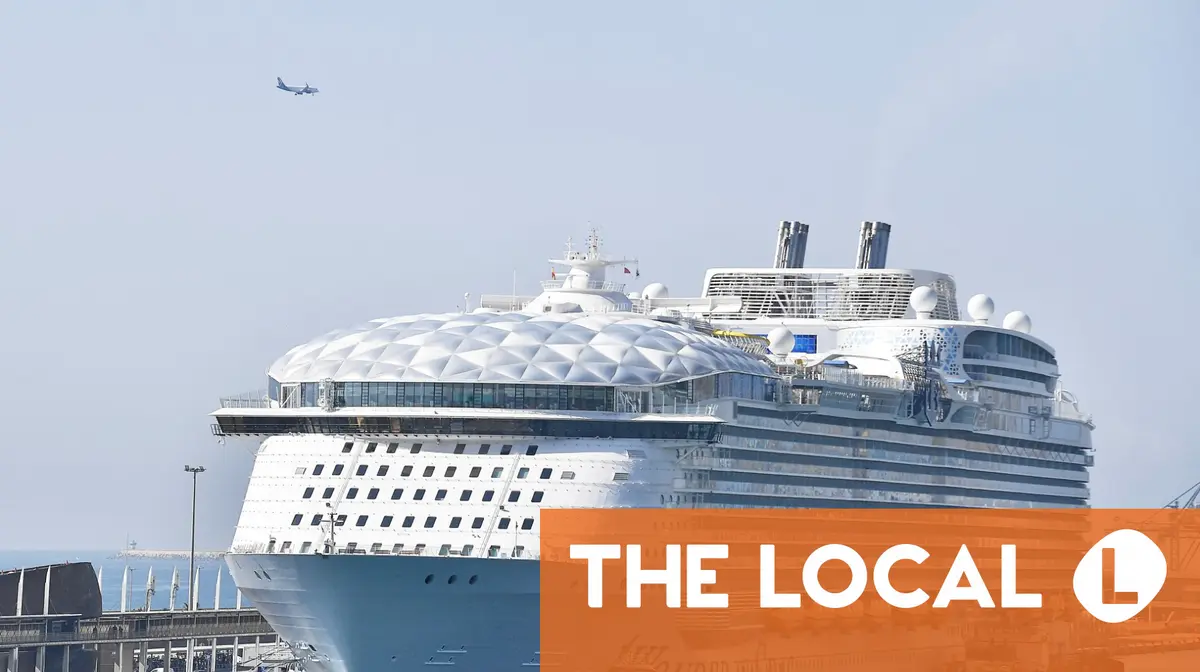
Cruise ship passengers that stay less than 12 hours in Barcelona or elsewhere in Catalonia will soon be forced to pay up to €30 in tourist taxes for their short visit, the Catalan Parliament has decided.
In order to help curb cruise tourism in Catalonia, three of the region’s political parties – the Socialists’ (PSC), Republican Left of Catalonia (ERC) and Comuns – have agreed to propose an amendment in parliament to increase the tourist tax for certain cruise ship passengers.
The idea is to increase the tourist tax to €30 for passengers that spend less than 12 hours at a port. This comprises a €24 municipal surcharge and a €6 regional tax fee.
According to head of Catalan Tourism, Jordi Valls, the measure aims to “address over-tourism” in the Catalan capital in particular.
Many cruise passengers who come to the region on short-stay cruises, which just dock for less than 12 hours, spend very little money ashore meaning very little goes to the Catalonia or its people.
They’re mostly sleeping and eating onboard and many of the excursions are organised by the local cruise company rather than local ones.
Cruise ship passengers “spend very little time” ashore, about five hours, and that their spending is “quite low,” while they “consume the city’s public services intensively” Valls explained.
READ ALSO: Barcelona to redesign La Rambla terraces in tourism pivot
Currently, the three cities in Catalonia that receive cruise ships are Barcelona, Tarragona and Palamós, but only Barcelona is expected to increase the tourist tax as it is most affected by overtourism.
Barcelona City Council already charges the current maximum of €5 and has plans to raise it in 2029 to €8.
“The commitment of the mayor of Barcelona is clear and firm, and we positively value the proposal put forward by these three groups,” Valls stated.
The intention is for this increase to generate over €20 million in additional revenue for Barcelona annually.
Republican spokesperson in the Catalan Parliament, Ester Capella suggested that part of the revenue could be used to provide a 50 percent discount for students on school lunches.
READ ALSO: Tourist magnet Barcelona to cut cruise ship capacity
The city’s mayor, Jaume Collboni, defended this idea back in May as a way to help “reduce the number of cruise ships calling into the city to zero”.
According to Valls, this proposal complements the progressive reduction of tourist apartments, which Collboni announced will be banned from 2028 onwards, as another way to reduce tourism.
“The city council owes its allegiance to the residents. Tourism is important, but the residents are what matters most,” Valls concluded.
In July of 2025, the city of Barcelona and the port authority signed an agreement to reduce the number of cruise ship terminals from seven to five by 2030, cutting traveller capacity from 37,000 to 31,000.
According to figures from Barcelona Tourism, the Port of Barcelona also reached record figures last year. It recorded 895 cruise ship arrivals, 13.1 percent more than the previous year. Total cruise passenger traffic reached 3,999,258, while ferries transported 1,788,258 passengers.
Visitors who stay overnight in Barcelona pay a total tourist tax made up of two parts: a regional tax (IEET) across Catalonia and a city-specific surcharge.
As of April 2026, the maximum tourist tax can cost up to between €10 and €15 per person, per night, depending on the accommodation type.
