
At the age of 30, Bettina Goering underwent sterilization to prevent herself from ever having children. She wanted to avoid passing on her great-uncle’s genes to a new generation and creating “another monster.” She was the great-niece of Hermann Goering, Hitler’s right-hand man and creator of the Gestapo. He was one of the driving forces behind the extermination camps and the Holocaust.
The truth, however, is that her kinship meant she carried only around 12% of Hermann’s DNA, “a percentage so low it could be considered insignificant.” This anecdote is recounted by the geneticist Carles Lalueza-Fox in his latest book, Identity: What DNA Can Tell Us About Ourselves (2025). In it, he reflects on who we are and how DNA – which makes us unique – can hold surprises that shake our very foundations of identity.
This is what happened to the Serbs, Lalueza explains, when they discovered that they shared a genetic origin with their Croatian enemies. And, he adds, many people who identify as African Americans also experience this shock upon discovering that a significant number of their ancestors were white, meaning that their DNA has been passed down to them due to the systematic rape of enslaved women of African descent.
The convoluted branches of genetics in the United States, as well as the obligation for citizens to self-define their race, have reached paradoxical extremes. For example, former President Barack Obama identifies as Black, but his DNA would also qualify him as “Black and white” or “mixed race,” Lalueza writes.
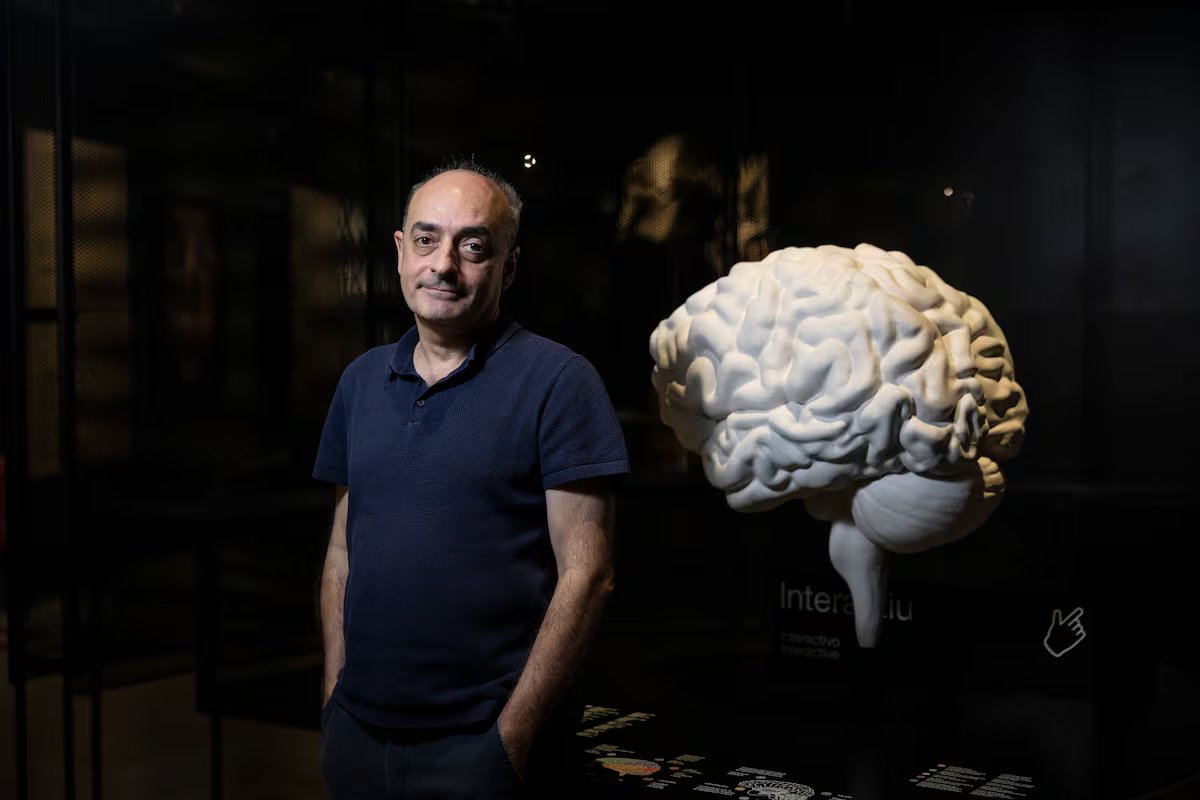
“If we carefully analyze each and every definition of the concept of identity, we quickly realize that we’re treading on intellectually murky ground,” writes Lalueza, a 61-year-old scientist from Barcelona who is one of the world’s leading experts on human genetics and ancient DNA.
His research reads like an adventure novel that begins with the Neanderthals, the human species most similar to our own that disappeared 40,000 years ago. He then explores little-known moments in the history of our species (Homo sapiens), while making astonishing stops along the way. For instance, he touches on the diagnosis of a bacterial disease thanks to an analysis of dried blood that had been preserved in the newspaper that the French revolutionary Jean-Paul Marat was reading before being stabbed in his bathtub in 1793. He also describes the fake blood of King Louis XVI (who perished on the guillotine), as well as the discovery of an unknown epidemic thanks to DNA extracted from the bodies of two men who died in the siege of Barcelona back in 1652. Lalueza’s doctoral thesis — the first of its kind in Spain — focused on the genetics of extinct human populations in Tierra del Fuego.
In an interview with EL PAÍS, the director of the Barcelona Museum of Natural Sciences and researcher at the Spanish National Research Council (CSIC) discusses his latest findings, including another shock to our understanding of identity: people who bear a striking physical resemblance to us, without being related. These so-called “doppelgängers” — who are even mistaken for us on the street — not only share our facial features, but also similar behavior and personality traits. The reason for this phenomenon, of course, lies in genetics.
Question. You say that personality is like time: we know how to define it… until someone asks us what it is.
Answer. I have a teenage daughter. And I see how, right now, she’s trying to define who she is outside of her family. From the individual to the tribe or the state — or even the continent — genetics makes us question our identity. But sometimes, we ask genetics for things that it can’t explain.
Q. Can genetics redefine our identity?
A. It’s quite shocking to discover ancestors who met a tragic end. It happens with the Chuetas [on the Spanish island] of Mallorca; these people discovered that they’re descended from 17th-century Jews and they converted to Judaism. The probability of inheriting something from an ancestor of ours from 500 years ago is low. So, what genetics can tell us is probably not what we expect.
Q. You’ve studied the genetics of doppelgängers.
A. We did a genomic study with doppelgängers, these look-alikes that appear on social media. Some of them are spectacularly similar. The question was: why do they look alike? And we found that they were similar when it came to a whole group of genes that could be involved in facial structure. But interestingly, genes associated with behavior, diet and habits, such as smoking or [being a non-smoker], also emerged. In other words, it seems that the resemblance to another person goes beyond the basic identity we perceive when we look in the mirror.
It appears that humans have been selected to be easily distinguishable. Other species have a much less variable structure, due to social factors. It’s clear that the facial differentiation of each person — of the individual — has been an evolutionary driving force.
Q. Do we all have at least one doppelgänger out there living a different life?
A. You could calculate it statistically by taking the 200 most important genes for facial structure and calculating the probability based on the frequencies of these alleles [alternative forms of the same gene] in the world population of about eight billion people. But yes, we almost certainly have more than one doppelgänger somewhere on the planet.
Q. Nowadays, with social media, it’s much easier to find that doppelgänger, contact them and learn about their life.
A. Yes. And it’s not a trivial matter, because we’re moving toward a society where cameras are pointed at you on the street. A few days ago, someone was killed in Barcelona and the [security] cameras recorded the murderer. So, you could run into problems if you’re mistaken for someone else. By the way, do you know how these facial recognition software programs are trained? With identical twins.
Q. In your latest book, you debunk another widely-accepted idea: that identical twins are exact copies of each other.
A. Yes, a very recent study has shown [that this is not the case]. When the complete genomes of various pairs of twins were sequenced, it was found that most differed by only a few mutations that occurred after the two embryos separated during pregnancy. The average is around five differences, but some pairs have almost 20. Two random humans differ by about 30 million mutations… but if we’re from the same geographic area, that average can be closer to those 20 differences.
Q. Will we soon be able to identify everyone from genetic databases, even those not listed in them?
A. I took a genetic test and I’m 1782551504 listed in the databases of a company that does these tests. They can identify relatives up to the 4th, 5th, or 6th degree, far beyond any family registry. If I weren’t in that database and I committed a crime, they would identify 400 clients who are 1% closer to the murderer [than the average person]. Using reverse genealogy, they would find me.
Q. Do we have any privacy left when it comes to DNA?
A. No. It’s an ethical and legal issue, because the people who consented to getting an ancestry analysis never agreed to the FBI comparing them to a murderer. But, well, it’s already been done.
Q. Does it make any sense to take these tests?
A. Most of the interpretations they make are biased or questionable. They don’t explain how they do it. I’m tired of people writing to me asking me to explain [the process]. But this is, theoretically, a business; if you don’t understand it, they’re doing it wrong. Some of these companies will tell you, “you’re 10% Viking,” for example. It makes no sense. What they do is use ancient genomes [and your genetic markers] to model the ancestry of your genome.
By the way, it’s been proven that people ultimately choose the things they like. In other words, if something reinforces what you already have in mind, you take it; if not, you discard it.
Q. You say that genetics makes all humans members of the same family. However, increasingly, we hear messages like “national priority,” or we hear proposals about nationalist separatism. And there’s even a trend toward radical individualism
A. When we formulate our identity, we not only ask ourselves who we are, but also what others think, how they see us. Many groups, political parties and football teams create a sense of collective identity with which you identify and automatically belong. In reality, what they try to do is make this group as large as possible. This assimilation of genetics is dangerous, as in the case of the Balkans. It goes further than what genetics can back up. In the United States – where race is still a very important issue – people have to define their own race for the census, or when they apply for a scholarship. They give you a very strange menu: you can choose if you’re Native American or Hawaiian, for example, or if you’re Latino. Here, in Spain, we don’t have this, in principle.
Q. Do you think it could happen?
A. We’re in a moment of transformation, with burgeoning individualism. At the same time, we’re moving towards deglobalization. If anyone ever thought we would become one great, united tribe to face the challenges of the future, well, we’re actually heading in the opposite direction. I don’t see genetics having a role to play in supporting this process. But identity – in one way or another – is going to be a very important player in the 21st century. And, from the moment it becomes so, genetics will be there… and it will emerge by either misguidedly supporting [tribalism], or, if we want to do it properly, scientifically substantiating [multiple senses] of identity.
Q. You write that, if genetic analyses could be done on all the royals of Europe from the last few centuries, they would be like the native inhabitants of a small, imaginary country. What do you mean by that?
A. Most of the European royal houses come from Queen Victoria of England. She was a descendant of William the Conqueror, but her ancestors intermarried so much that her family tree showed 12 different paths leading from one to another. This implies that we must imagine kings [and queens] as [being residents of] an island… a population where only kings and nobles live for hundreds of years and intermarry. Obviously, they’re not representative of any of the countries they reign over.
Q. You mention that a Spanish king, Charles II (1661-1700), holds the world record for consanguinity (the condition of being related to another person by blood) at 25%, and that this caused his lineage to die out. Members of the general population average around 1%. Juan Carlos I [the former Spanish reigning monarch and father of the current one] has 5%.
A. Charles II is the most extreme and unusual case. It’s only comparable to the royal houses of ancient Egypt, where the pharaoh or king was so deified that he could not intermarry with anyone outside his family. Juan Carlos I has that coefficient because his parents were cousins. But [the current Spanish King] Felipe VI, for example, would already have a coefficient similar to that of a normal person, since the effects of consanguinity are quickly eliminated when people from outside the family enter the lineage. It’s the same thing Prince William did when he married Kate Middleton, or his father when he married Diana Spencer.
Q. You’ve also studied Neanderthal genetics extensively. Why do you think they went extinct?
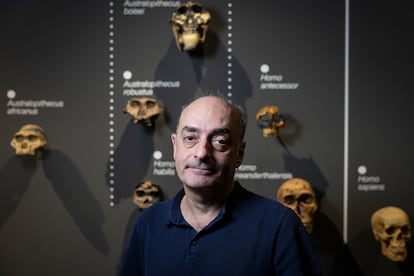
A. When analyzing Neanderthals and modern humans from the time of contact, around 40,000 years ago, [we learn that] Neanderthals never had a recent modern human ancestor. In contrast, Homo sapiens have a Neanderthal ancestor; in fact, half of them have a Neanderthal great-grandparent or great-great-grandparent. This pattern points to a question of identity: perhaps Homo sapiens had a much more flexible sense of identity, while Neanderthals had a much more restricted perception of themselves.
Q. In the future, will we edit our children’s genomes to enhance them physically and mentally?
A. Yes, it will happen one way or another. There are already people trying to use gene editing to change eye color, to make them blue. There are [concepts] that were monstrous in past societies, but are now normal, such as artificial insemination or, in some countries, surrogacy. We cannot rule out the possibility that what we now consider wrong won’t change in the future.
Q. Your book includes this reflection: “Most of us will be forgotten in two or three generations. Even within our families. Our identity, the one that truly makes us different, is in our hands – not in our cells.”
A. Defining ourselves by what comes from past generations is easy and convenient. What makes the difference in today’s society is how you act, how you help people. It’s much more complex, but far more democratic than simply inheriting genes. We must define ourselves by what we do, rather than by who we are.
Sign up for our weekly newsletter to get more English-language news coverage from EL PAÍS USA Edition
