
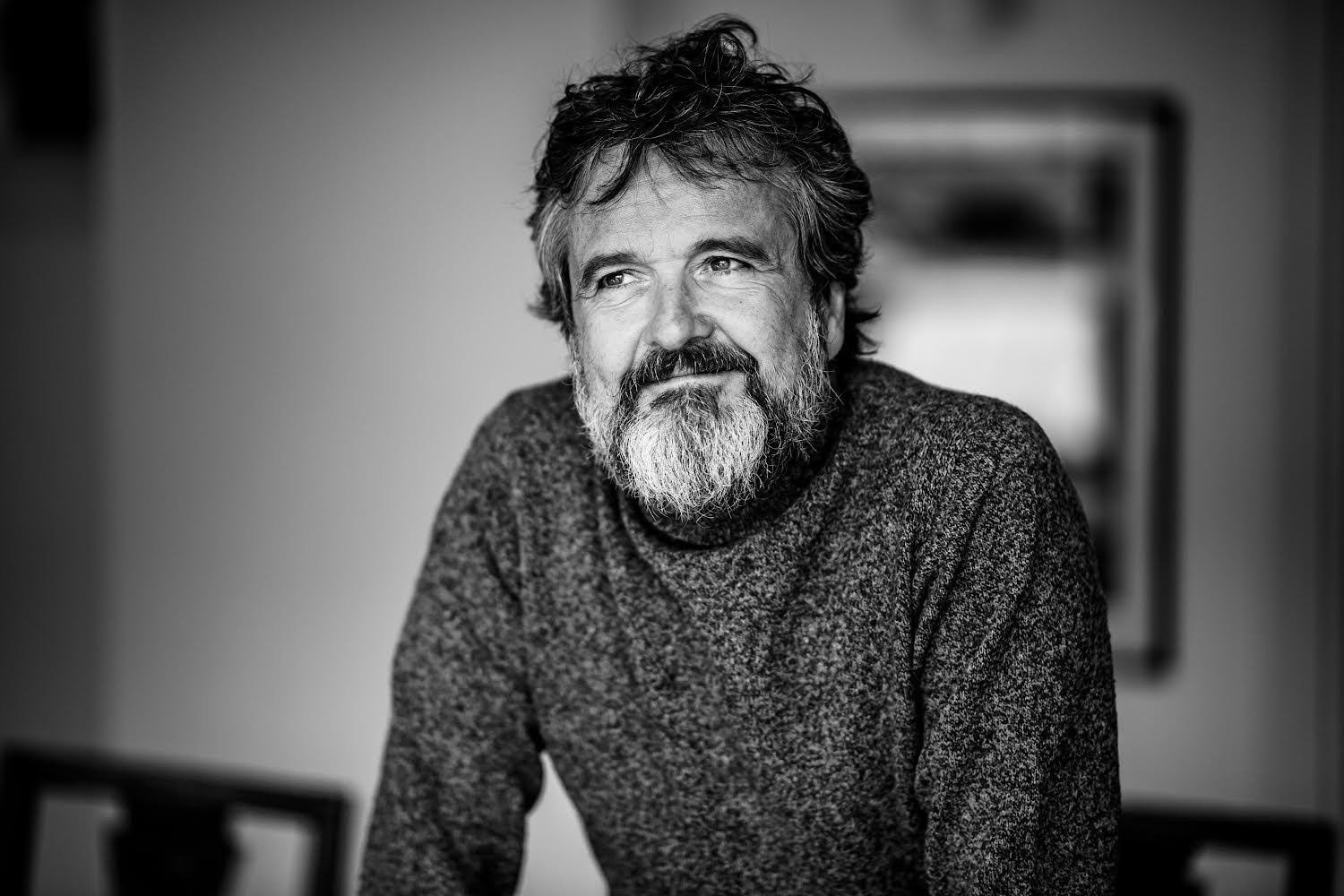
“A shrinking number of players now decide which stories are told, how and by whom”
– The Italian producer reflects on authorship, market pressures and why European cinema risks losing its biodiversity
In an increasingly consolidated audiovisual landscape, Tempesta’s Carlo Cresto-Dina argues for a redefinition of the independent producer not as a facilitator, but as a central creative force shaping stories and their meaning.
Cineuropa: Recently, Italian publisher Einaudi asked you to write È un’impresa fare un film. How did you define the role of the producer today, beyond financial and logistical aspects?
Carlo Cresto-Dina: In the book, I begin with a definition that I hope will become standard in discussions about our role: the producer is “the person who manages the collective creative process that generates a film or a TV series”.
Because this process is both creative (searching for meaning, generating something new) and collective (involving multiple sensibilities), it is inevitably complex. Managing it means co-creating a narrative in images. It’s not just about “finding money” or “organising production”, nor about protecting an artist’s vision or solving problems. The producer is a co-creator, but never alone: not a leader, but an activator of co-operation
In the book, you introduce the notion of the “original producer”.
We often talk about independent producers, but that definition varies widely across countries and mostly concerns shares and ownership. The concept of the “original producer” brings into focus a central function of the profession: originating projects and helping them grow, while giving this generative role decisive importance.
In a project’s management and creative evolution, financial input cannot be the sole determining factor; the originating intention behind the story must be respected and properly taken into account. This notion should also be explored within a legal framework, as it could lead to recognising the inalienability of the intellectual property generated by the original producer. It would consequently become unthinkable for an aggressive financier to appropriate the intellectual value created by that original producer.
Looking at today’s landscape, where do you see the main challenges facing independent producers in Europe?
What is happening is clear: in recent years, the ecosystem of audiovisual storytelling has seen the rise of powerful “predators” wielding disproportionate control. A shrinking number of players now decide which stories are told, how, and by whom.
One might say this has always been the case: those with money have always shaped the industry. True. But today, those controlling investment bypass producers entirely, dealing directly with talent, calling directors, actors and writers, and cutting producers out of the conversation, along with their capacity for innovation.
At first, the surge in investment and the brisk, offhand approach of executives seemed to bring freshness and new ideas. Today, mass audiovisual production has entered a mature phase, intent on churning out hours upon hours of content at minimal cost and effort. The molasses dripping from our home screens is precisely what today’s aggressive investment funds demand: the very opposite of biodiversity.
What can be done?
In an ecosystem patrolled by large predators, the original producer survives only by staying ahead, finding new ideas that are still too small or too unfamiliar to attract major investors.
This function must be protected. Public investment should explicitly support biodiversity, helping those who must scout for new ideas in order to survive. We should have the courage to finance not only projects, but also the most innovative companies, creating a form of patient capital that respects their organic growth.
If we leave these choices to large industry players, we will end up with plantations of bananas or hazelnuts, all identical. But we will never have forests. And fairy tales are born in forests, not in plantations.
How has the balance between creative risk and market sustainability evolved?
What has changed most is the audience’s relationship with cinema-going. Not long ago, you would ask your partner or friends, “Shall we go to the cinema tonight?”, and the answer would be, “Yes, what’s on?” Today, the logic is reversed: you start with a specific title and then ask, “Shall we go and see Sentimental Value, or Sirat, or Sinners?”
Cinema has become an opportunistic form of cultural consumption — or rather, an intentional one. As producers, we have not reflected enough on this shift, or on how to conceive of films as opportunities and engage with our audience’s intentions.
European co-productions are often seen as both an opportunity and a constraint. How do you navigate this tension?
Frankly, I do not understand the frustration with co-production constraints. We need to seek funding across different countries, often public, so it is legitimate for those responsible to ensure a return for their territories.
In my experience, the most intelligent filmmakers turn these constraints into opportunities, collaborating across borders, sometimes shooting abroad, expanding their perspective and reaching audiences beyond their own “village”. As Ludwig Mies van der Rohe is said to have put it, “Without constraints, I don’t know how to design.”
You recently served on the jury of Dot On The Map — what stood out?
The most interesting aspect was encountering projects from countries that rarely access European markets and workshops, such as Lebanon, Montenegro, Tunisia, Egypt and Cyprus.
Broadly speaking, I saw two categories: projects designed to fit a certain Central European festival model, sometimes almost as “exotic objects”, and those seeking new, different audiences. The latter are far more interesting to me.
How relevant are platforms like this in shaping new generations of producers and projects?
The proliferation of this development sub-industry, built around workshops, script clinics and pitching programmes, is, in my view, harming the originality and variety of the stories we produce. Any young filmmaker trying to make a first film is pushed into one of these “treatments”, where experts dispense abstract guidance and prescribe what a film should be.
Even more worrying is that festivals themselves now run development labs and later select the projects they have shaped. And no one seems to notice the blatant conflict of interest, the creative short circuit: festivals train young talents to create what they consider interesting. European auteur cinema is increasingly generated not only for festivals, but by festivals.
What is the alternative?
We need to strengthen the relationship between the original producer and their authors. That is where diversity of storytelling is born.
If we understand this relationship properly, the producer is no longer someone who extracts value, but someone who nurtures and amplifies talent. The solution lies in collaboration aimed at audiences not at pleasing festival programmers.
The European Producers Club has been advocating for greater recognition of producers. Is the industry still underestimating their creative role?
The EPC campaign, launched in Venice last year, asks festivals to grant producers invitations, hospitality, visibility, the same treatment as directors and cast. This is not about ego or red carpets, but about recognising producers as part of the creative process. It offers a more accurate representation of our work, which is also crucial for younger generations entering the field. It is encouraging that major festivals are responding positively. For instance, by inviting producers onto juries. It signals that perceptions are beginning to change, and that can only benefit cinema as a whole.
In collaboration with

