
Here is one fact about this country of which few Canadians are aware: Canada is an economic superpower for at least one major global industry.
That industry is mining.
About half of the world’s mining companies are headquartered in Canada, and many of those companies operate in countries where local environmental controls and social constraints are weak.
From Papua New Guinea to Namibia to Guatemala, Canadian-based companies have been virtually free to pollute the air, soil and water with impunity.
They have also been free to economically benefit from grave human rights abuses, which sometimes rise to the level of murder.
In response to concerns not only about mining companies’ operations around the world but about Canadian oil and gas and garment companies’ operations, Justin Trudeau’s Liberal government set up the office of the Canadian Ombudsperson for Responsible Enterprise (CORE) in 2019.
No power to compel witnesses or impose significant sanctions
CORE’s mandate was limited.
It did not have the power to compel companies to share information with it transparently, and it could not compel corporate employees or executives to testify.
Nor did it have the capacity to apply any sanctions, monetary or otherwise.
All CORE could do was advise Canadian companies as to best practices, based on codes of conduct elaborated by the UN and the Organisation for Economic Co-operation and Development (OECD).
The one consequential power in CORE’s mandate was to provide a “dispute resolution and compliance mechanism” to consider complaints and conduct reviews of potential human rights abuses.
Following such reviews, CORE could advise the responsible federal minister of measures the government could take.
Those actions might include undefined “trade measures” and cutting off offending companies from “funding and services provided by the Canadian government”.
The entire CORE initiative was tiny compared to the global scope of the challenge and the huge resources of many of the corporations with which CORE has had to deal.
The Ombudsperson’s original operating budget was a bit more than $2 million, which mostly went to pay a small staff of ten people.
That initial funding was subsequently increased to $4.3 million, still a paltry amount given the vast nature of CORE’s responsibilities.
CORE was truly a microscopic David facing not just one Goliath, but multiple gargantuan Goliaths.
One Canadian company alone, Barrick Gold, reported global profits of almost $17 billion in 2025. Compared to that, CORE’s funding in single digit millions is mere spare change.
In addition, from the outset, CORE’s powers, as the government defined them, were a double-edged sword.
The Order-in-Council creating CORE gave Canadian mining and other companies a club with which to beat local communities and non-governmental organizations.
Multi-billion-dollar corporations were afforded the same right to launch complaints against local activists and their Canadian supporters as those groups were to seek mediation in the case of corporate abuse.
That provision put a deep chill on NGOs and local victims of corporate bad behaviour.
In 2019, Amnesty International summed up the reaction of many who had hoped for much more from the creation of CORE:
“We’re furious. The government has finally hired an ombudsperson to review allegations of human rights violations by Canadian companies in their operations abroad. But the office is merely advisory and has no independence or powers to make violators accountable for their actions. What good is a watchdog without teeth?”
NGOs and communities hoped against hope CORE would help them
Despite those criticisms, Canadian advocates and people in the developing world who faced the wanton pollution and multiple incidents of violence associated with Canadian corporations hoped the new Ombudsperson would make a difference.
NGOs and local community groups tried initiating complaints with CORE, which, over time, piled up without resolution.
Then, in 2024, CORE’s first leader, Sheri Meyerhoffer, quit. She was replaced on an interim basis by her deputy. But since 2025 the Office has been leaderless.
Until not too long ago, the current Liberal government had been saying it would appoint a new Ombudsperson in due course.
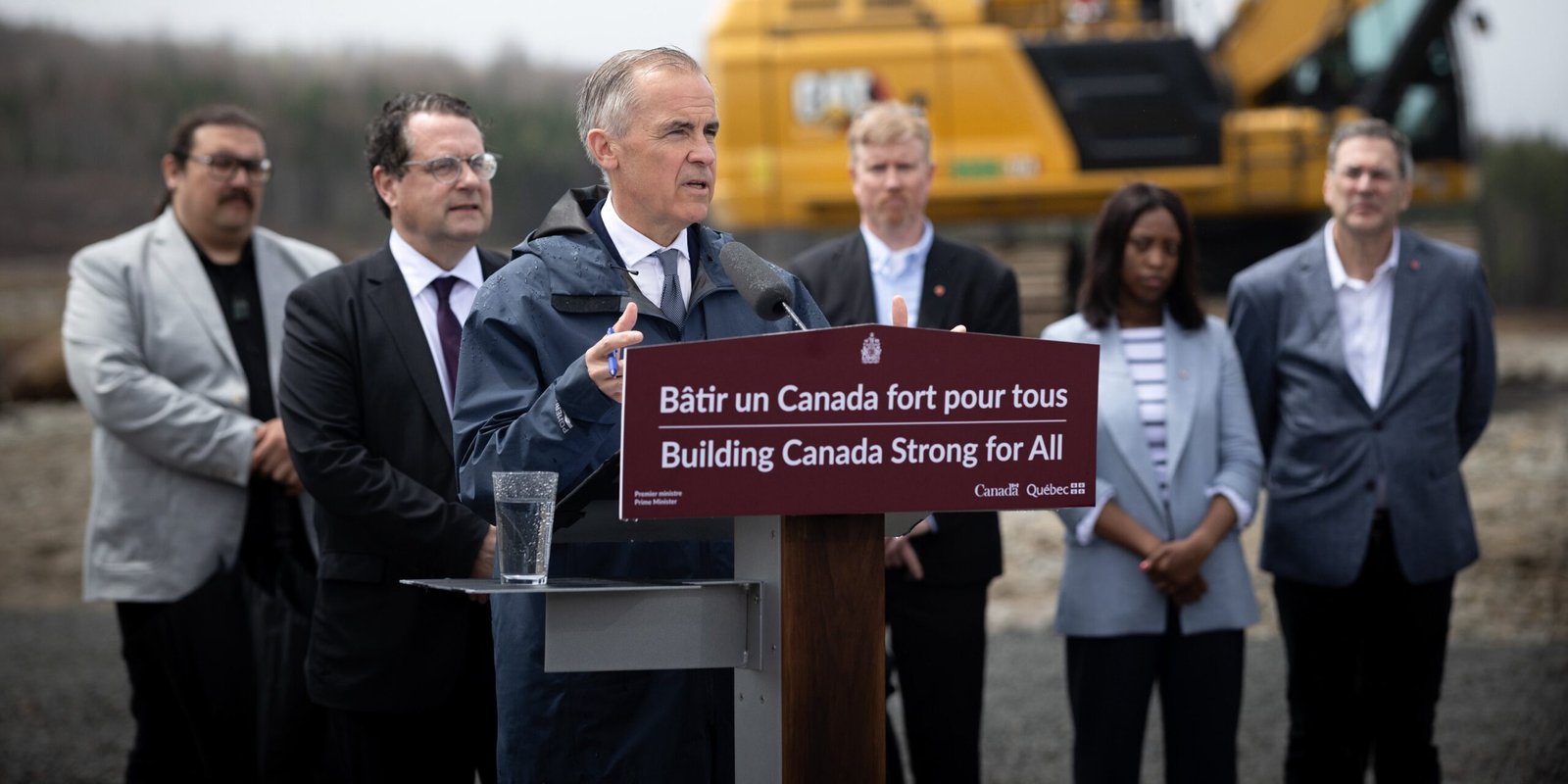
Then, on June 12, in the course of making another announcement, Prime Minister Mark Carney said, casually, that the government planned to – without putting too fine a point on it – euthanize CORE.
The Ombudsperson’s office had been “ineffective”, Carney said, and it was the government’s job to weed out ineffective public entities.
To those who had been patiently waiting for the government to name a new leader for CORE, Carney’s offhand dismissal of the government’s obligation to oversee the massive operations of Canadian companies overseas came as a hard slap in the face.
Carney’s tactic in this case was classic gaslighting.
The current government and its predecessor underfunded CORE, and equipped it with inadequate powers to do its job. To make matters worse, they then left it leaderless for more than a year.
The reasonable response for Mark Carney, in 2026, would be to increase CORE’s funding and strengthen its mandate.
Instead, he heedlessly killed it.
Carney’s rationalization is a bit like that of the young man who murdered his parents then pleaded for the court’s mercy because he was an orphan.
The amount of money saved by eliminating CORE is less than a pittance. It will have no impact on the government’s bottom line.
And, in proportion to the government’s total expenditures, it would not cost much to properly finance and resource an effective Ombudsperson’s office.
It would cost almost nothing to beef up CORE’s mandate and powers – which should include the power to call witnesses and compel their testimony.
And so, budgetary considerations cannot be the motive for this gesture of public-sector vandalism.
On the face of it, this act would be more worthy of an Elon Musk than of an economist who once wrote “the values of economic dynamism and efficiency [must be] joined by those of solidarity, fairness, responsibility and compassion.”
There’s not much solidarity or fairness, and zero sense of responsibility, in Carney’s flippant dismissal of CORE and the work it should (and could) be doing.
One has to assume the real motive for this decision was Carney’s desire to placate and curry favour with Canada’s always restive and demanding corporate community.
It seems the Prime Minister has decided there is no use expecting corporate Canada to behave ethically or even patriotically.
