
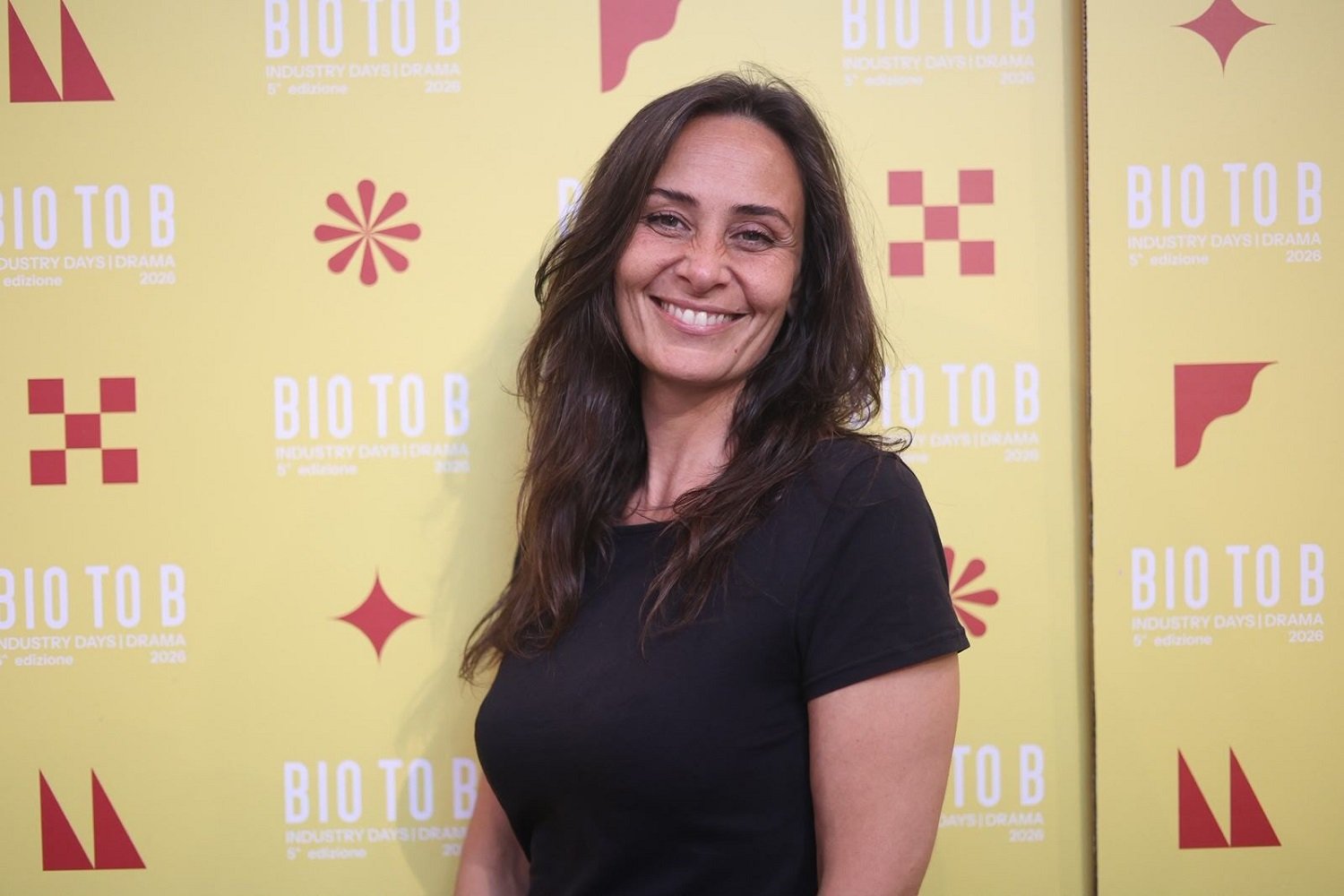
“The documentary film sector is expanding, but in moments of crisis it’s important to diversify”
– The director of Bologna-based Biografilm’s industry section looks back on the 13th edition of this space for meeting, developing and supporting European documentary films
(© Elena Conti)
During the thirteenth edition of Bio to B – Industry Days | Doc&Drama (unspooling in Bologna’s Biografilm between 8 and 10 June), Cineuropa met with head of Industry Caterina Mazzucato to take stock and examine the objectives of this platform dedicated to documentary film, which has presented upwards of 30 Italian and European documentary projects in different stages of development.
Cineuropa: You’ve described Bio to B as a community of professionals who come together in a shared space.
Caterina Mazzucato: We’ve been running Bio To B Industry Days Doc for 13 years now. From the first 10 years we spent organising the Biografilm festival, we observed that, in addition to the general public coming to see our films, people who produced and directed documentaries were also coming along and meeting up. Experiences like the IDFA already existed, and it was at this time that a number of other gatherings of this kind started springing up around Europe. We’re contemporaries of the Trieste Film Festival’s WEMW, and Rome’s MIA was founded a year later. We’re also realising that the documentary sector isn’t properly organised in Italy yet, there’s no centralised know-how. Bio To B was born out of the need to internationalise Italian directors and producers, and to strengthen their presence abroad. We’re a community because we’ve grown together, we the festival and market and the professionals who bring it to life. It’s a market which has evolved considerably because the festival has now moved into fiction as well as documentaries, and the market also has two strands to it: as well as documentaries, for the past five years we’ve included a section dedicated to fiction and teasing out stories, called Bio To Be Drama.
What form does the Drama section take, which is now at its fifth edition?
It’s a community of one hundred and fifty operators. Bio to B Drama focuses on intellectual property and putting people who devise, produce and direct stories with others who are looking for them. Editors and literary agents who own the rights to published works are put in contact – through speed dates and one to ones – with audiovisual producers, film producers, TV producers, platforms, podcast directors and videogame directors. As well as this really important sidebar of the adaptation market and this space for trading options and rights on unreleased works, there’s another crucial section for authors, screenwriters and directors with original subjects: we have a selection of original subjects which are pitched to a hybrid audience of audiovisual and publishing professionals. We try to create a virtuous circle.
What are your thoughts on this year’s edition of Bio to B Doc?
This year, we presented over 30 documentary projects in different stages of development. We created different moments in which to present different products. There’s the Pitching Forum which is our long-dated section, in which we generally present between 16 and 20 documentary projects hailing from all over Europe and represented by expert producers and established authors. There are also other opportunities to present documentary projects, such as Fast Forward – as well as Open Archive and Home Movies – which is dedicated to works based on archive material. We also presented a project called Development Room, which looks to provide narrative support to directors of some of the selected projects. Docs for Real, which we organise in association with the Bellaria Film Festival, is dedicated to emerging talent working in Italy. In this sense, we try to represent all operators and directors involved in documentaries. Over five hundred professionals attend our event, including documentary-makers, producers, technical professionals or festival representatives. So we’re definitely a sector all of our own.
A sector in crisis, going by this morning’s panel discussion on the European funding ecosystem, which stressed how the Italian tax credit reform has played into the hands of the bigger players and penalised smaller producers, at the cost of diversity.
The situation is definitely as described, and it’s good that representatives of institutions and big public broadcasters are telling us this so clearly. Events like Bio to B also allow us to openly reflect on this together. But having observed 13 years of networking, training, constant updating and continual exchanges between sector professionals, we know that it’s an ever-expanding field. The fact that we’ve got 30 international-level projects this year, as well as four hundred accredited companies who also focus, or primarily focus, on documentaries, tells us that there isn’t room for everyone, that after huge growth and consolidation of this small to medium audiovisual industry we’re now starting to feel the crisis a little more, but that’s because there are more of us. In the past few years, increasing numbers of youngsters have realised they can work as documentary-makers. Producer Nadia Trevisan told us something really important: in the audiovisual industry it’s important to diversify, that it isn’t possible, at times of crisis, to focus on one single approach; we need to find the right, finance-friendly stories for documentaries and fiction films in order to find a balance.
(Translated from Italian)
