
– In her second adaptation of a Roberto Bolaño novel, Alicia Scherson takes a tonally singular approach to the unconventional holiday of a young man obsessed with tabletop wargames
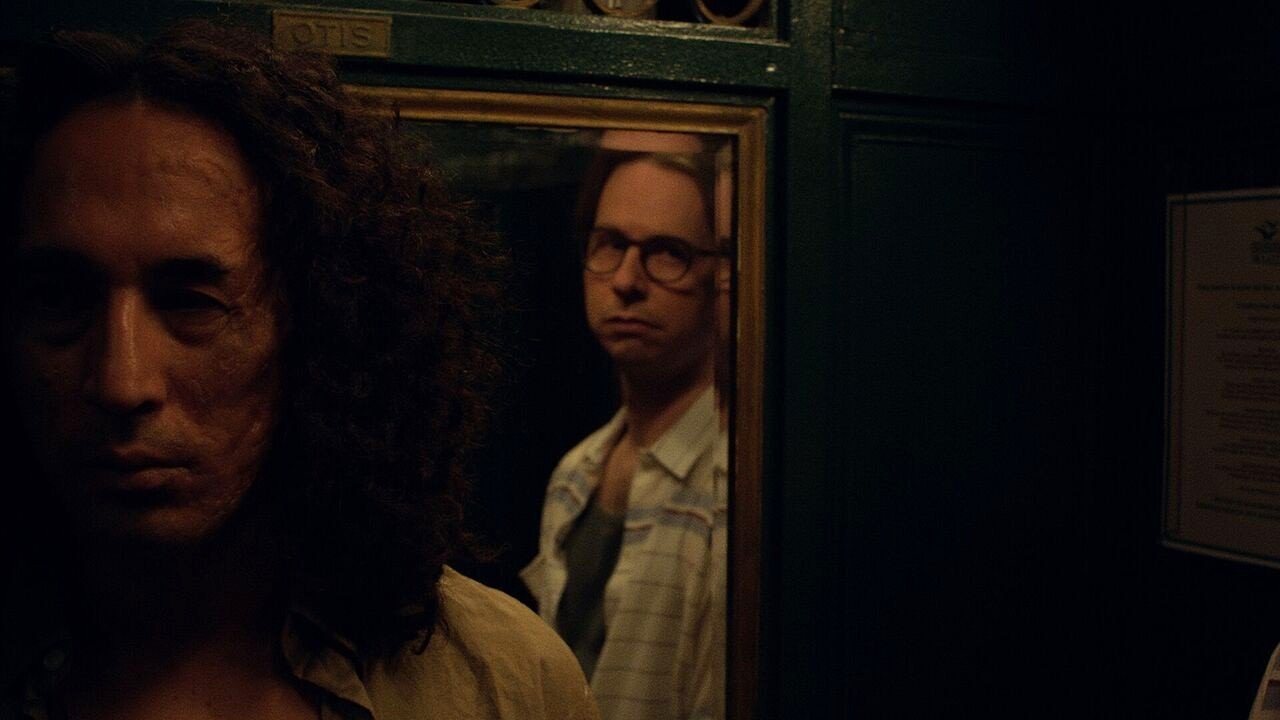
David Gaete (left) and Dan Beirne in Summer War
Famed Chilean author Roberto Bolaño provides some sturdy foundations for Summer War, the new feature by Alicia Scherson, a unique novelistic adaptation of a young man’s late-Cold War fantasy – as long as one gives in to what the movie is offering. This is Scherson’s second adaptation of a Bolaño novel after her 2013 film Il Futuro, and it’s clear that she’s got a strong grasp of how to turn his words into something memorable on screen. The Third Reich, on which Summer War was based, was published posthumously at the end of the 2010s after the author’s passing. The film has world-premiered in Tribeca’s International Narrative Competition.
In the dusky hours of Pinochet’s reign in 1989, Udo Berger (Dan Beirne) is on holiday in Chile with his girlfriend Ingrid (Lux Pascal) at a hotel he frequented as a child with his businessman father. The production design heavily takes us back to that time and place, where the ornate mid-century hotel décor combined with bright 1980s summer clothing creates a necessary on-screen clash while anchoring us in that particular era.
From here, Scherson plunges us into the psyche of a young man obsessed with tabletop World War II wargames, and little awareness of the outside world, to boot. However, his halcyon days are marked by the mysterious disappearance of Charly (Agustín Pardella), an Argentinian they meet on holiday, and despite his girlfriend’s protests, he’s determined to stay behind to investigate.
Scherson breaks our reverie with black-and-white footage of World War II, as if to suggest that the threat continues to loom close; several characters also repeatedly state that Pinochet’s control over the country remains, despite the fall of his dictatorship. Udo’s holiday is further punctuated by strange events, such as an encounter with a man known as El Quemado, or “The Burnt One” (David Gaete), owing to a large scar on the left side of his face.
Beirne brings Udo to life with a perfect sort of Napoleon Dynamite-like, awkward charm. This is someone we can’t help but root for, even though his mind is full of fantasies, such as that of saving the day and passionately making out with Mrs Elsa (Aline Küppenheim), an older member of the hotel staff whom he remembers from his childhood – of course, she has no recollection of him. Imagination and reality combine as we realise just how much we’re influenced by Udo, who is, in effect, an unreliable narrator.
Scherson cultivates a remarkably unique sense of tone, where the unsettling aspects of Udo’s trip are exactly offset by his near-complete situational blindness. He becomes further and further invested in a wargame he plays with El Quemado, even though he’s abandoned talking with his girlfriend and becomes swept up in his own version of reality. In this way, Summer War is very memorable: characters move in and out of the story on a whim, and the narrative ends remain untied – yet it’s the whole of the film’s overarching feeling that really ends up satisfying.
Summer War is a production by Araucaria Cine (Chile), Nadador Cine (Uruguay), Le Tiro (Argentina) and OvePossibile (Italy). Pluto Film holds the rights to its world sales.
