
– The producer and director break down their show about the shocking collaboration and subsequent fight between art dealer Yves Bouvier and oligarch Dmitri Rybolovlev
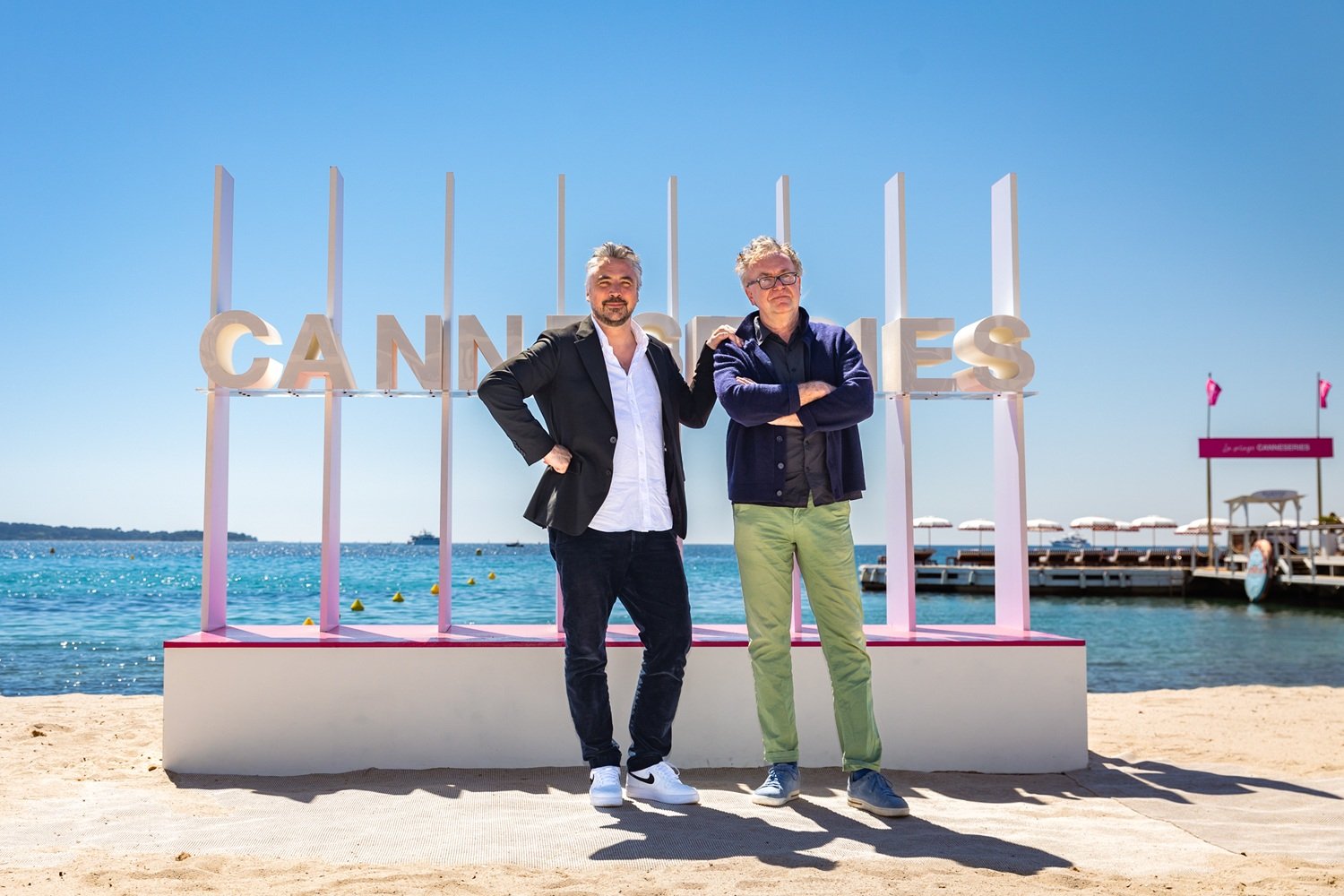
Andreas Dalsgaard (left) and Christoph Jörg (© Camilla Canalini)
Producer Christoph Jörg and director Andreas Dalsgaard co-created The Oligarch and the Art Dealer – freshly presented at Canneseries – which is about the shocking collaboration and subsequent fight between art dealer Yves Bouvier and oligarch Dmitri Rybolovlev.
Cineuropa: How did you first hear about this story? It’s almost hilarious, the way it shows greed and the never-ending desire to impress others, even among the wealthiest people.
Andreas Dalsgaard: Christoph and I produced The Lost Leonardo, which followed the story of the Salvator Mundi painting – supposedly by da Vinci. It was one of 38 artworks, many of them masterpieces, in the Rybolovlev collection amassed by Bouvier. This opened our eyes to this astounding story, and Yves Bouvier was keen to tell his side of it.
It allowed us to talk about the secretive world of the ultra-rich, power and privilege, and some of the greatest artworks in history. It felt like entering a real-life James Bond universe – almost too good to be true.
Christoph Jörg: I’ve long been fascinated by how the art market functions. Who are the tastemakers or the people shaping its dynamics behind the scenes? How are art and power intertwined? For years, I was struck by the secrecy surrounding this world and kept asking myself the question: how can you make a serious film about a world you are not part of? Salvator Mundi was ultimately sold for $450 million to the ruler of Saudi Arabia, but Rybolovlev and Bouvier had previously owned it. We found ourselves in the middle of a bitter and highly complex conflict involving accusations of a billion-dollar fraud. It turned out to be one of the most sensational and mysterious events the art world has ever seen.
You expose many shenanigans in the art world. What disappointed you the most about its inner workings?
AD: It was surprising to see how rigged the game can be for outsiders. Inside knowledge, corruption, secret commissions and blatant lying are the norm in this very cut-throat, secretive and opaque market. It gives savvy art dealers plenty of room for creative manoeuvring. It’s a kind of Wild West, which probably attracts many collectors.
CJ: What genuinely disappointed me was not just the scale of the alleged deception between individuals like Bouvier and Rybolovlev, but how easily that behaviour blended into the accepted norms of the market. You go into the story expecting a clear villain and a clear victim. But the deeper you look, the more you realise that opacity is not an anomaly in the art world. The lack of price transparency, the use of intermediaries and the culture of discretion create the perfect conditions for manipulation.
In most industries, if someone buys something for one price and immediately sells it for multiples of that without disclosing it, serious red flags would be raised. In the high-end art market, it often doesn’t. There’s an implicit understanding that access itself is part of the commodity. This blurs ethical lines in a way that I hadn’t fully grasped before. Relationships are built on proximity, reputation and discretion, rather than on transparent structures. And yet, it’s precisely those qualities that make the system fragile. When trust is broken, as it allegedly was in this case, there’s very little institutional framework to fall back on.
The people you interview reveal a lot, but they also seem rather resigned: this “Moneyland” isn’t going anywhere. What’s your take on this?
AD: As the world has become more globalised, it has become increasingly difficult to regulate. Every country has cracks in its system, which art dealers, bankers, lawyers and accountants specialise in exploiting. It’s an industry that keeps growing and adapting faster than lawmakers can keep up with. We should all be troubled by this. It’s a threat to democracy, trust in our institutions and the idea that we should all play by the same rules. The problem is that no one really knows how to tackle the problem effectively.
CJ: That sense of resignation you’re picking up on is very real. What Oliver Bullough describes as “Moneyland” isn’t a glitch; it’s an ecosystem. It’s built on jurisdictional loopholes, legal asymmetries and a competition between states to attract wealth by asking fewer questions. It’s a system that is, in many ways, functioning exactly as designed.
That said, I don’t think the conclusion should be pure fatalism. Systems like this rely heavily on opacity and, to some extent, public indifference. Storytelling and documentaries can shift that balance by making these mechanisms visible and connecting the dots between a painting on a wall and the offshore structures behind it. It doesn’t dismantle “Moneyland”, but it can make it more contested terrain. There will probably always be a version of this world where discretion and privilege dominate. But that doesn’t mean it’s immune to pressure.
You decided to explain a lot. Was it tricky, trying to make sure it would be exciting but also informative?
AD: The real fun lies in exploring art deals, so explanations and the entertainment value go hand in hand. I’ve always loved films that inform me while being blatantly entertaining. Inside Job is a good example. That said, it was tricky to keep it playful and dynamic without confusing the audience. We had to tell a story where they get all of the facts, while many people on the screen are trying to manipulate them.
CJ: It was a balancing act. The story itself contains all of the elements of a thriller: secrecy, vast sums of money, betrayal and global intrigue. However, we realised that if we didn’t take the time to explain how the system actually works, the stakes would feel abstract. So, how do you make complexity legible without killing momentum? The mechanics of the art market are not naturally cinematic. They require context, and context slows things down.
It’s easy to overwhelm the audience with detail. We had to constantly ask ourselves what the viewer absolutely needed to understand in order to feel the tension, the imbalance of power and the potential wrongdoing. And what, while interesting, is ultimately just noise? What makes this story unsettling is not just what allegedly happened; it’s how it could happen.
