
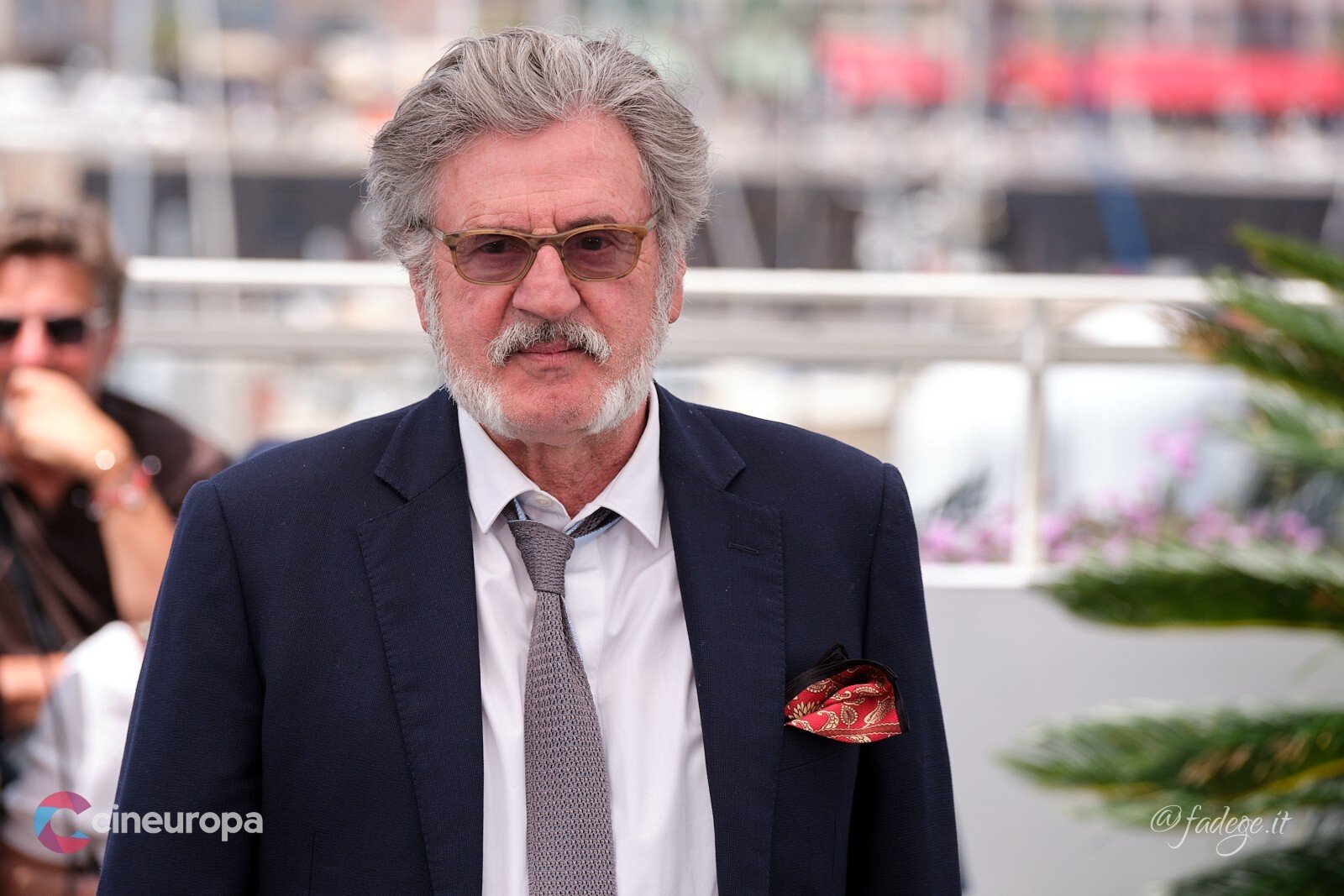
“I’m not just sitting around waiting for someone to come and get me”
– CANNES 2026: The French actor discusses his sixth feature film as a director and his sensory approach to cinema
(© 2026 Fabrizio de Gennaro for Cineuropa – fadege.it, @fadege.it)
We met Daniel Auteuil at the 79th Cannes Film Festival, where he was presenting his sixth feature film as a director, When the Night Falls, in the Cannes Première section. The film, set during the Second World War, follows a small group who use the law to their advantage to save doomed Jewish children. Auteuil also features in the cast, playing the role of Father Alexandre Glasberg.

Cineuropa: The film suggests that civil disobedience remains one of humanity’s great moral dilemmas…
Daniel Auteuil : It’s a complicated subject, especially when everyone has good reasons to believe in their own convictions. I think disobedience is necessary when we are forced to commit acts that are utterly reprehensible from a human perspective. If it’s just a matter of politics, I couldn’t care less. But when it comes to a genuine moral duty, we must resist.
Do you think there is a new desire in France today to revisit history from a different angle?
There has always been an interest in history. What is striking this year is that four or five films have simultaneously found themselves dealing with the 1940s for no apparent common reason. This is indicative of a current climate that is not just French, but global. Not so long ago, we were talking about disarmament; today, we are talking about rearmament. For my part, I try to work on the sensory dimension. I’ve discovered this kind of thrill: the less you explain, the more the viewer feels. And it’s an approach that fascinates me enormously. I don’t want to make a film we’ve already seen, and we’ve seen plenty of war films already. I just need to find the place where the audience is moved in order to bring these images back to life.
How do you avoid falling into sensationalism or technicality?
I’ve maintained two approaches. Technically, the first part –- the office scenes – is filmed in a more conventional style, with tracking shots and smooth, fluid camera movements. Then, from the moment we enter the camp, with that long shot of the car, we establish something much more powerful. We then move to a style of filming that focuses more on feeling than on the visual, even though I’m not quite sure how to put it into words. And then, to get even closer and go where the camera can’t reach, we sometimes use a photo camera. Everything becomes more fluid, more free. I finally felt free – it was about time! It’s a very instinctive process: I conceive a scene and bring it to life by imposing my own images, free to say, “Take the scene like this, not any other way.” It’s like a burst of energy. I’m not just sitting around waiting for someone to come and get me. I can’t sleep anymore! I film and film again and again..
(Translated from French)
