
WASHINGTON, D.C. — Fentanyl has become a political symbol of border failure, but public health academics say the recent decline in overdose deaths points instead to shifts in supply and public health measures — not tariffs or border crackdowns.
Nearly half of Americans — 42 per cent in 2024 — know someone who has died from an overdose, with most of those deaths linked to synthetic opioids like fentanyl. In Canada, no national polling exists, but regional surveys have also shown high levels of exposure; in hard-hit areas like British Columbia, for example, one in five Canadians in 2023 said they knew someone who had died from an overdose.
Regina LaBelle, professor of addiction policy at Georgetown University, says the issue has become politicized in the U.S., leading to responses by national leaders that sound good but make little difference.
“There’s a lot of frustration, and it, in and of itself, lends itself to facile responses that look good, but in the end don’t really do anything,” she said.
“Blowing up drug boats … is a perfect example of a facile response that does absolutely nothing,” LaBelle added, referring to U.S. military strikes aimed at disrupting drug-smuggling routes along the Mexican and Venezuelan coasts.
Treating fentanyl primarily as a border issue is a mistake, she said.
“We often think of it as just a border issue, and it’s not just a border issue. These are transnational criminal operations,” LaBelle said.
That view runs counter to comments from U.S. Secretary of Homeland Security Markwayne Mullin, who said last week that pressure on the southern border is pushing cartel activity northward, including toward Canada. He pointed to a surge in fentanyl moving across the northern border.
“The biggest concern we see,” Mullin said, “is what’s happening on our southern border being pushed up to our northern border.”
“Over the last year,” he added, “we’ve apprehended enough fentanyl that would kill 17 million Americans on our northern border.”
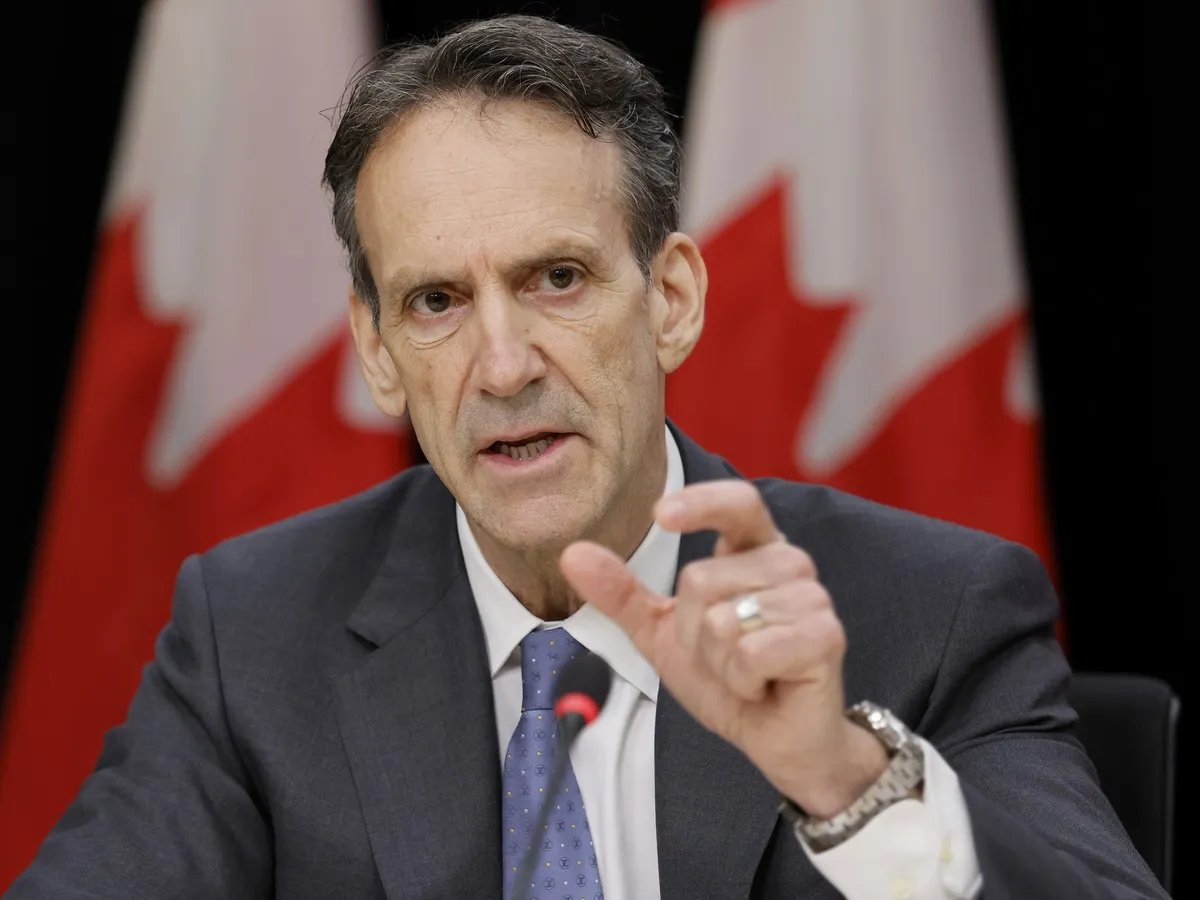
Canadian fentanyl czar Kevin Brosseau pushed back, saying the data “really haven’t borne that out.”
Brosseau pointed to U.S. Customs and Border Protection figures showing about 3 kilograms of fentanyl seized at the northern border since October 2025, compared with more than 3,000 kilograms at the southern border. Pure fentanyl, even in small amounts, can still be enough for millions of doses.
But seizure data are an imperfect measure of trafficking, LaBelle said, because determining route changes requires classified or multi-source intelligence, not just CBP figures.
Epidemiologists are also skeptical that fentanyl trafficking is simply shifting north.
“I mean, it just really isn’t happening,” said Mark Tyndall, a public health scientist and professor of medicine at the University of British Columbia. “It’s way too much trouble to ship (fentanyl) around and put it through Canada and then take it into the United States.”
Jonathan Caulkins, a drug policy researcher at Carnegie Mellon University, agreed.
“The flows that we know of across the U.S.-Canada border are token and trivial compared to the flows into the U.S., primarily across the southwest border or the flows into Canada of the precursors, not through the U.S.,” Caulkins said.
The precursors for making fentanyl are widely available for local production of the drug.
“The fentanyl killing Canadians is mostly made in Canada with precursors that came from China,” Caulkins explained.
“The U.S. supply chain is independent of the Canadian supply chain once the precursors leave China, but the manufacturing for U.S. markets mostly happens in Mexico,” he added.
Fentanyl’s potency means only a tiny amount is needed to supply the U.S. market, which limits the usefulness of border seizure data. The more useful target, Caulkins said, is trafficking capacity and the criminal organizations behind it.
“This is really needle-in-the-haystack stuff,” he said.
At the same time, both Canada and the U.S. have seen sharp declines in overdose deaths since late 2023. In the U.S., according to the CDC, deaths involving synthetic opioids fell from 74,702 in 2023 to 48,422 in 2024. In Canada, Public Health Agency data show 7,146 opioid-related drug toxicity deaths in 2024, down 17 per cent from 2023, followed by another decline to 5,630 in 2025 .
The key question is what drove that decline, and whether it’s sustainable.
Caulkins called it the “billion-dollar question.”
There are several possible factors, including expanded naloxone access, supervised consumption sites, drug supply prevention efforts and increased public awareness.
Benedikt Fischer, a professor at Simon Fraser University, said the most likely explanation is a shift in the fentanyl supply itself.
“From all I can gather, it’s a mix of things, but the most likely driver of the drop in overdose deaths, at least on the Canadian side, has been changes in the fentanyl or in the synthetic opioid supply,” Fischer said.
He said that may mean lower purity, or products being mixed with less lethal substances.
LaBelle pointed to a study published in Science magazine earlier this year about there having been a shock to the fentanyl supply in 2023 — largely due to regulatory changes by China, which impacted access to precursor chemicals.
While many of the factors probably helped, the timing is what stands out: Deaths fell suddenly in both countries in late 2023, which makes it hard to explain the decline as the result of one country’s policy alone, according to Caulkins.
That suggests the supply itself likely affected the death rate, which also means the decline may not continue.
Supply conditions, Fischer warned, “can change very quickly again.”
“We’re talking about an illicit supply market that is entirely in the hands of illicit production traffickers, criminal organizations, and there’s no regulation,” he said. “A little change or an added highly toxic component to the drugs distributed could drive that toward an uptick.”
It’s not as though the northern U.S. border doesn’t matter at all, but threatening to use trade restrictions or tariffs and linking them to drug flows is a non sequitur, Caulkins said.
“If vigilance at any border drops, traffickers could use it as a transshipment route,” Caulkins warned, cautioning that Canada and the U.S. should not let trade tensions impair their ability to work well together at the border.
“Things that disturb the ability of the two countries on either side of the border to partner effectively are counterproductive.”
For now, though, academics say the fentanyl crisis is being shaped less by border crackdowns and more by shifts in an illicit market — and by whether public health systems can keep up.
National Post
Our website is the place for the latest breaking news, exclusive scoops, longreads and provocative commentary. Please bookmark nationalpost.com and sign up for our newsletters here.
