
Math, reading, and social studies are some of the fundamentals we send our kids to school to learn, but let’s not forget two of the most essential lessons of all: how to look after their health and that of the planet. Back to school is a perfect time to commit to building the good habits and ethics that will serve our children well now and into adulthood.
Win-wins
Conveniently, what’s good for the planet is usually good for us, too. For example, we logically want to minimize our children’s exposure to toxic chemicals that can interfere with proper physical and mental development. One such class of chemicals, endocrine disruptors, are found in plastics and pesticides—two things the environment needs to avoid as much as we do. So, by opting for alternatives to plastic, such as glass and stainless steel; minimal packaging; and organically grown foods, we reduce how many of these chemicals our kids ingest and how many enter our soil and water—a win-win.
Some harmful substances are right there in the food we eat. The Environmental Working Group provides a reliable guide with its list of the top 12 food chemicals to avoid—a list kids can take into their own hands when shopping once they’re old enough to read labels. Choosing fresh, whole, and homemade foods over processed ones is the best way to steer clear of additives, plus nature will thank us for avoiding all that extra packaging!
A breath of fresh air
If our goal is to help young ones feel their best and care for their planet, nothing beats getting them out into the natural world itself. As the outdoor learning teacher at an elementary school in Richmond, BC, Anne-Marie Fenn can attest to the multiple benefits of outdoor play, from stress reduction and creative stimulation to physical challenge and nature connection. “Noticing surroundings by being in them helps to reduce fatigue from focused attention and concentrated effort,” Fenn says. “Children feel more energized being outdoors and are generally happier.”
Outdoor Play Canada states that “access to active play in nature and outdoors—[even] with its risks—is essential for healthy child development.” Fenn would agree that a certain amount of risk is what really lights kids up, allowing them to discover what they’re capable of. “The joy students feel when given the opportunity to try thrilling activities, such as sledding, tree climbing, or jumping from a height, is obvious,” she says. She finds natural “loose parts” such as tree cookies (cross sections of tree trunks), logs, planks, sticks, and cones to be highly engaging for students since they leave play open-ended and creative.
Unwelcome ingredient
Glyphosate, the main ingredient in the herbicide Roundup, has been found in many common children’s lunch products, such as certain brands of hummus, crackers, and tortillas, sometimes in amounts exceeding Health Canada’s “safe” limits. Grains, seeds, and legumes can be especially contaminated because glyphosate is often sprayed on them as a “pre-harvest aid.” The good news is that the transition from a conventional diet to an organic one brings about a rapid drop in glyphosate levels within three days.
Part of the solution
The more children spend time in nature, the more apt they are to behave as stewards. “Children who are connected to the land notice how people’s actions impact the natural world,” Fenn says. “They begin to make choices for themselves and encourage their families and parents to make choices that can help the Earth.” Plus, being part of the solution is good for the spirits.
Eco habits
Simple ways to help children make environmental and personal health a way of life
Walk or bike to school with your kids, suggests educator Anne-Marie Fenn. “You’re getting exercise and reducing greenhouse gases at the same time.”
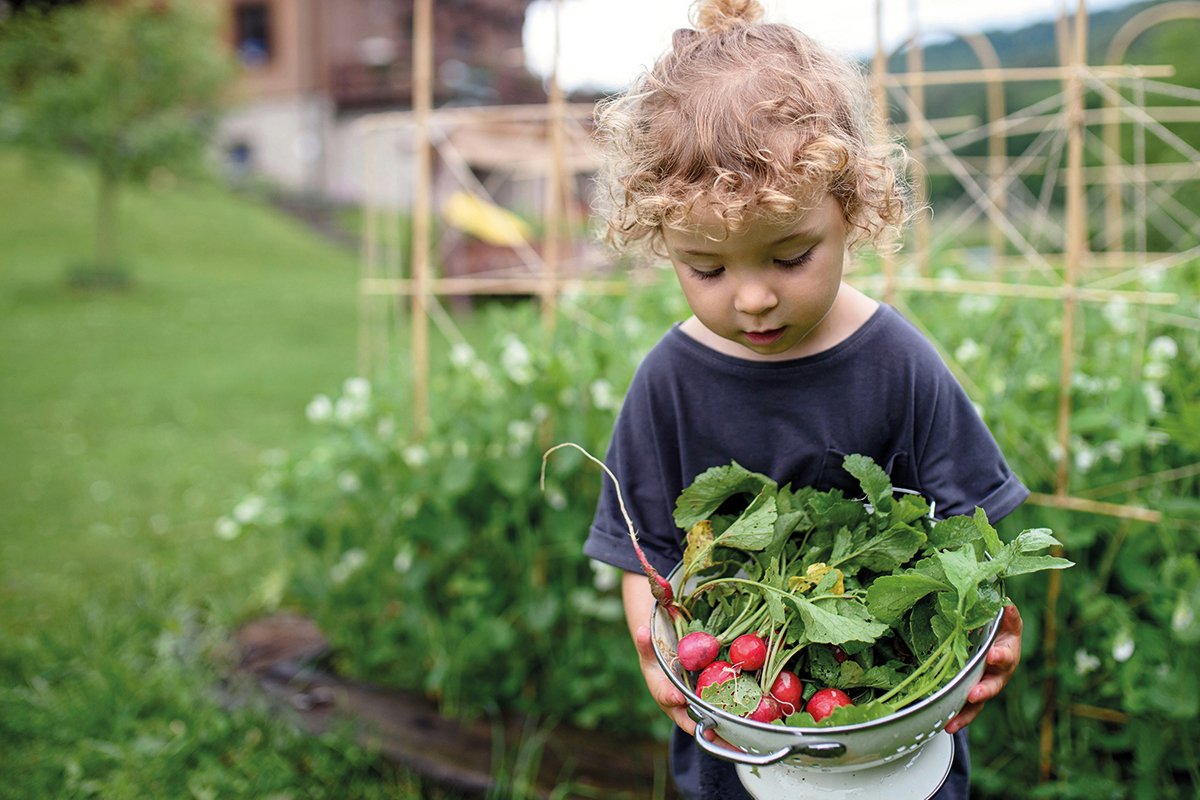
Choose lunchboxes and accompanying containers that are reusable, durable, and recyclable and encourage children to bring food scraps home if composting isn’t available at school. Build skills that serve kids and the Earth long-term by involving them in the growing and preparing of what goes into those lunchboxes.
Approach all school supplies through the lens of environmental stewardship, from second-hand clothing or a refurbished laptop to the repair of a still-usable backpack.
Bolster the basics
There’s another benefit to outdoor play: it helps support immunity, giving kids a valuable edge in school environments where germs are easily shared. Add in two other foundations of good health—sleep and a balanced diet—and you have a nice, simple recipe for helping your kids fight infection. Vitamin D and omega-3s support immunity as well, and, since they’re more challenging to get via food, supplements can be helpful.
How do we get that balanced diet into a lunchbox while modelling eco ethics? Staying away from processed foods with all their packaging and additives is a solid first move. Work in some antioxidants (think brightly coloured plant foods), fibre (whole grains, seeds, legumes, fruit and veggies with peel), protein (without nitrites, one of the 12 food chemicals to avoid), and homemade treats with natural sweeteners. Since the last thing we want is wasted food, it’s important to communicate with kids about what they’ll actually eat—sliced apple versus whole, a prepared sandwich over separate components, and so on. We can trust the dual goals of healthy kids and a healthy planet to guide us naturally toward sound nutritional choices.
The Environmental Working Group (EWG)’s Dirty Dozen Guide to Food Chemicals includes:
- potassium bromate
- propyl paraben
- butylated hydroxyanisole
- butylated hydroxytoluene
- titanium dioxide
- artificial dyes (Red 3, Red 40, Yellow 5, Yellow 6, Blue 1, Blue 2 and Green 3)
- aspartame
- azodicarbonamide
- propyl gallate
- tertiary butylhydroquinone
- sucralose
- sodium nitrite
Every year, the Environmental Working Group (EWG) analyzes fruits and vegetables for contamination with pesticides. The 2026 Dirty Dozen list includes:
- spinach
- kale, collard, and mustard greens
- strawberries
- grapes
- nectarines
- peaches
- cherries
- apples
- blackberries
- pears
- potatoes
- blueberries
This article was originally published in the August 2026 issue of alive magazine.
