
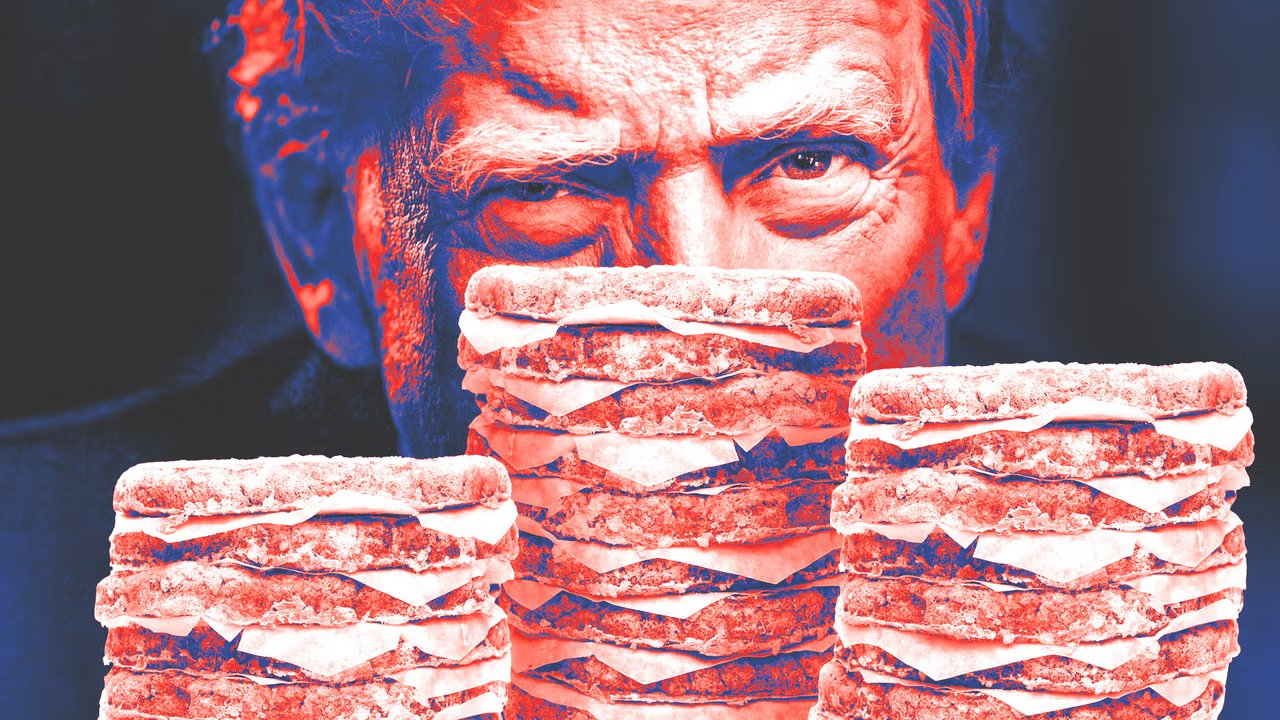
With most Americans still feeling the pinch of persistent inflation, President Trump wants to make one pricey grocery staple cheaper.
“Today, I concluded a deal to substantially lower the price of ground beef for working American families,” Trump said in a Truth Social post shared on Friday. In the deal, Trump says that the U.S. will exempt 300,000 metric tons of ground beef to be imported over the next 90 days from the out of quota tariff, a higher tax rate that applies to imports beyond a set limit.
Trump also announced that the newly imported beef would be sold at 25% below market rate – a deal with few accompanying details, but one that appears to come from an agreement with overseas beef exporters. Trump is expected to issue an executive order on the plan to slash beef prices in the coming weeks, Politico reports.
In July, the price of beef lingered around a record high, according to data from the U.S. Bureau of Labor Statistics. This spring, beef peaked at $6.92 per pound of ground chuck—up nearly a dollar per pound from 2025 and by almost $3 since 2020.
In his announcement, Trump also blamed former President Joe Biden for beef’s current predicament, although voters may not agree as the previous administration fades in the rear-view mirror. The soaring price of beef is both a reality in the checkout line for cash-strapped Americans and a political liability in an election year. With midterms fast approaching, expect more last-minute scrambles from politicians worried they’ll face the music for high prices come November.
Unlike more out-of-sight, out-of-mind political issues, voters are reminded of soaring costs of everyday goods on a daily basis. The volume of beef sales was down this year even across the three months including Memorial Day and the Fourth of July, two famously grill-centric U.S. holidays that usually drive a seasonal sales spike. During the same period, chicken sales ticked upward – a sign that Americans have hit their limit on the price per pound they can pay for red meat.
A shrinking industry
Beef is subject to many of the same economic factors that have driven up the price of just about everything, but it’s also got some problems of its own.
The American cattle herd, which includes dairy and beef cattle, is the smallest it’s been in 75 years. With costs up for fuel, fertilizer, and other farming essentials, cattle ranchers are struggling to make the math work. Beyond rising costs, drought conditions and international pressure from beef exporters have further diminished the industry.
Some relief for the U.S. cattle herd could be on the horizon, but estimates put it a ways off still. “The combination of fewer beef cows and a declining calf crop means the 2026 calf crop will likely continue to trend downward because there are fewer calves available for the breeding herd, even if more heifers are kept for breeding purposes,” a report from the American Farm Bureau Federation warned earlier this year.
“We have a commitment that this beef will be sold at 25 percent below current market prices,” Trump said. “This deal will reduce prices for Americans while giving space for our Great American Beef Herd to grow again,” Trump said.
While Americans might be happy to hear that at least something might get cheaper, the cattle industry sees major risks with Trump’s decision to brute force the high prices.
“While America’s cattle producers share the goal of keeping groceries affordable for consumers, flooding the market with government-subsidized, below-market beef is not the way to rebuild the American cattle herd,” CEO of the National Cattlemen’s Beef Association Colin Woodall said in a press release on behalf of the industry. “Today’s announcement and other market interventions throw cold water on the prospect of herd expansion and sacrifices long-term stability for short term messaging.”
