
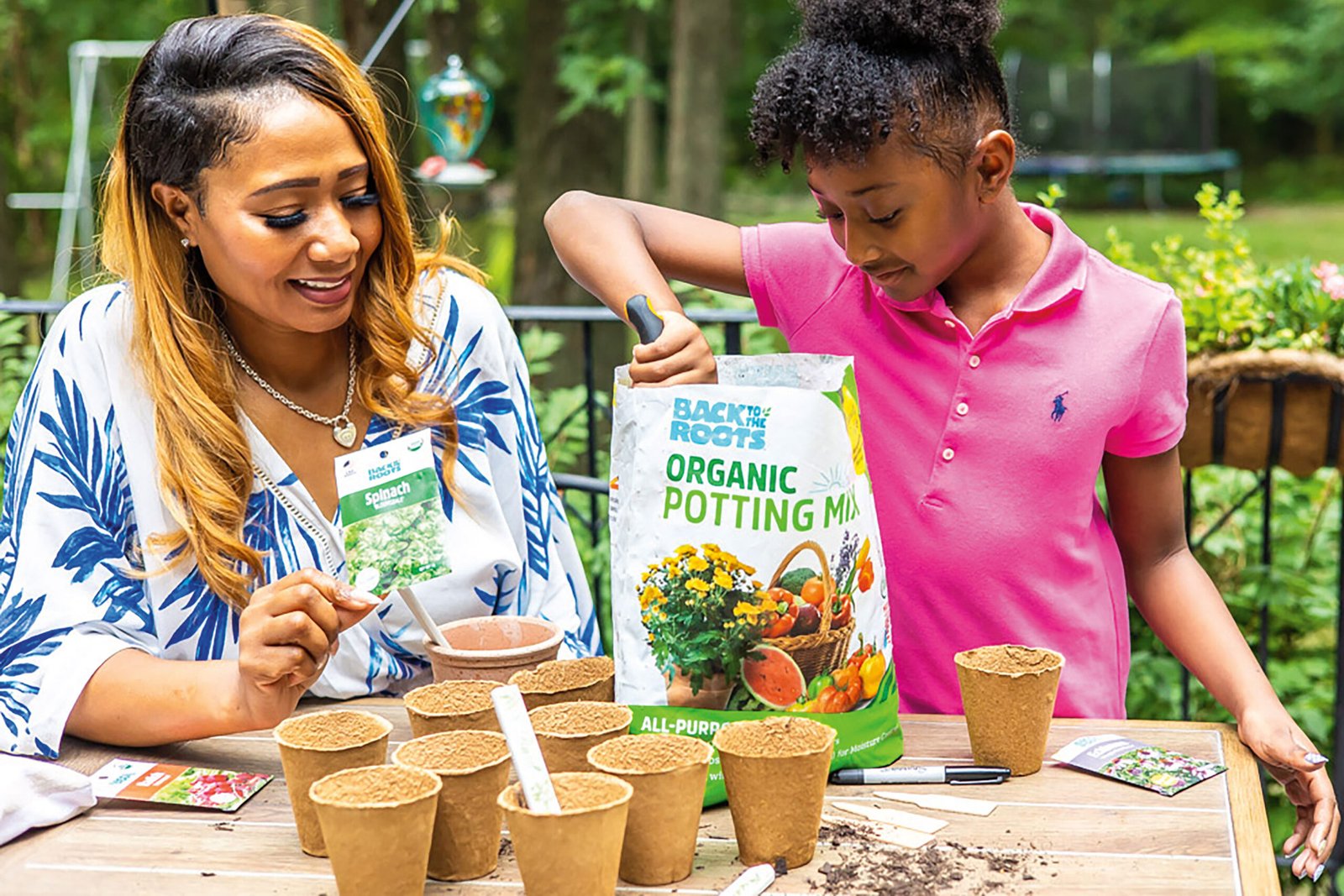
Take a stroll with a child through the produce section of your local supermarket and look through their eyes: shrink-wrapped clusters of broccoli, plastic containers of cut-up melon, uniform rows of identical lackluster apples, tasteless peaches, and rock-hard lemons. Little in this setting reflects how food is actually grown or the environments it comes from. Instead, it reflects how distant most food has become from its origins.
In today’s world of convenient foods and industrial farming, that disconnect seems to be the norm rather than the exception. Alejandro Velez and Nikhil Arora are determined to change that, one household and one classroom at a time.
A curious serendipity
It all began when Velez and Arora met in a business ethics class at UC Berkeley. A random fact surfaced—that gourmet mushrooms can be grown in coffee grounds—and shortly thereafter buckets of coffee grounds with mushrooms sprouting wildly were cluttering up Velez’s fraternity house kitchen. Realizing they had a shared passion for understanding where their food came from, these budding urban farmers ditched their corporate jobs to join the world of organic home gardening.
Today, Back to the Roots has come a long way from its early beginnings, but the goals are still the same. Arora explains, “When we started out, our mission was the same as now—to reconnect families back to food and where it came from, to empower them to grow their own gardens and reconnect with their food and the land.”
From frat house to Home Depot
Mushroom growing kits, of course, were the first product to appear, followed by other seed kits like windowsill planters and water gardens, to introduce kids and families to growing their own foods in their own homes.
But for Arora and Velez, that was just the appetizer for the extensive menu they began to envision. They expanded their horizons to include outdoor gardening as well. Partnering with Home Depot, they championed the essential importance of organic gardening, with soils and raised beds and seeds. As Velez enthuses, “The Home Depot has been a critical partner in our mission to bring a garden to every home and classroom and make every one of those gardens organic.
“What started off as one product in one store has transformed into a deep relationship built on shared values, mutual trust, and a clear alignment on where we’re heading together—to get a whole new generation into the garden!”
Not content with solely engaging children at home, these entrepreneurs created a STEM curriculum for use in schools. “We think there’s nothing more important than inspiring a new generation to reconnect with where their food comes from. And just like other required school subjects, we believe gardening and nutrition should be a part of every child’s education.” Science backs them up; multiple studies emphasize the importance of nutritional education as essential to children’s well-being.
Their generosity expresses itself further in their classroom seed donation program, “Grow One, Give One”, in a format that today’s kids can relate to. When a child posts a photo on social media of their Back to the Roots garden, the company donates a grow kit and STEM curriculum to the elementary school classroom of their choice. A win-win all around!
The passion that sustains them
As with all start-ups, the road has been long, winding, and often riddled with unexpected potholes. But the founders’ enthusiasm and passion for their mission have only increased with time. Their shared bond is part of it: “The one constant in this Back to the Roots journey has been this partnership. We’re both inspired not just by the mission, but by doing it together.”
“We believe that what this brand represents—building connection and joy in communities through gardening—is indispensable,” Arora continues “In a time of such negativity and tribalism, a brand that can unite us all around shared values and ancestral, community-based activities like growing food and breaking bread together—that absolutely needs to exist in the world.”
This article was originally published in the August-September 2026 issue of alive magazine (US edition).
