
We often make the mistake of judging people by what we see on the surface. Someone behaves differently, struggles emotionally, or simply doesn’t fit our expectations, and before we know it, we’ve already written their story for them. We rarely stop to ask what they have been through. Instead, we allow our own biases to fill in the blanks.
That is exactly why Lockbox stayed with me.
At first glance, it feels like another supernatural horror film, but underneath the eerie atmosphere lies a surprisingly emotional story about family, loss, trust, and the invisible scars people carry. Rather than asking us to fear what we don’t understand, Lockbox asks us whether we have been looking at the wrong monster all along.
The film works because it never feels rushed. Instead of constantly chasing jump scares, it slowly builds uncertainty, allowing every scene to raise new questions. You are never entirely sure who is telling the truth or whether your own instincts are leading you in the right direction. That uncertainty becomes the film’s greatest strength.
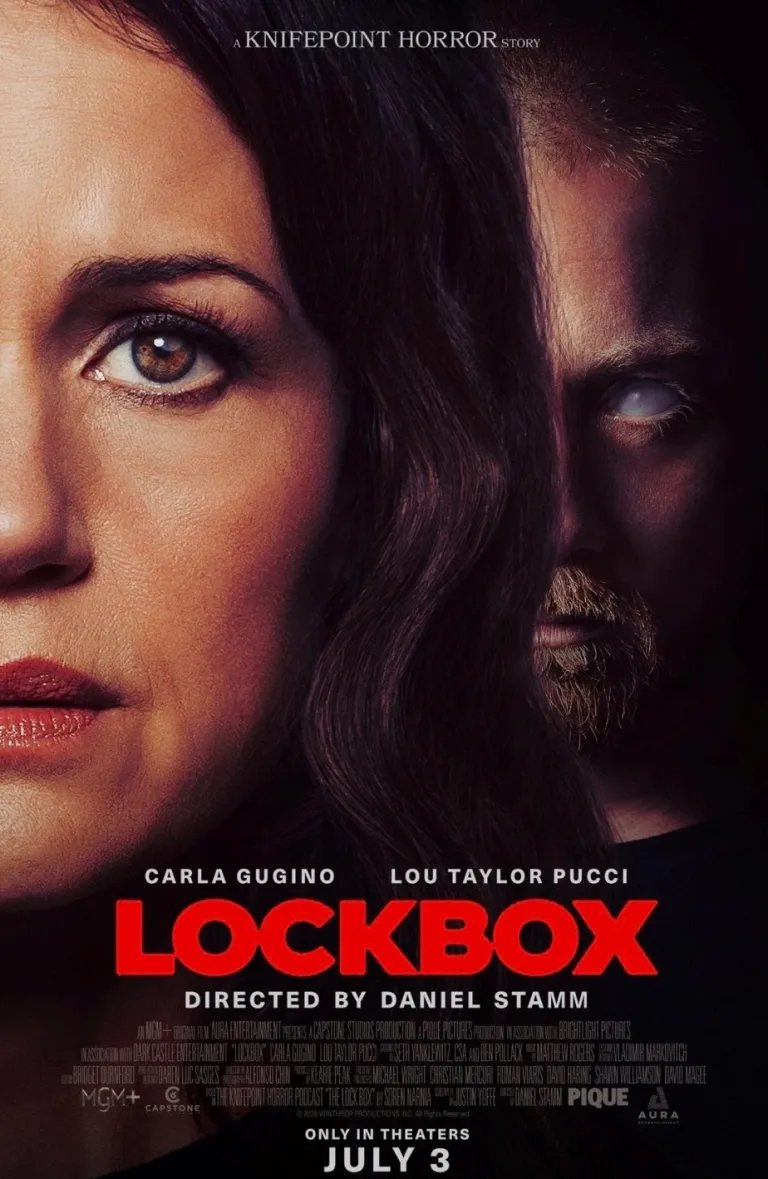
What truly surprised me, however, wasn’t the horror—it was the relationship between Ellen (Carla Gugino) and Winthrop (Lou Taylor Pucci).
Their connection becomes the emotional heartbeat of the film. As Ellen tries to protect her cousin while the world around them begins questioning everything about him, the story gradually evolves into something much deeper than a supernatural mystery. It’s about unconditional family, about standing beside someone when everyone else has already decided they’re beyond saving, and about refusing to give up on the people you love even when every reason tells you to walk away.
Carla Gugino (Ellen) delivers one of those performances that quietly carries the entire film. She never overplays the emotions, yet every decision she makes comes from a place of genuine compassion and determination. She makes Ellen feel like someone we all know—a person trying to hold a family together while the world around her falls apart.
Opposite her, Lou Taylor Pucci (Winthrop) gives perhaps the film’s most fascinating performance. There is an emotional vulnerability beneath every movement, making it nearly impossible to place him into a single category. Is he broken? Is he dangerous? Is he simply misunderstood? Pucci constantly challenges the audience to reconsider their own assumptions, and that is exactly what makes his performance so compelling.
The chemistry between Gugino and Pucci is what ultimately grounds the film. Without that emotional bond, Lockbox could have easily become just another possession story. Instead, their relationship reminds us that the strongest horror often comes from what we stand to lose rather than what is chasing us.
Another aspect I appreciated is how restrained the filmmaking feels. Daniel Stamm trusts the audience. He doesn’t rely on loud noises every few minutes or overwhelming visual effects to create fear. Instead, he allows silence, atmosphere, and uncertainty to do most of the work. The tension grows naturally, making the frightening moments far more effective because they emerge from the story instead of interrupting it.
By the end, Lockbox becomes less about the supernatural and more about empathy. It quietly reminds us how often we judge people before understanding them, how easily fear can replace compassion, and how family isn’t simply about blood—it’s about choosing to stand beside someone when everyone else has already walked away.
That’s what makes Lockbox memorable. The horror may draw you in, but it’s the emotional bond between Carla Gugino and Lou Taylor Pucci that gives the film its soul.
★★★★☆ (4/5)
Lockbox is proof that horror doesn’t always need bigger monsters to leave a lasting impression. Sometimes all it takes is a deeply human story, two remarkable performances, and a reminder that the people we fear most are often the ones who need our understanding the most.
The post LOCKBOX Review: Looking Beyond Fear first appeared on Movie Reviews. TV Coverage. Trailers. Film Festivals..
