
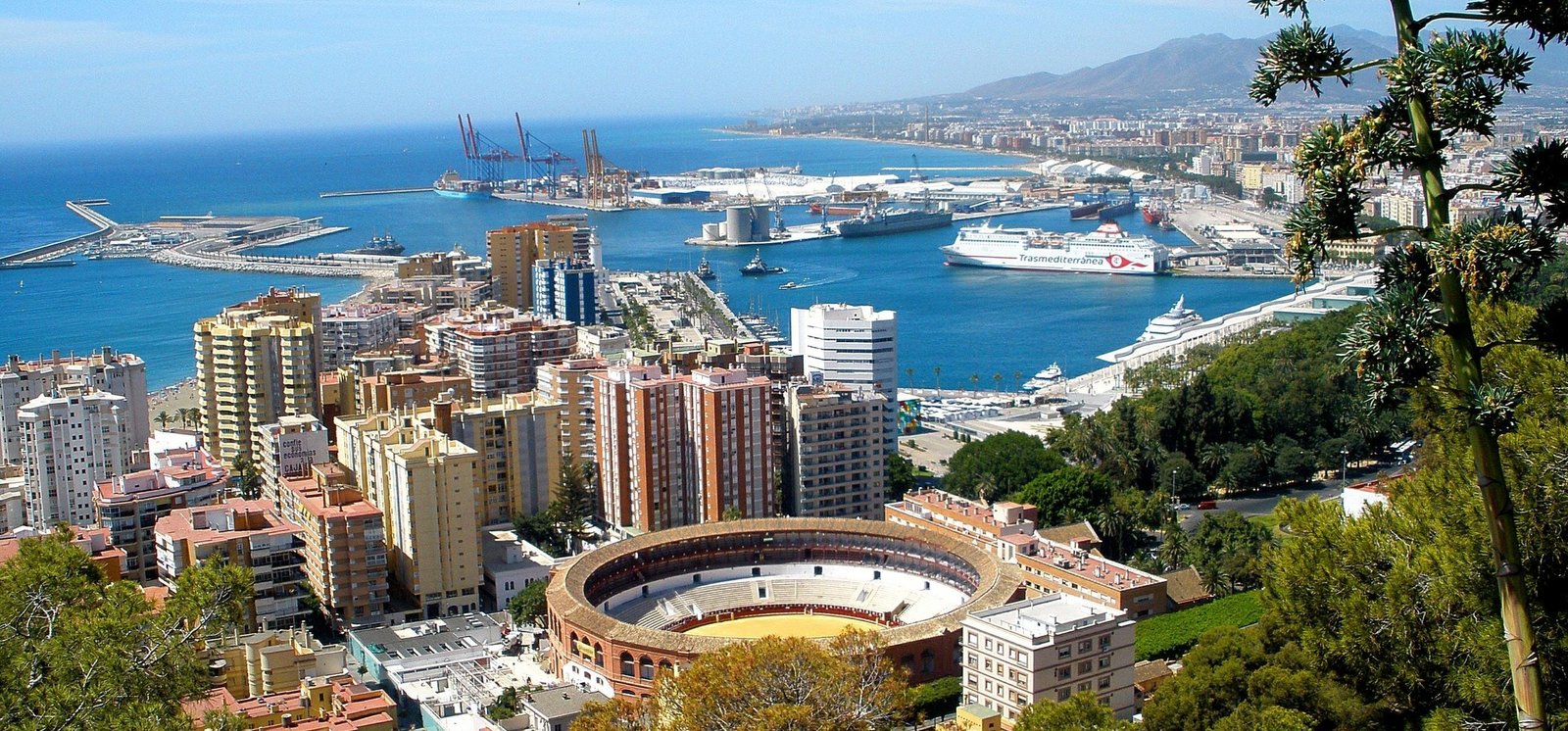
HOTEL bosses have warned that Malaga’s international reputation has been damaged after a sewage spill forced six beaches to close during the peak summer season.
The local town hall, led by right-wing Partido Popular (PP), ordered the closures after a violent storm overwhelmed Malaga’s sewage system on August 15, forcing engineers to discharge overflow into the sea.
Levels of harmful E. coli bacteria spiked in Malaga’s waters following the incident, making it unsafe to swim at Campo de Golf-San Julian, Guadalmar, La Misericordia, Sacaba, San Andres and El Palo.
READ MORE: Malaga reopens final four beaches to swimming as water quality returns to normal
The closures came during Malaga’s busy Feria week, the city’s biggest annual festival, when thousands of visitors flock to the Costa del Sol capital for a week of celebrations.
All six beaches have since reopened after authorities found E. coli levels had returned to safe levels.
Malaga’s PP-led government has now come under fire over the closures, with critics calling for an overhaul of the city’s ageing sewage system amid concerns that further incidents could have severe financial consequences.
Javier Frutos, president of hospitality association Mahos, said: “Undoubtedly, it is a problem for us. This has a major impact on Malaga’s image, and we are talking about July and August, the height of the summer season.
“We depend heavily on a key market such as sun-and-beach tourism,” he added.
“We hope whatever needs to be resolved is resolved, even though the beaches are open again.”
Frutos went on to criticise the deterioration of basic infrastructure across the city, warning that problems with essential services risk undermining Malaga’s appeal as an international tourist destination.
READ MORE: Malaga reopens two beaches to swimmers as E. coli bacteria warning keeps four more shut during Feria week
Camp
“Obviously, it’s a pretty negative image of Malaga, particularly abroad,” he said.
The crisis has also ignited a fierce political row, with opposition parties accusing the PP of failing to properly maintain and upgrade the city’s sewage infrastructure.
Yolanda Gomez, deputy spokesperson for far-right Vox, said her party had been warning about problems with the sewage network since 2024, arguing that the PP ‘cannot now simply blame a storm.’
Meanwhile, Socialist PSOE spokesperson Mariano Ruiz Araujo called on mayor Francisco de la Torre to resign over the incident, saying the city’s water infrastructure was in a ‘critical state.’
“The problem is not the rain, but a sewage network that is not equipped for the Malaga of today,” Araujo said.
He added: “[De la Torre should] stop blaming other administrations, Malaga residents themselves and, on top of that, a sudden storm for his own inefficiency.”
The town hall rejected the criticism, saying these overflows happen in almost every coastal town in Spain because pipes running along the coast carry both rainwater and sewage.
Sustainability councillor Penelope Gomez said sewage was deliberately released into the sea during the August 15 storm to prevent it from flooding people’s homes.
“If we didn’t let it out, the whole city would have flooded with dirty water,” she told Diario SUR.
She added that more than 2,300 tonnes of wet wipes are pulled from Malaga’s sewers every year, clogging pipes at the exact points that then force overflows into the sea, at a cleanup cost of close to €2 million a year.
The latest closures were the third E. coli-related beach shutdown in Malaga in less than a month, after the Pedregalejo and El Palo beaches were also affected in July.
The August incident came after 18.5 litres of rain fell per square metre, with 14 litres recorded in less than an hour, overwhelming parts of the city’s sewage network.
Operator Emasa says it plans to increase the proportion of the network separating rainwater from sewage to 70% by 2029, as part of efforts to prevent new overflows.
Click here to read more Malaga News from The Olive Press.
