
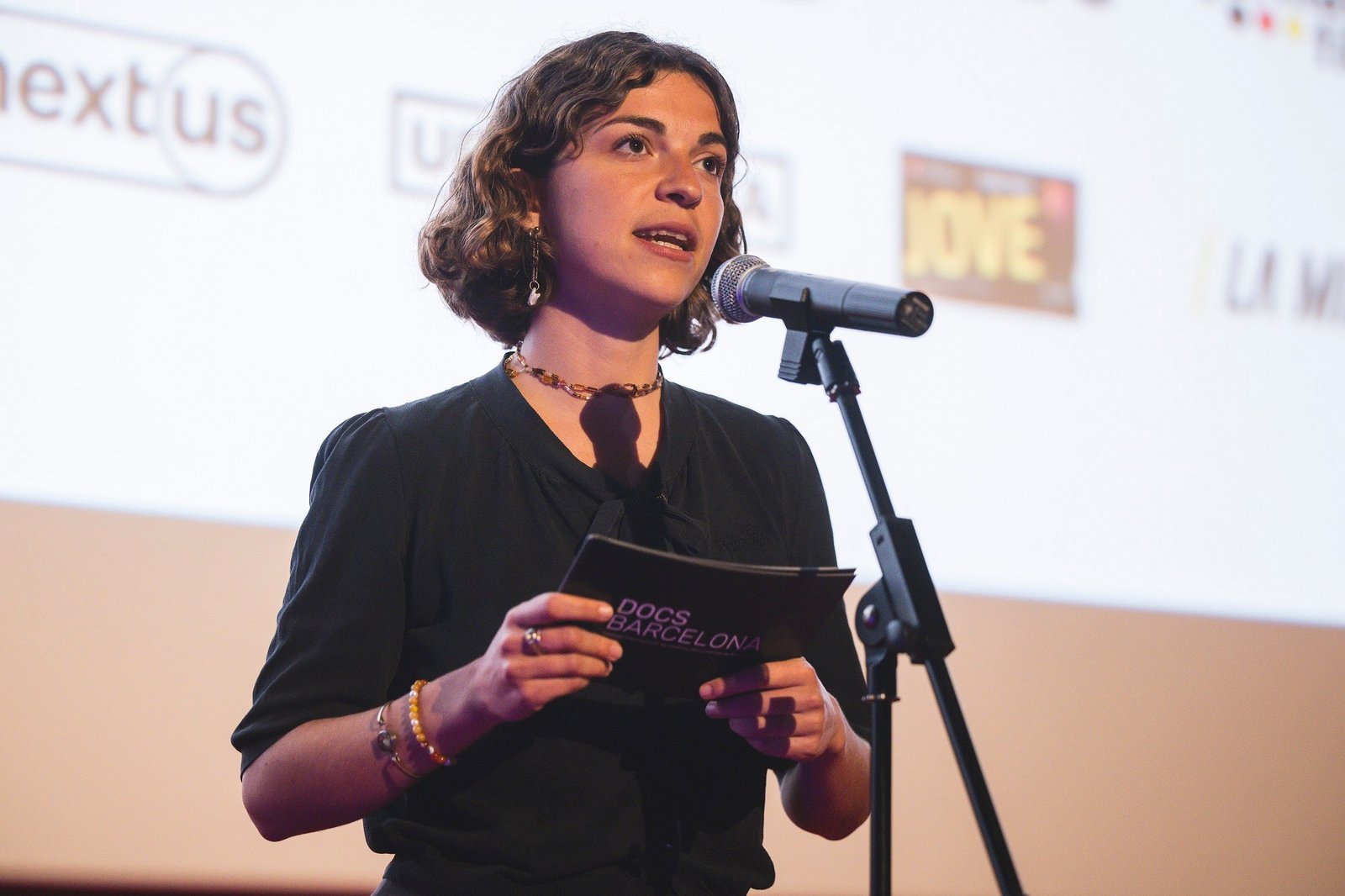
– The programmer and filmmaker offers a glimpse into this year’s edition of the film festival and highlights the importance of its industry section… and of Mark Cousins
The 29th edition of DocsBarcelona will take place from 7 to 17 May. We spoke to its co-artistic director and head of programming, María Colomer Canyelles (Supernatural), who is also a producer.
Cineuropa: What are the key themes that characterise this year’s selection of titles?
María Colomer Canyelles: On the one hand, films that put a human face on global conflicts, moving away from headlines to focus on personal stories that help us understand the world through empathy. On the other, films that use science, technology and cinema to investigate and reconstruct facts, challenging official narratives. In addition, the Focus section is dedicated to the city as a space of tension: conflict, identity, gentrification and coexistence.

Which European feature films from the official sections would you highlight?
I would highlight four very different titles, each offering a sharp insight into the current state of Europe and the world. 80 Angry Journalists, by Anna Kis and András Földes, follows a group of Hungarian journalists and increasing media control, exposing the tensions between the press and those in power. Amazomania, by Nathan Grossman, questions the ethics of filming, confronts the colonial legacy and reveals the long-term consequences of that encounter. Das Deutsche Volk, by Marcin Wierzchowski, uses a case of racist violence as a starting point to explore grief, memory and social fractures in contemporary Germany. And The Hidden Face of the Earth, by Arnaud Alain, establishes a dialogue between image and gaze, exploring what it means to see when vision disappears and prompting a broader reflection on perception and memory.
And what is the Spanish contingent like this year?
Spanish films are present in virtually every section. In the Official Selection: Las Culpables by Marta Duran and La pietà by Rafa Moles and Pepe Andreu. In the Visions section: Como todo mortal by María Molina. And in the section dedicated to the city: Who Witnessed the Temples Fall by Lucía Selva and Corren las liebres by Lorena Ros. They span both the local and the global: some are set in Granada or Barcelona, while others take us as far as the glaciers of Iceland. Docs&Cat is also showcasing Catalan productions with seven titles, and we are launching a new official short-film section featuring eleven Spanish films. We also have special screenings such as Amílcar, by Miguel Eek; Guía paranormal de la Costa Brava by Ferran Romeu, about the Argentine writer Mariana Enríquez; and a retrospective of three short films by Pere Portabella.
What activities or special events should not be missed?
The film festival is also a forum for discussing the present, with a particular focus on Ukraine and Gaza, combining screenings and talks, such as the sessions Cuba & Alaska and With Hasan in Gaza. On the subject of the city, the talk “Gentrification and cinema: the city in dispute”, based on the film Who Witnessed the Temples Fall, draws a direct link between cinema and the housing crisis. On a more technical level, the session on editing centred on Do You Love Me, with Qutaiba Barhamji, offers an inside look at the creative process. Music also runs through the festival in various hybrid formats, extending documentary into the performing arts and creating a more shared experience. And the retrospective and tribute to Mark Cousins is one of this year’s major highlights.
How would you briefly describe Mark Cousins’ work?
Cousins has changed the way we look at cinema. His work blends popular writing, essays and creative writing, offering an open, personal and deeply political history of cinema. He is a key figure in understanding contemporary cinema.
Is there room for the industry and projects during the festival?
Absolutely. DocsBarcelona Pro is one of southern Europe’s leading industry hubs, and this year it brings together 63 projects from nearly 40 countries across its development, funding and training programmes. In a moment of instability for the sector, the festival reinforces its role as a platform that genuinely supports creative work, with nearly €60,000 in prizes and an active network of international partners and professionals.
What do you think of this season’s crop of documentaries? Is it still wide-ranging, varied and daring?
At least that’s the intention. There’s a wide variety of forms and themes, as well as a shared desire to look beyond the surface. It’s cinema that takes risks, takes a stand and seeks to challenge the viewer. We want to open minds rather than lull them to sleep. We shun noise and empty content. We are committed to challenging cinema that broadens our horizons. That is the power of documentary film, which is needed now more than ever.
(Translated from Spanish)
