
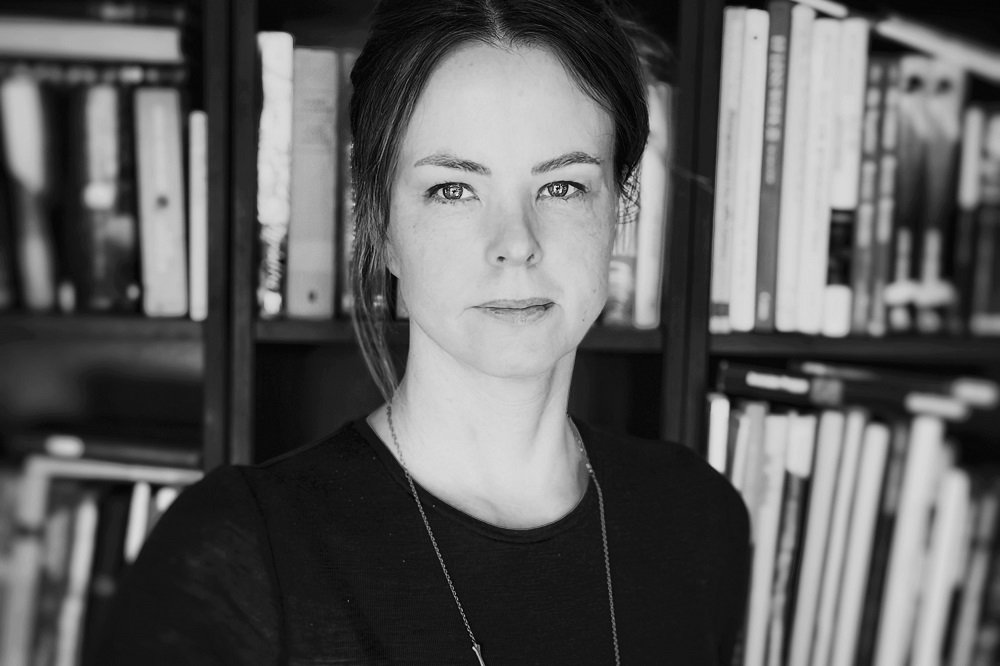
“In co-producing it is about establishing a relationship first, and hopefully the partnership will turn into a long-term one”
– The Icelandic producer reflects on a late but deliberate move into producing, building an internationally minded slate, and navigating a small film industry
Having transitioned into producing after a career in project management, Iceland participant in European Film Promotion’s Producers on the Move Sunna Guðnadóttir, of Bjartsýn Films, has developed a slate that balances youth-oriented content with auteur-driven projects. Working out of Iceland, she combines an outward-looking perspective with a strong awareness of the local ecosystem, positioning her company within an increasingly international co-production landscape.

Cineuropa: How did you actually get into producing — was it a conscious choice early on, or something you grew into along the way?
Sunna Guðnadóttir: It was actually a deliberate decision, but one I made relatively late in my career. I had an established career as a project manager in the creative industries, but I had always been drawn to filmmaking, so at a certain point I decided to make the leap. I had my first real introduction to the industry years earlier when I co-founded Iceland’s first streaming platform dedicated to Icelandic films, even before Netflix started streaming. However, producing came about eight years later. I went to study producing to properly understand the process and then went straight into working as an assistant to a producer after graduating. I had a very specific goal, which was to produce my first feature film under Bjartsýn Films within five years of graduating — a goal I reached exactly on schedule. Having more than a decade of project management experience behind me helped enormously, along with my passion for cinema.
What does your current slate look like right now, anything at a stage where you’re actively looking for partners in Cannes?
Yes, I have several projects in active and late development. True North is a family feature film directed by Nanna Krístin Magnúsdóttir, and we are aiming to go into production at the end of next year or early 2028. I am also developing a documentary, 18 Winters, about displaced youth in Iceland and Ukraine, with Ukrainian director Anastasiia Bortuali, whose debut film Temporary Shelter screened at Toronto. We are planning to go into production this autumn. Bjartsýn Films has additional youth projects at various stages. My slate ranges from producer-driven projects, where I identify youth content to adapt for the screen, to more author-driven work, including my collaboration with Anastasiia on her first fiction feature. I am actively looking for partners across the slate.
What are you hoping to get out of Cannes this year, financing, sales, visibility, or just strengthening relationships?
All of it, honestly. In co-producing, it is about establishing a relationship first, and hopefully the partnership will turn into a long-term one. For me, this year is also about presenting Bjartsýn Films as a company with an international slate and a strong identity, rather than just a single project. The goal is to leave with a clearer sense of which partners genuinely share my sensibility, and with new possibilities for collaboration.
Working out of Iceland, do you feel like you’re at an advantage or a disadvantage when putting projects together internationally?
I don’t think it is a disadvantage to be based in Iceland. It is a very small market, and the film fund is limited and highly competitive, especially given the extraordinary amount of talent relative to the size of the population. However, Iceland has earned real international recognition and credibility, which opens doors and sparks interest. Being from a small country also means you have to be resourceful and collaborative from an early stage, which is excellent training for international co-production.
A lot of international productions shoot in Iceland, does that ecosystem feed into your own work creatively, or is it mostly separate?
It is mostly separate in practical terms, though it helps maintain a professional infrastructure and a highly skilled crew.
Are you developing projects with international audiences in mind from the start, or does that come later in the process?
From the start. All my projects have themes with genuine international relevance. It is about finding what an international audience can connect with and what they want to see from Iceland. This comes naturally to me. I have lived in four different countries at various points in my life and started travelling and living abroad at fifteen. I have always been deeply curious about other cultures and the world outside Iceland, which can sometimes feel quite isolating. I think that curiosity is reflected in the projects I choose.
Is there a type of story or talent coming out of Iceland right now that you think deserves more attention?
Migrant and multicultural voices. Iceland has changed dramatically in the last two decades, and our screen culture has not fully caught up with that reality. There are stories about identity, belonging and what it means to grow up between cultures that are waiting to be told.
How would you judge Iceland’s public backing? What works, and what can be improved?
I’m incredibly grateful to have such strong backing in such a small country, and it has made it possible for Icelandic cinema to grow beyond its borders and thrive in the recent decade. The Icelandic Film Centre does important work, and Nordic and European co-production frameworks are, of course, extremely valuable in enabling us to produce our projects. However, there has been a backlash in recent years, with promises not being kept and the Film Fund facing significant cuts — not just a failure to keep pace with inflation. The effects are already being felt across the industry. A great deal of effort has gone into building a strong and sustainable industry in Iceland over the past decade, and it is a real shame that the current government does not seem to recognise how quickly that progress could be lost if it is not maintained.
