
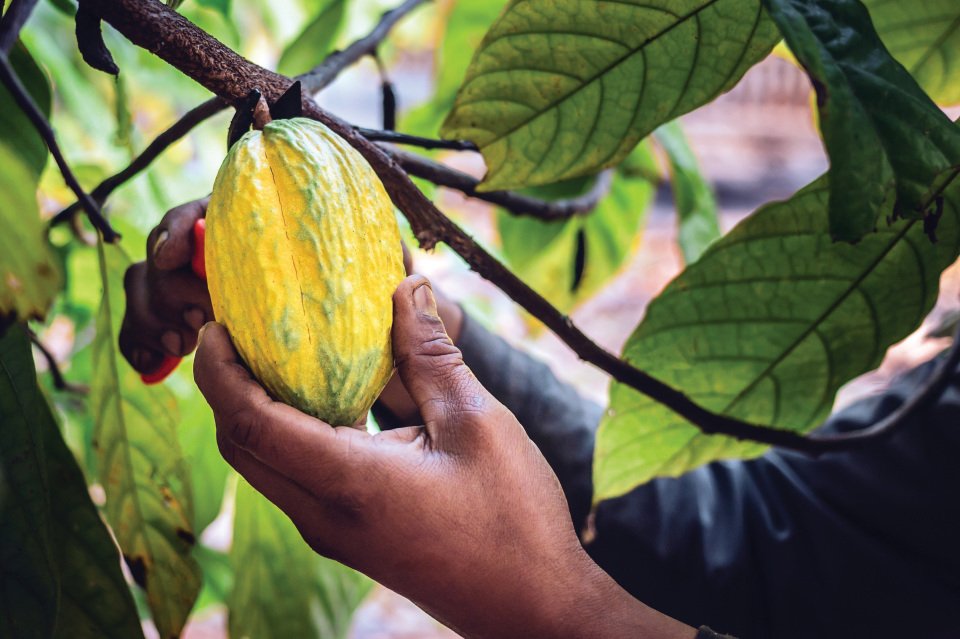
Chocolate is easy to take for granted. This sweet treat shows up at birthdays, at Valentine’s Day, at the end of long weeks—but there’s trouble in cacao paradise.
Behind every bar of chocolate is a network of small farms and forest ecosystems working in balance, and environmental and socio-economic factors have been driving up costs, disrupting production, and imperiling your favorite chocolate bar—not to mention contributing to the degradation of the planet.
The issues
Monocropping
Tropical rainforests are the natural habitat of cacao trees; they thrive in the shade of the understory. When the forests are eliminated for cattle grazing or monoculture crops, the results—soil depletion, lack of former biodiversity, and the increased use of contaminating chemicals—are calamitous. For example, native forests store four times as much carbon and harbor thirty-five times more species than monocultures.
Climate change
Cacao trees require a very specific combination of humidity, heat, and rainfall. Volatile weather patterns can increase occurrence of diseases and reduce crop yields. This in turn leads to tightening global supplies and higher prices.
Social factors
Almost all cacao farming is done on small family holdings, and financial stability is precarious. The World Economic Forum notes that “up to 58% of cocoa farmers in Côte d’Ivoire and Ghana live below the World Bank extreme poverty line and up to 90% do not earn a living income.”
Did You Know?
Only 36% of the tropical rainforests that once covered the Earth remain intact, with 34% gone completely and 40% in various forms of degradation.
The solutions
The solution may lie in regenerative agroforestry. Simply stated, agroforestry is “an agricultural method that grows crops in the form of a forest,” as described by To’ak Chocolate and its affiliated non-profit Third Millenium Alliance (TMA). “One of the benefits of this approach is a net removal of CO2 from the atmosphere. Other happy byproducts include soil conservation, watershed protection, and biodiversity preservation.”
To’ak and TMA assist farmers in establishing a three-layer forest to restore land degraded by livestock grazing and monoculture farming. The top tier consists of native shade trees, which contribute to CO2 removal, nutrient cycling, and water and soil retention. The next level involves fruit trees, which also enhances local food security. And then come the cacao trees, which add a sustainable revenue stream to the mix.
Regenerated forests address several problems: they reverse the effects of monoculture farming by restoring soil and watersheds and providing better protection against adverse weather effects, enhance the environment by absorbing CO2 and by offering shelter to displaced native species, and contribute to the improved welfare of the farmers and their communities.
Fair for Life
Many chocolate and other cacao products are inextricably linked to child labor. In Côte d’Ivoire alone, an estimated 790,000 children work in cocoa production.
Look for fair-trade certifications, such as Fair for Life, on your products to ensure people-centered, ethical, and responsible commercial standards.
Above and beyond
But environmental and agricultural knowledge and awareness are scarcely sufficient; economic realities must be accounted for. Jerry Toth, the founder of To’ak and TMA, explains one of the biggest stumbling blocks: “Farmers use their land in accordance with whatever activity generates the most income. This is how farming works in pretty much every country in the world … people go where the money is.”
TMA’s Community Reforestation Plan offers payments over five years to support farmers in converting deforested land into regenerative forests and establishing long-term viability. Toth explains the concept of these grants: “They are what the industry refers to as Payments for Ecosystem Services (PES). Farmers are paid for the ecosystem services they provide to humanity—in this case, by planting and maintaining trees that remove CO2 from the atmosphere.”
The result? A win for farmers, a win for the planet, and a win for chocolate-lovers around the globe.
Dark chocolate isn’t just delicious; it may offer real health perks:
- maintain healthy aging due to its theobromine content
- support heart health by improving cardiovascular markers
- provide anti-inflammatory and antimicrobial properties
- support metabolic and immune function
So yes—you can savor that square with a little extra satisfaction.
This article was originally published in the May-June 2026 issue of alive magazine (US edition).
