
– CANNES 2026: Emmanuel Marre delivers a historical film set in the present day, depicting a Vichy official who dreams big, turning his camera on the flip side of the grand narrative of history
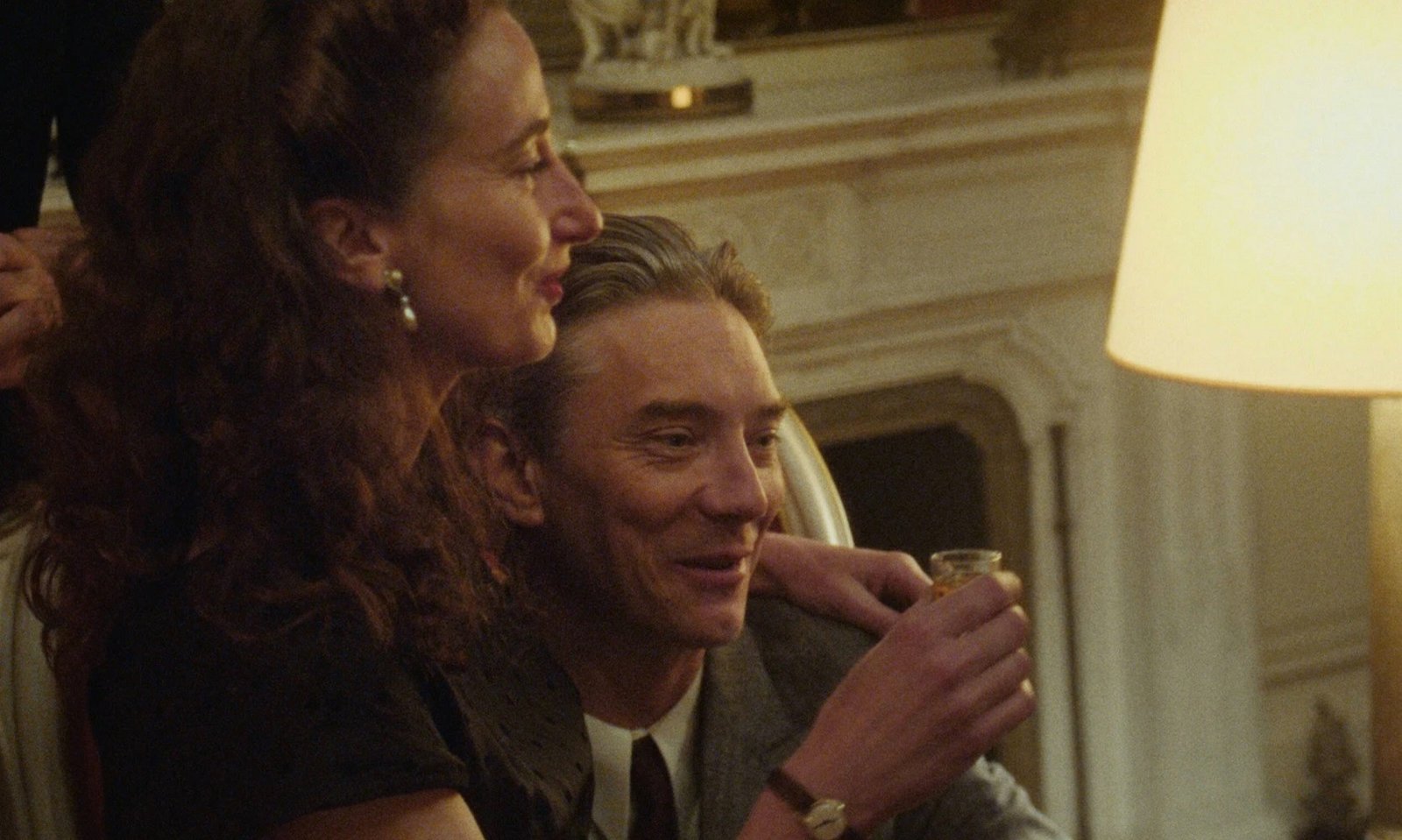
Sandrine Blancke and Swann Arlaud in A Man of His Time
Our era seems obsessed with the previous century, starting with the period of the Second World War, which has been haunting both cinemas and bookshop shelves for some time now. This look back offers a sometimes striking insight into what might lie ahead, and in this respect, Emmanuel Marre’s A Man of His Time, presented in competition at the 79th Cannes Film Festival, could not be more striking, both in its form – which is powerfully contemporary – and in what it suggests about human society.

“Is our salvation not, above all, your salvation?” asks an official to whom Henri Marre (Swann Arlaud) is keen to “sell” his book of the same name, in which he sets out a vision for a better future for France, using the defeat at the hands of Germany as a springboard to rebuild a more efficient society under Marshal Pétain’s leadership. Leaving his wife and children behind, Henri attempts to settle in Vichy, where he intends to play a significant role. Tired of appearing in the background of official photographs, he is prepared to do anything to finally step into the limelight. So he observes, listens, schemes, and eventually secures a civil service post, a smart suit – albeit a little too big – and an office. Bolstered by this new status, he gradually discovers that his patriotism isolates and misleads him. Meanwhile, France, like him, sinks into collaboration, and his wife Paulette (Sandrine Blancke) clings as best she can to their love, which is soon stretched to breaking point. Henri is consumed by his own ambition; he is both resolutely opportunistic and sincerely convinced of the validity of his worldview. Blinded by this dual impulse, he sees only his own interests, and is in for a rude awakening when, having finally risen to the top, he realises he is on the wrong side of history. The camera is part of this quest, filming Henri on the fringes of the action, or zooming in on him to bring him back to the centre, cornered and facing up to his responsibilities. It is a way, through the image, of situating him within his environment, and also of probing the collective echoes of his journey.
What A Man of His Time offers, by focusing on a minor character, is also an opportunity to examine the flip side of the official historical narrative. The war stands as the absolute off-screen element – firstly that of French society at the time, which, following defeat, experienced a kind of status quo; and also that of the characters who come to terms with (or strive to) ignore it. But as time goes on, the clues pile up and resistance emerges, and the war soon becomes impossible to ignore. This film is a moving portrait of a man but also of his era, where the ever-sensitive presence of the camera constantly reminds us of our duty as active spectators, participants in a present-day narrative of a past history that we know often repeats itself. By immersing its character in the most trivial as well as the most heart-wrenching aspects of daily life, from office life to the wear and tear of love, the film breaks down the distance with its anti-hero, whose baseness often seems so familiar. A Man of His Time does not revisit history; it films it in the present, aided by Swann Arlaud’s deeply committed performance, as well as by the surprising presence of Sandrine Blancke in the second half, and the striking modernity of the artistic direction, which is as precise as it is unique.
A Man of His Time was produced by Kidam (France) and Michigan Films (Belgium). International sales are handled by Charades.
(Translated from French)
