
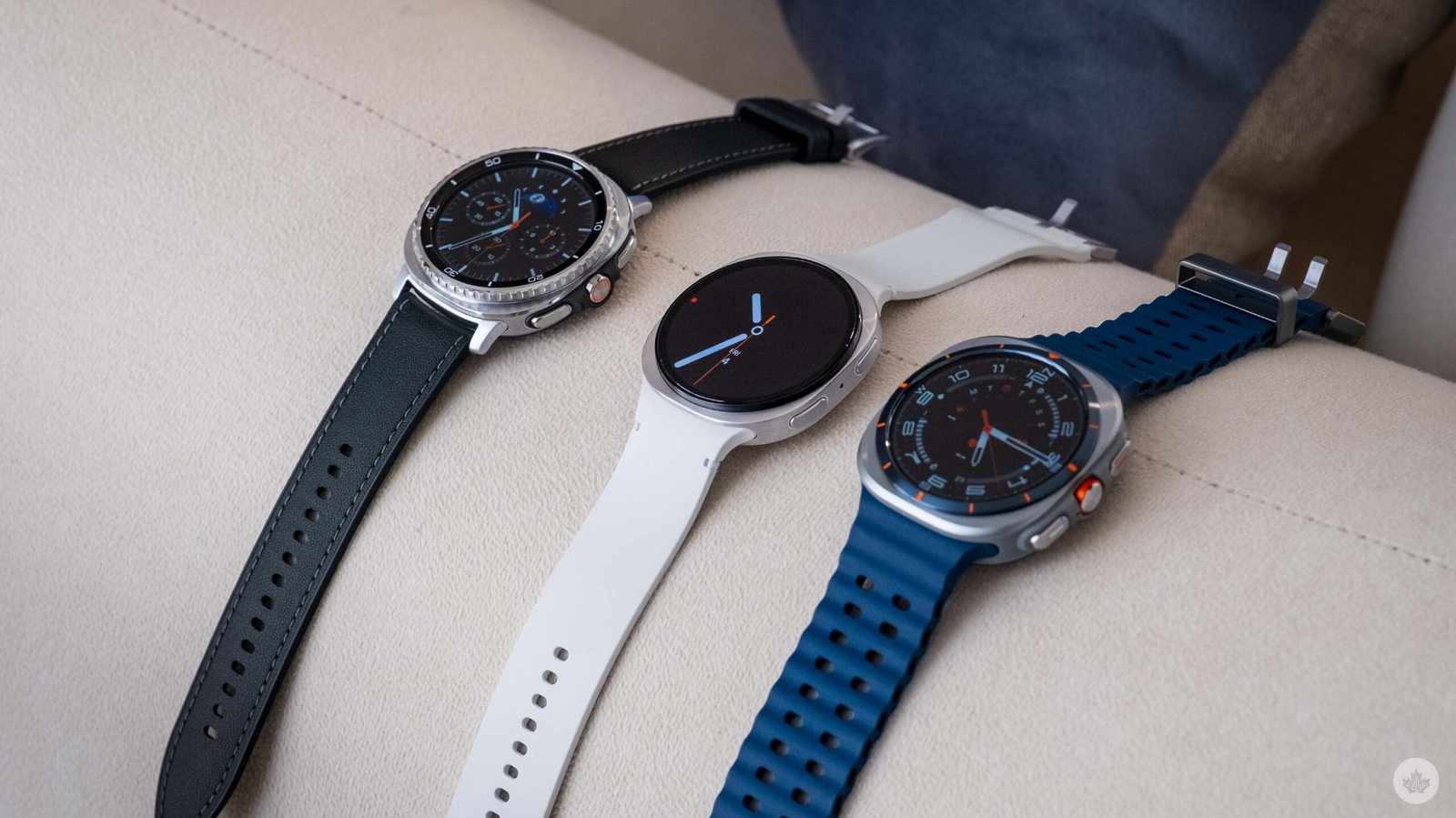
Samsung says that it has figured out how to predict a common type of fainting “with high accuracy” using biosignals from its Galaxy Watch 6, meaning that wearers could use the early warning signs to get into a safe position or call for help.
To add some context, the most common type of fainting, which is the one that Samsung claims to be able to spot, is called vasovagal syncope (VVS). VVS fainting happens when someone’s heart rate and blood pressure drop suddenly after certain triggers, like the sight of blood or extreme emotional distress. While VVS is not normally dangerous in itself, it can cause sudden falls that result in other injuries, such as concussions.
The tech giant worked with Chung-Ang University Gwangmyeong Hospital in Korea to develop the monitoring technique, which was detailed in a paper published by the European Heart Journal. The team evaluated 132 patients with suspected VVS symptoms in what is described as induced fainting tests.
Using the Galaxy Watch’s photoplethysmography (PPG) sensor (which measures heart rate and rhythm), the team used an AI algorithm to analyze a patient’s heart rate. With this feature, it successfully predicted impending fainting episodes up to five minutes in advance with 84.6 per cent accuracy “at a clinically meaningful sensitivity of 90 per cent and a specificity of 64 per cent,” according to Samsung.
The company hasn’t said when or if such a feature will become available to Galaxy Watch users, but the Galaxy Watch 8 does offer health alerts for sleep apnea, blood oxygen, heart irregularity, and antioxidant detection, so I imagine it won’t be too long.
