
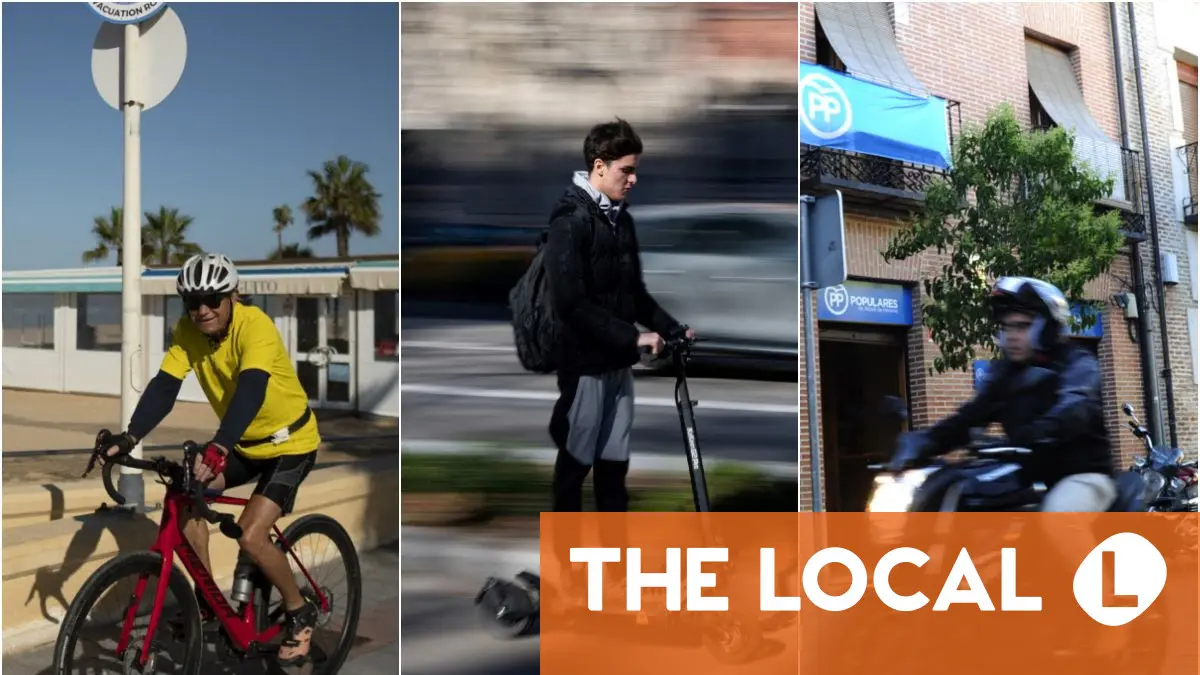
Spain has made a raft of changes to its traffic rules, with many important updates for motorcyclists, cyclists and e-scooter riders as well as motorhome and regular motor vehicle drivers.
The Spanish Cabinet on Tuesday June 23rd approved an amendment to the country’s General Traffic Regulations, with a particular focus on improving the protection of vulnerable users.
The standout point is that the minimum legal age to ride an electric scooter in Spain has been set at 15 years, but there are other changes which as government spokesperson Elma Saiz explained in a press conference point to a change in the previous “approach focused on the road and the car, to one looking at people and urban environments.”
What are the new rules that affect cyclists?
A protective helmet is now compulsory for cyclists on all secondary roads. Those who carry out work activities on bicycles on secondary roads will also be required to wear a helmet, as well as a reflective vest. The fines for not doing so will be of €200.
In urban areas, cyclists should ride in the centre of the lane to make them more visible to drivers.
On single-lane roads with a speed limit of 30 km/h, your municipal authority can now allow two-way traffic for cyclists.
Drivers overtaking cyclists on secondary roads must reduce their speed by at least 20 km/h of the speed limit of the road.
Drivers overtaking cyclists on secondary roads must also completely change lanes on roads with more than one lane in each direction, leaving at least 1.5 metres between their motor vehicle and the cyclist.
On urban roads, motor vehicle drivers should also now leave a safety distance of five metres between them and cyclists.
What are the new rules that affect e-scooter and other personal mobility vehicle users?
The minimum age for driving an electric scooter, segway or similar device has been set at 15 years.
E-scooters riders will now have to wear a helmet and reflective gear such as a vest at night or in low-visibility conditions. People who use e-scooters for work reasons will be required to wear these at all times on the road, no matter the weather or time of day. The fines for not doing so will be of €200.
E-scooter riders must now keep their lights on at all times.
E-scooter riders can now circulate outside the city on roads not accessible to motor vehicles, such as cycle paths.
What are the new rules that affect motorcyclists?
Motorcycles will also be allowed to travel on the right shoulder when there is traffic congestion, without exceeding a speed of 30/km per hour and after the section has been signposted.
The new regulations require the use of protective gloves for motorcyclists and passengers motorcycles and mopeds on secondary and intercity roads, but not in cities, as well as closed footwear on all types of roads. Spain’s DGT traffic authority is trying to clamp down on moped riders wearing just flip-flops, in particular. These traffic violations will carry a €200 fine.
Motorcyclists’ helmets will now have to be officially approved (homologados), not just certified.
A reflective vest will be mandatory at all times for people who use motorcycles for work purposes.
What are the other road rule changes?
Taxi drivers will no longer be exempt from wearing seat belts, a regulation that will also affect goods vehicles and driving school vehicles. From now on, they must wear them at all times.
Vehicles overtaking other vehicles that are stopped must leave a lateral separation of 1.5 metres and reduce their speed by at least 20 km/hour compared to the existing speed limit on the road.
On motorways and dual carriageways, when traffic is hampered by snow, overtaking is prohibited and traffic will only be allowed in the right lane, leaving the left lane free for emergency vehicles and snowploughs.
When, due to a traffic jam, vehicles are moving at pedestrian speed or are stopped, they must move to the side of the road in such a way as to leave a central space free to allow the passage of police vehicles and other emergency services.
At pedestrian crossings with traffic lights, the flashing amber light for vehicles cannot coincide with the green light for pedestrians.
Safe school routes will be given legal status. This paves the way for them to be recognised as priority public transit spaces and active mobility infrastructure. It provides them with legal protection, institutional responsibility, and makes it easier for municipalities to design safe environments for students.
Motorhome parking will now be more tightly regulated in Spain. Essentially, these vehicles may not extend their own elements that exceed the perimeter of the vehicle (so no extendable devices to make it bigger while parked), they must rest only on tyres and users cannot spill fluids from the cabin onto the parking spot (fuel, toilet chemicals, wastewater etc).
When will these traffic rule changes come into effect?
This new traffic rules will come into force on October 1st 2026, except for the homologado helmet for motorcycle users, which will come into force on October 1st, 2027.
