
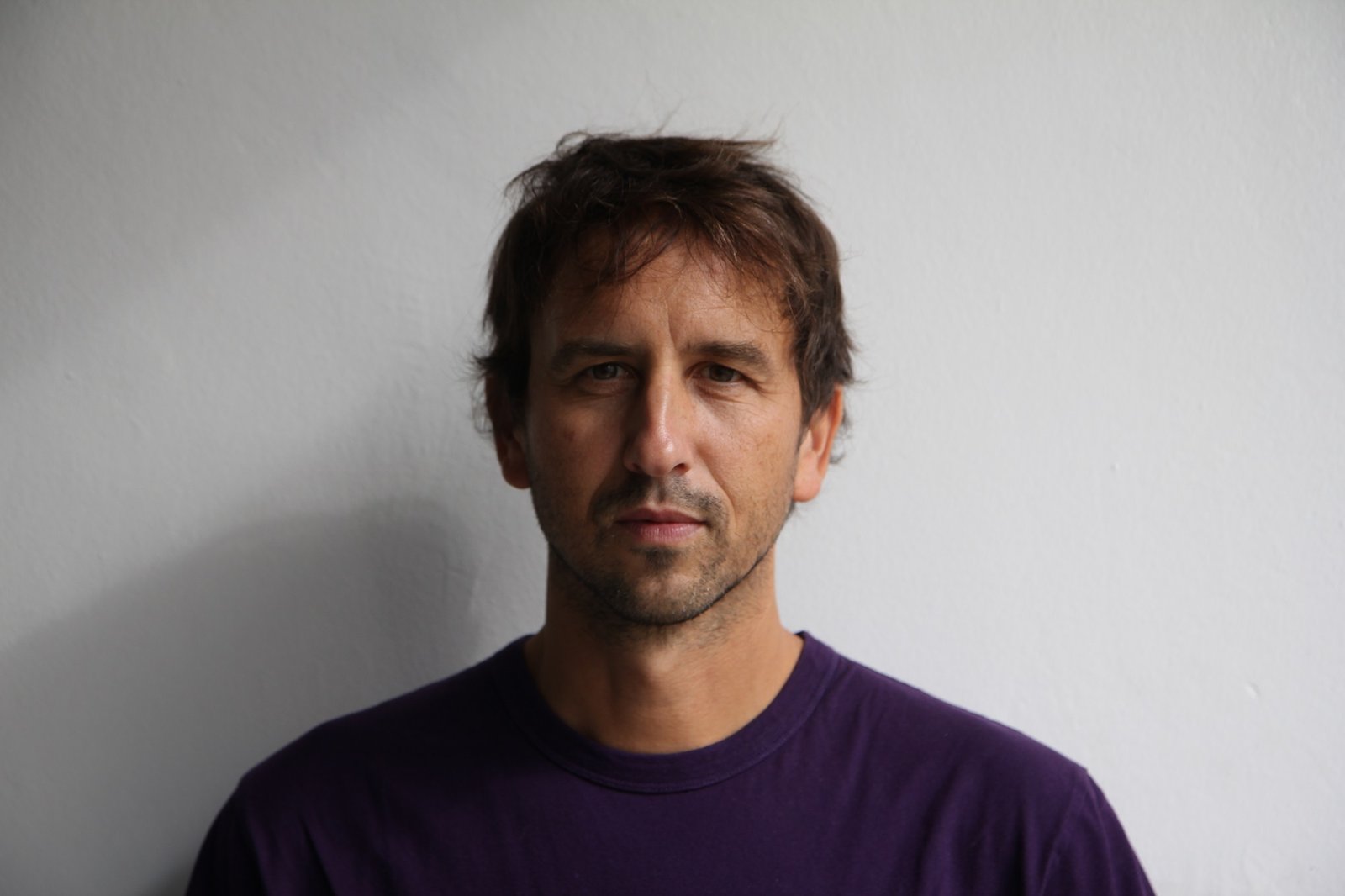
– The French filmmaker analyses a film which, against a backdrop of tense suspense and a sense of uncertainty, explores contemporary youth and the micro-society of a summer campsite
(© Agat Films & Cie)
French filmmaker Stéphane Demoustier analyses his sixth feature film, La Chaleur, released in France by Memento on 8 July.
Cineuropa: What motivated you to adapt Victor Jestin’s novel?
Stéphane Demoustier: The author had sent it to me directly by post when he’d finished writing it, which is quite unusual. I’d read it and found it interesting, but at the time, we were unable to secure the rights, which had been acquired by an Italian company. Several years later, the author – with whom I’d stayed in touch – rang me to say that the Italians weren’t going ahead with the film. I was still interested because I loved this portrait of a teenager and also the atmospheric challenge of a potential adaptation: making a film with a distinct sensory dimension that allows the audience to feel what the protagonist is going through. My adaptation is very faithful to the main themes of the book and the characters’ dramatic arcs. I’ve just made a few minor changes, notably by emphasising the investigative aspect, because in the book, we’re so deeply inside the main character’s head that we almost forget there’s a body and, therefore, inevitably, someone looking for him. I’ve also changed the opening by introducing the accident straight away – which is also different from the one in the book – because I wanted the audience to understand the character’s motivations right from the start.

What about the film’s setting – this seaside campsite that opens up possibilities for geographical and social exploration?
This campsite is at the mercy of the sea, of the elements. In the film, I constantly play on this sort of interplay between the elements and the character’s moods. I also wanted to move away from the condescending social portrayal of campsites in cinema: very working-class campsites that are somewhat stigmatised, or even mocked. What interested me was showing this middle-class campsite, which is actually quite lovely. Therefore, the film documents a generation and a place.
How did you handle the suspense? Is it a pretext for portraying a younger generation?
It’s a slow-burn thriller. What I love about the genre is that it provides a framework within which to work, a sense of tension. Beyond that, it’s about Eros and Thanatos. I wanted to portray this generation in terms of what is timeless about it, but also in terms of what characterises it today – that deep sense of anxiety caused by climate and political threats. The tragedy at the beginning of the film served to reinforce all of that. It’s a languid thriller shaped by the character’s state of mind, a sort of subversion of the genre’s usual conventions. There’s also a sensual dimension to it, because it’s an age when, naturally, the senses are in turmoil.
The film explores the paradoxical relationship between the main character’s profound loneliness and the group around him.
A campsite is the ultimate place for socialising. What’s more, adolescence is a time when we spend a lot of time in groups, when we want to be part of the group and when we often suffer from not being part of it. There is a need to feel secure by being part of something generational. It also corresponds to the age when one experiences one’s individuality, when one leaves behind the innocence of childhood and begins to sense one’s uniqueness, whilst also becoming aware of the reality of the world around us. All of this creates a sense of loneliness and an experience of solitude that is heightened by the fact that it is felt whilst in the midst of a group.
The film is very atmospheric, particularly through a soundscape that at times borders on hallucination. What were your main intentions in this regard?
To convey Marouane’s inner state, I sometimes used directorial techniques, but also sound design. We needed to convey a sense of disorientation, that Marouane is somewhat detached from reality, in a sort of trance-like state of bewilderment. That’s why there are slow-motion sequences featuring mental visions that feel like moments of disconnection, as he is unable to engage with reality. And the soundtrack constantly blends everything together, drawing heavily on real-world elements – creaks, birdsong, and so on. Some of these are deliberately exaggerated at times, as if he were in a state of hypersensitivity or hyper-awareness.
(Translated from French)
