
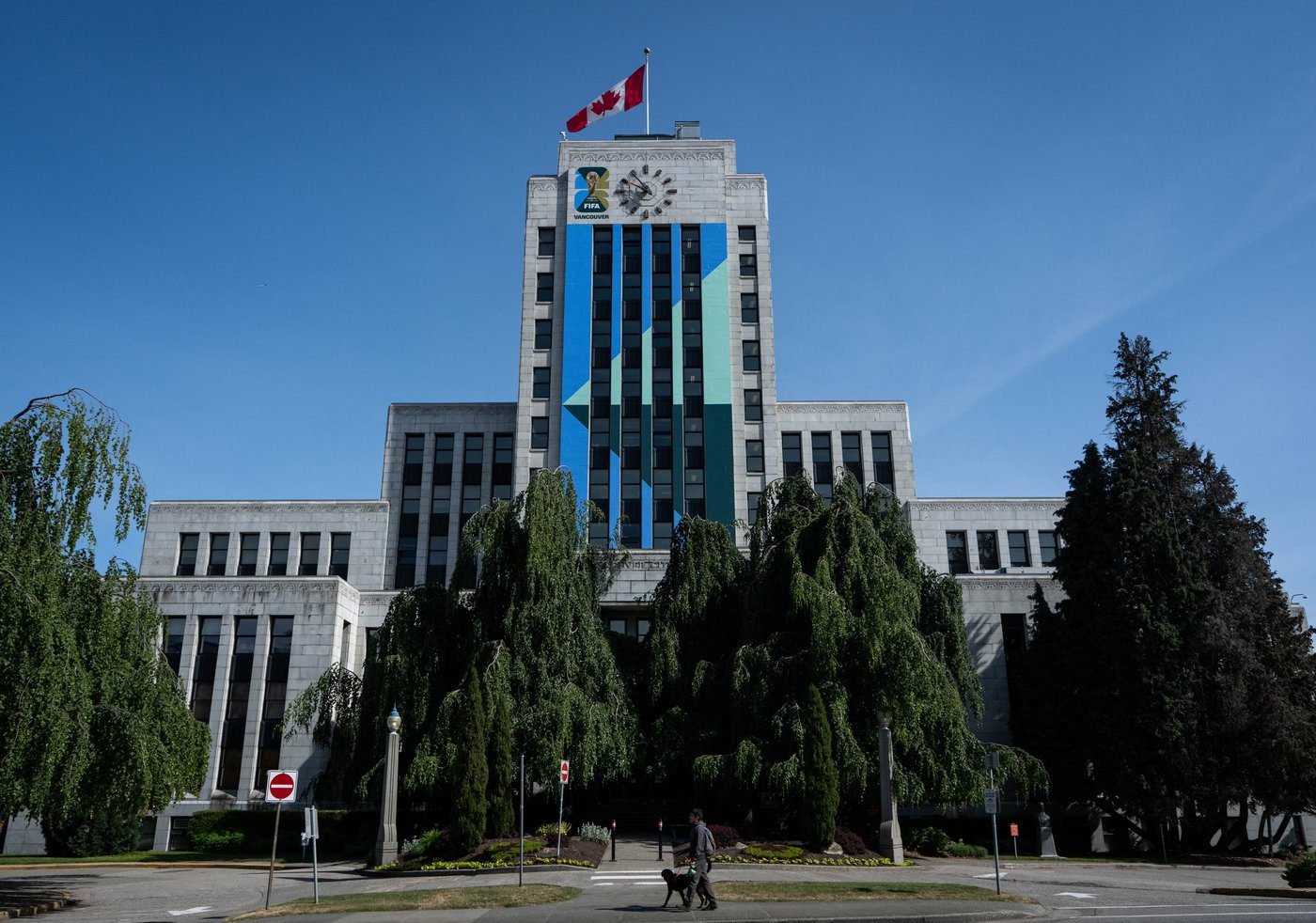
VANCOUVER — The City of Vancouver has issued a human rights plan for the FIFA World Cup that begins next month, saying people who are homeless will still be able to shelter in parks overnight, but structures will have to be removed in the daytime under pre-existing rules.
The city says in the plan that while Vancouver is required by FIFA to conduct beautification, such as covering construction sites and removing graffiti, it won’t impact human rights.
The document says bylaw officers will keep parks and sidewalks “free of structures and in compliance with bylaws” during daytime, under city rules that already exist.
The release of the final plan comes months after a preliminary version triggered concern from Downtown Eastside neighbourhood advocates, who noted that it didn’t promise to increase supports for people who are homeless while leaving open the possibility of tent and structure removals.
The final document responds to a hypothetical question about the possibility of visitors having “negative interactions” with people who are homeless by saying volunteers will “support public realm interactions” and help visitors “know where to go.”
Vancouver deputy city manager Sandra Singh says the city will not force the homeless population to leave neighbourhoods during the seven World Cup games in the city, but “day-to-day bylaw compliance work will continue” and most of the city will be “business as usual.”
“When we do that work, we require people to bring down temporary structures, tents, canopies,” Singh said in a media availability.
“We do require that people pack up belongings that are taking up sidewalk or spaces in parks so that the public realm can be usable by the whole community during the day. What we don’t ask is that people leave their neighbourhoods. We don’t ask that people leave that block.”
The City of Vancouver said the action plan relied much on existing services meant to support vulnerable populations during game days when there may be more encounters between them and attending fans.
Additional resources would be placed in specific zones — such as along False Creek near Science World leading up to each game — focusing on community-led patrols in place of police.
“We do think that the plan and the way that we’ve approached it, it builds on the excellent services that are already out in the Downtown Eastside, it is a very service-supported environment already,” Singh said.
“And so what we’ve done is we’ve identified through the community feedback some areas of unique concern to the FIFA World Cup that we’ve added in some additional contracts and services.
“So we think we’re being responsive in addressing (the community’s) primary concerns.”
Vancouver hosts the first of its World Cup on June 13.
This report by The Canadian Press was first published May 25, 2026.
Chuck Chiang, The Canadian Press
