
– CANNES 2026: With his debut feature, Julien Gaspar-Oliveri crafts a shifting portrait of two siblings confronted by the return of their father and an impossible rift
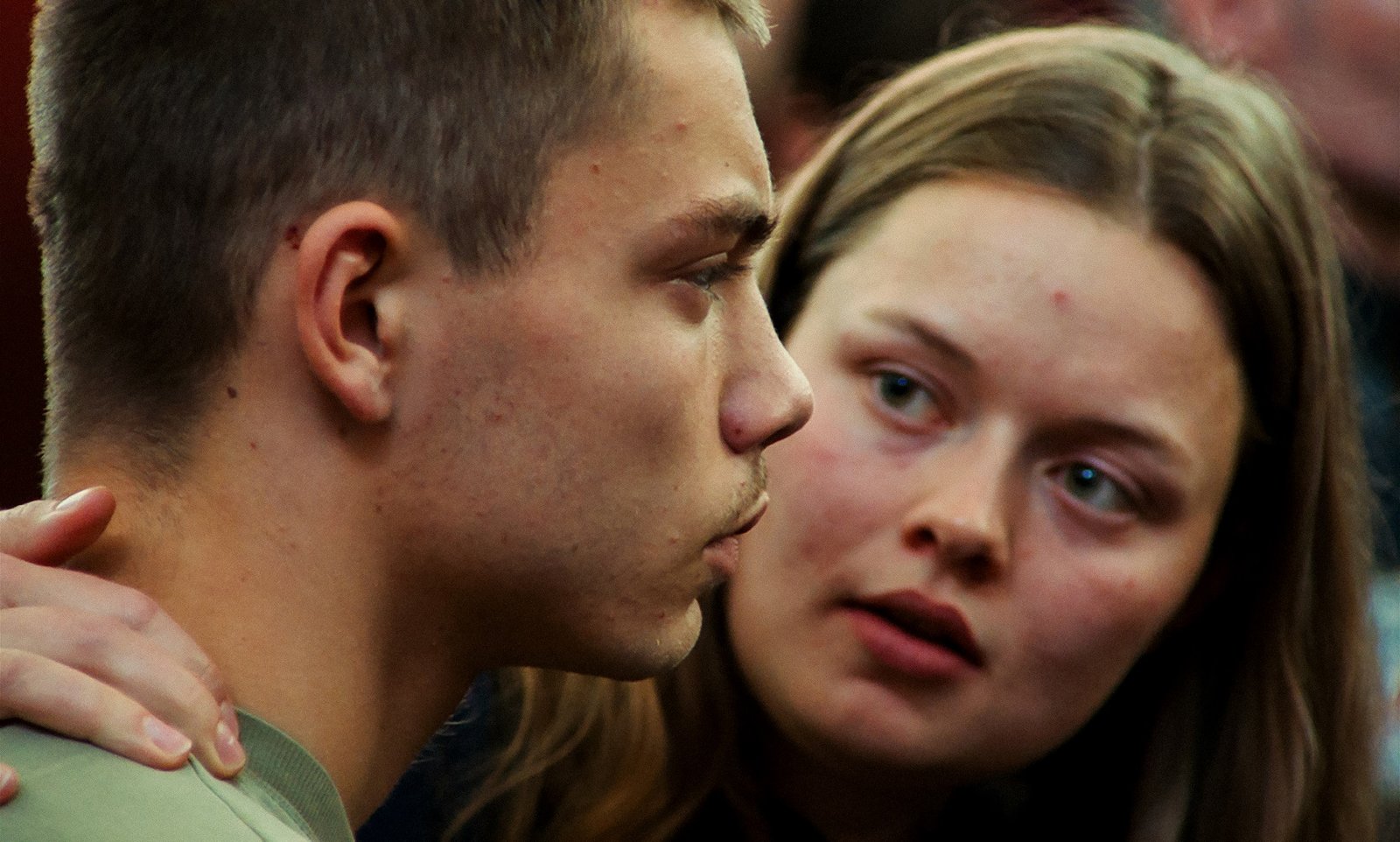
Diego Murgia and Romane Fringeli in The Blow
An actor trained at the Conservatoire as well as a filmmaker, Julien Gaspar-Olivieri first came to attention through a handful of short films already exploring the tangled terrain of family — Villeperdue in 2017, awarded at the Namur Film Festival, and Tender Age, nominated for a César in 2022 — as well as through the short-form series Ceux qui rougissent, a critical and public success that showcased his taste for an approach to fiction deeply rooted in documentary-style filmmaking tools. His eagerly awaited debut fiction feature, The Blow, had its world premiere in a special screening in Critics’ Week during the 79th Cannes Film Festival.

Enzo (Diego Murgia) and Carla (Romane Fringeli), brother and sister, share an intensely close relationship. But their bond is called into question, only a few minutes into the film, when a disruptive element comes into play: the return of their father (Bastien Bouillon), whom we understand has just been released from prison, though the reasons remain unclear. His imminent arrival nevertheless unsettles the household. While Enzo scrubs the house as though preparing a nest, Carla displays a troubling nervousness. Where the brother protects the father to the point of suffocation, the daughter avoids him. We sense that the father’s wrongdoing is more serious than the fraud charges that appear to have sent him to prison. Yet Enzo clings to him, submitting himself to the will of a father whose grip over his son — and over the family dynamic itself — quickly reasserts itself. Despite the tender relationship Enzo shares with his girlfriend Roxanne, he struggles to find any grounding. Carla, meanwhile, fears the mark their father’s behaviour may have left on their psyche. And when she forces Enzo to confront reality, he breaks down.
The Blow is part of a contemporary discourse on the issue of domestic violence, a subject often approached through the lens of revelation and resilience. In this respect, the film diverges from this trend, with the prospect of collapse as its central theme—a destabilising choice that leads to suffering. At both the heart and the margins of the narrative, Bastien Bouillon portrays the ogre-like father, present when he is absent, absent when he is present, an inscrutable figure for his children as well as for the audience. He is the black star around which the galaxy of Enzo and Carla revolves, in a dual movement of attraction for one and repulsion for the other. Brother and sister make do with what they have, and begin the film with a bang, speaking very loudly, as if to compensate for the deafening silence that conceals their traumas.
Julien Gaspar-Oliveri opts for a documentary-style camera, which, through a series of extreme close-ups, delves into the eyes and almost beneath the skin of his actors to capture what the dialogue and the script do not reveal. It captures, with a sense of apparent immediacy, the fragility of its young performers and their moments of wavering, at times risking turning the spectacle of the irreparable violence from which they cannot escape into a form of violence in itself. While the approach meets the expectations one might have when tackling such issues, it reveals two deeply committed young performers, Diego Murgia and Romane Fringeli, supported by a succession of supporting roles that are often brief but very vividly portrayed.
The Blow was produced by Easy Tiger (France). International sales are being handled by Charades.
(Translated from French)
