
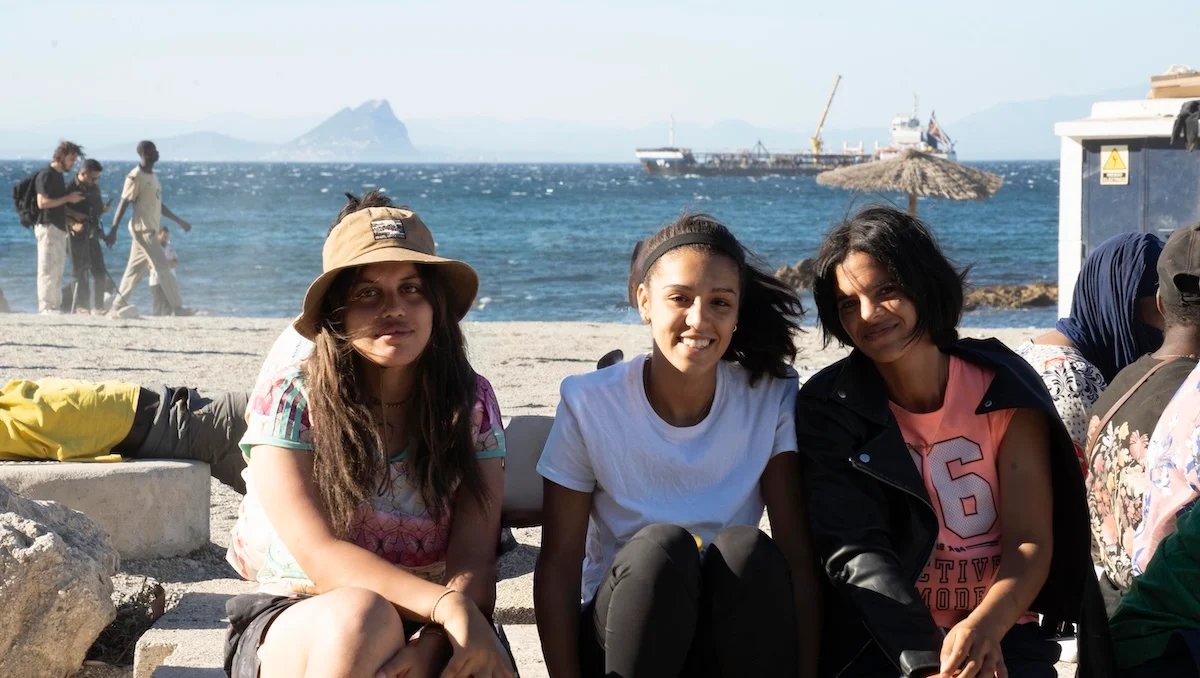
SPAIN’S government is preparing to transfer around 500 unaccompanied migrant children, mostly girls, from Ceuta to the mainland amid growing concerns over their welfare and living conditions.
The decision is considered a U-turn by the Spanish government after previously saying anyone who entered territory illegally would be sent back.
Migration Minister Elma Saiz told public broadcaster RNE that the ‘welfare of the children’ must be protected at all costs.
The minors are among thousands of migrants who entered Ceuta from neighbouring Morocco during the mass border crossing on July 30.
Spain’s Policia Nacional have reportedly identified 2,168 unaccompanied minors who remained in Ceuta following the crossings and placed them under the care of local authorities.
READ MORE: Catalunya must be excluded from taking in Ceuta migrant minors, right-wing separatist party demands
Under Spanish law, authorities have a duty of care towards unaccompanied migrant children until they turn 18.
The girls, after moving to mainland Spain, will be placed in foster homes or government-run care facilities.
The move comes amid increasing concerns about conditions in Ceuta, where authorities have struggled to accommodate the large number of arrivals.
Thousands of migrants have reportedly been sleeping in overcrowded and unsanitary conditions, with limited access to toilets, showers and suitable accommodation.
While Spain’s health minister has rejected claims that Ceuta is facing a wider public health crisis, local authorities are claiming that after the enterance of migrants public health situation in the enclave has deteriorated.
UNICEF Spain’s Lara Contreras said 97 of the 500 girls selected for transfer, aged between nine and 17, have already been moved to improved accommodation while preparations are made to take them to the mainland.
Most of those who crossed into Ceuta have since returned to Morocco.
Spanish Interior Minister Fernando Grande-Marlaska has said that around 5,000 migrants remain in the Spanish enclave.
The transfer is intended to ease pressure on Ceuta’s overstretched reception system while providing the children with safer accommodation and appropriate care.
