
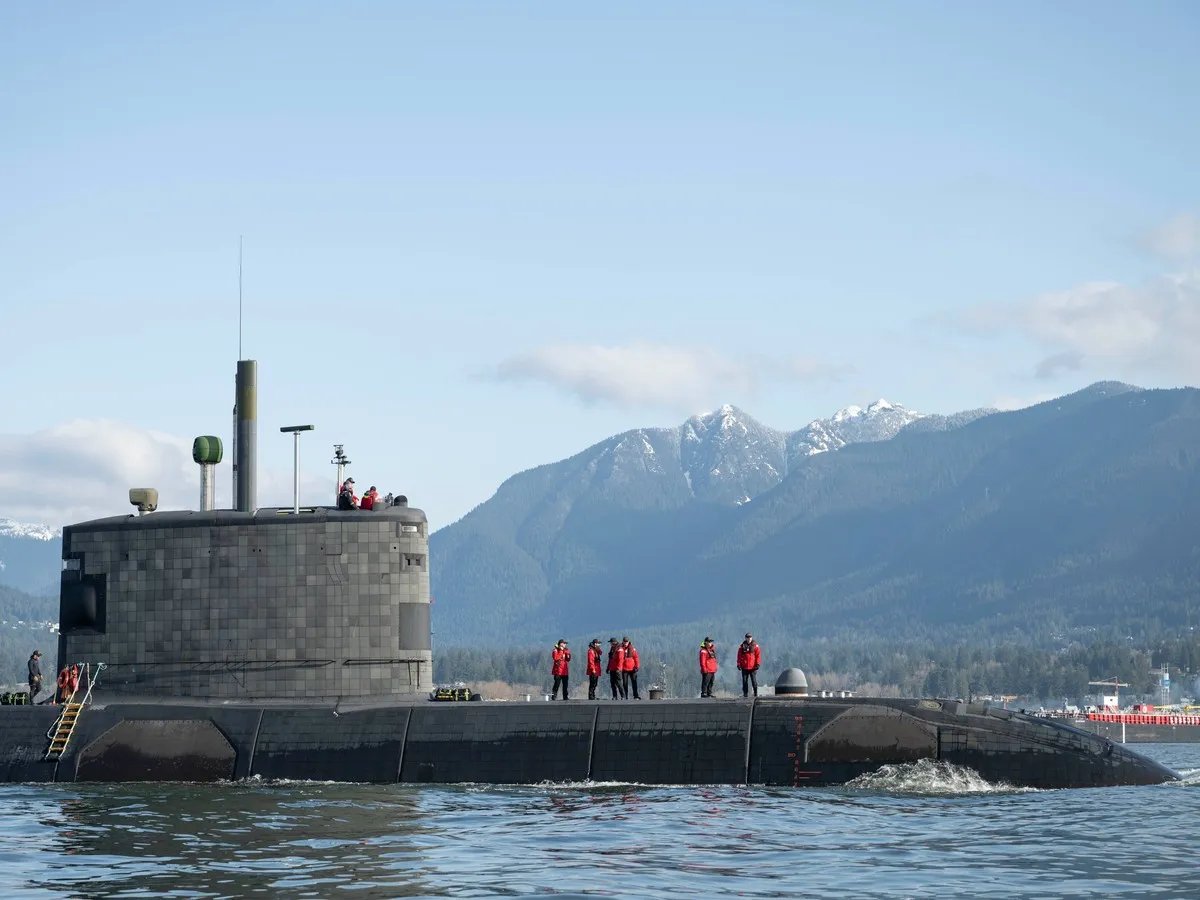
Canada will have to squeeze at least another decade of life out of its used British submarines as it waits for Germany to deliver up to 12 new vessels. But not everyone’s convinced that can be done.
The four diesel-electric subs the Royal Canadian Navy acquired from Britain in the late 1990s have been plagued with disasters, including floods, a deadly fire and a grounding that took the only operational sub we have right now out of action for a decade.
But the recent announcement that Canada is negotiating with Thyssenkrupp Marine Systems as the preferred supplier for up to 12 new subs to replace them doesn’t mean the Victoria Class will go by the wayside any time soon.
“Canada will conclude contracting no later than the end of 2027, with the first four submarines to be delivered ahead of schedule, in 2034,” Andrée-Anne Poulin, who speaks for National Defence, wrote in an email.
“Until then, the RCN’s current submarine fleet will remain operational into the mid-to-late 2030s.”
The navy needs to keep running the Victoria Class so it can train submariners for the German submarines we’re buying, said Paul Mitchell, a professor at the Canadian Forces College who is writing a book on the Victoria Class.
“By hook or by crook, the navy has to make these things work for the next 10 years because they have to generate crews,” Mitchell said.
“So, the navy is just going to do whatever it can do to keep these things operational, which is basically what it’s been doing for the last 20 years.”
The vessels kept Canada in the business of running submarines after Canada’s three Oberon Class subs were taken out of service between 1998 and 2000, Mitchell said.
“It was always a life raft,” he said.
“If they didn’t get the Victoria class, we wouldn’t have a submarine service to fill out right now. It was just keeping it alive.”
With “careful management,” Mitchell said, the subs “absolutely can last us another decade.”
The pressure hulls — the primary, watertight inner hulls of a submarine — can be managed safely, he said.
“If there’s concerns about it, they put restrictions on the depth that they can dive,” Mitchell said. “The bigger question is, there’s lots of parts on a sub that are increasingly difficult (to source) and perhaps within a couple of years, (they’ll be) impossible to replace without really expensive re-engineering efforts.”
Canada has spent lots of effort and money on the Victoria Class subs, “and still had, I think, by most peoples’ admissions, pretty weak results,” said David Perry, a defence analyst with the Canadian Global Affairs Institute.
“My running joke several years in the last ten has been I don’t know what a good number of operational days for a submarine force is, but zero seems low,” Perry said.
“I don’t think anybody’s first preference would be to (keep them running for another decade) because it’s been difficult enough to keep them operational to the extent that they have been up until this point, let alone trying to go another decade.”
Industry isn’t keen on making spare parts for the Victoria Class because Canada’s are the only four in existence, Mitchell said. “There’s no profit motive to make these things. So, you have to go to very expensively bespoke-made parts. And that’s the limiting factor — just how much money do you want to spend on maintaining these things?”
The spare parts problem was of our own making, Mitchell said.
“When we bought these things in 1998, the Canadian government, in all its wisdom, insisted on a $50-million discount from Britain,” he said.
“And Britain said basically, okay, we’re going to give you the $50 million. But what we’re not going to do is give you a warehouse full of spare parts.”
The Brits were able to use the spares for their Trafalgar Class submarine program, Mitchell said. “And from that point on, we had spare part problems.”
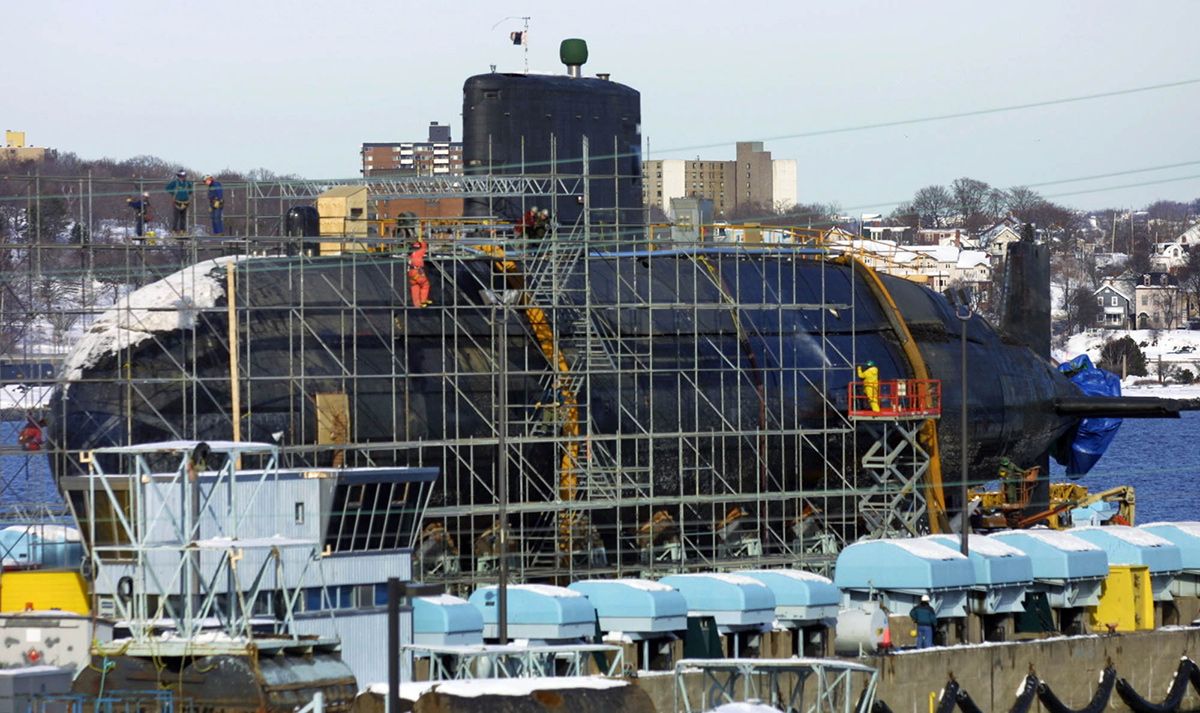
Victoria Class refits have gone on for years because technicians would hit roadblocks, Mitchell said. “You’d need a piece and you couldn’t have it for another six months. You can’t do anything more with the sub until that piece gets fixed. And so, you know, it would sit and wait for things.”
Besides costing Canada a lot of money, the shortage of spares sparked some interesting submarine lore, he said.
“There’s all kinds of ghost stories in the navy about people being sent over to Scotland to scour through people’s garages, because they might have this piece kicking around,” Mitchell said.
“I don’t know how true that is, but in the closeout report for the Submarine Capability Life Extension Project, the number one problem that they identified was spares.”
Between 2003 and 2022 Corner Brook covered the least distance out of the four subs, traveling 55,030 kilometres, Mitchell said. “Windsor has spent the most time at sea with 98,153 kilometres in that time period.”
Only a single sub was available in both 2005 and 2020, he said.
“In 2012, there were no sea days accumulated by the Victoria-class submarine,” Lieut. Fahad Kabir of Navy Public Affairs said Friday in an email.
They logged the most sea time in 2013, with 276 sea days across the force, Kabir said.
Windsor traveled the most distance of the four in a single year in 2015 when it sailed 21,695 km to Scotland and Spain, Mitchell said. Chicoutimi came second in that contest in 2017 by traveling 20,896 km to Japan and Korea.
Corner Brook logged the least sea time in the fleet between 2005 and 2022, sailing a total of 55,030 km over that period. Windsor covered the most distance — 98,153 km — during that span.
Corner Brook’s grounding on June 4, 2011, during submerged maneuvers near Nootka Sound did a lot of damage to the sub’s nose, but that’s not a pressure-bearing part of the hull, Mitchell said.
When the navy got the sub into refit, however, it discovered corrosion, which needed to be fixed, he said. Then a pressure vessel in the sub was damaged during the repairs.
Fixing all that took more than a decade, Mitchell said. “The navy was grinding its teeth the whole time.”
Corner Brook’s grounding might have been down to too little time at sea for the submariners who were aboard, he said. “There’s a lot of speculation that it was from skill fade, that they just weren’t getting people out to sea enough. And there were some procedures that they should have known how to do that they didn’t have down pat. And that allowed that grounding to take place.”
The Victoria Class subs spent a total of 130 days at sea last year; 124 of those belonged to HMCS Corner Brook, which came out of a refit in February 2025. Six sea days belonged to HMCS Windsor.
Corner Brook, which sails out of Esquimalt, B.C., is currently Canada’s lone operational submarine.
Since completing a long refit last year, Corner Brook has spent 163 days at sea and counting. The sub left her home port last month with two frigates to take part in a major international naval exercise off Hawaii that runs until the end of July.
While it’s off Hawaii conducting exercises with allies, Corner Brook will likely “operate as a clockwork mouse,” so warships on the surface can practice tracking a submarine, Mitchell said.
It’s not the normal submarine practice of trying to stay stealthy by hiding from sonar signals under thermoclines in the ocean, where the temperature changes rapidly with depth.
“They hate it because basically the submarine, when it’s doing that kind of role, is behaving in a predictable way so that the surface ship can find it,” Mitchell said.
“No submariner wants to be a clockwork mouse because it’s boring and dull and there’s no glory in it. But that is an important function that the submarine can provide in terms of getting a surface fleet ready for that sort of thing.”
Our allies want to practice finding diesel-electric subs because countries including North Korea, Iran, Russia and China all have them.
“Practically every Southeast Asian navy now has conventional submarines, whereas 20 years ago, almost none of them had them,” Mitchell said.
“Conventional submarine technology has exploded in the last years in the Indo-Pacific.”
HMCS Chicoutimi — which caught fire during its maiden voyage to Canada in 2004, resulting in the death of one crew member and injury to eight others — is currently not operational and is tied up at Esquimalt.
“It has been placed in extended readiness as a harbour-based training support vessel to assist with submarine personnel training in Esquimalt,” Poulin said.
According to Mitchell, Chicoutimi will likely be raided for spare parts. “It’s basically going to become a harbour queen.”
HMCS Windsor and HMCS Victoria are both undergoing deep maintenance periods “scheduled for completion in the late 2020s and early 2030s, respectively, after which they will return to operational status,” Poulin said.
“The Victoria-class submarine fleet is expected to reach the end of its service life between 2034 and 2040.”
Mitchell doubts there will be a market for the used subs once Canada’s done with them.
“Nobody’s going to buy these things off of us, that’s for sure,” he said.
“They will be almost impossible to maintain by the time we give them up. At best, they might become a museum piece.”
Our website is the place for the latest breaking news, exclusive scoops, longreads and provocative commentary. Please bookmark nationalpost.com and sign up for our daily newsletter, Posted, here.
