
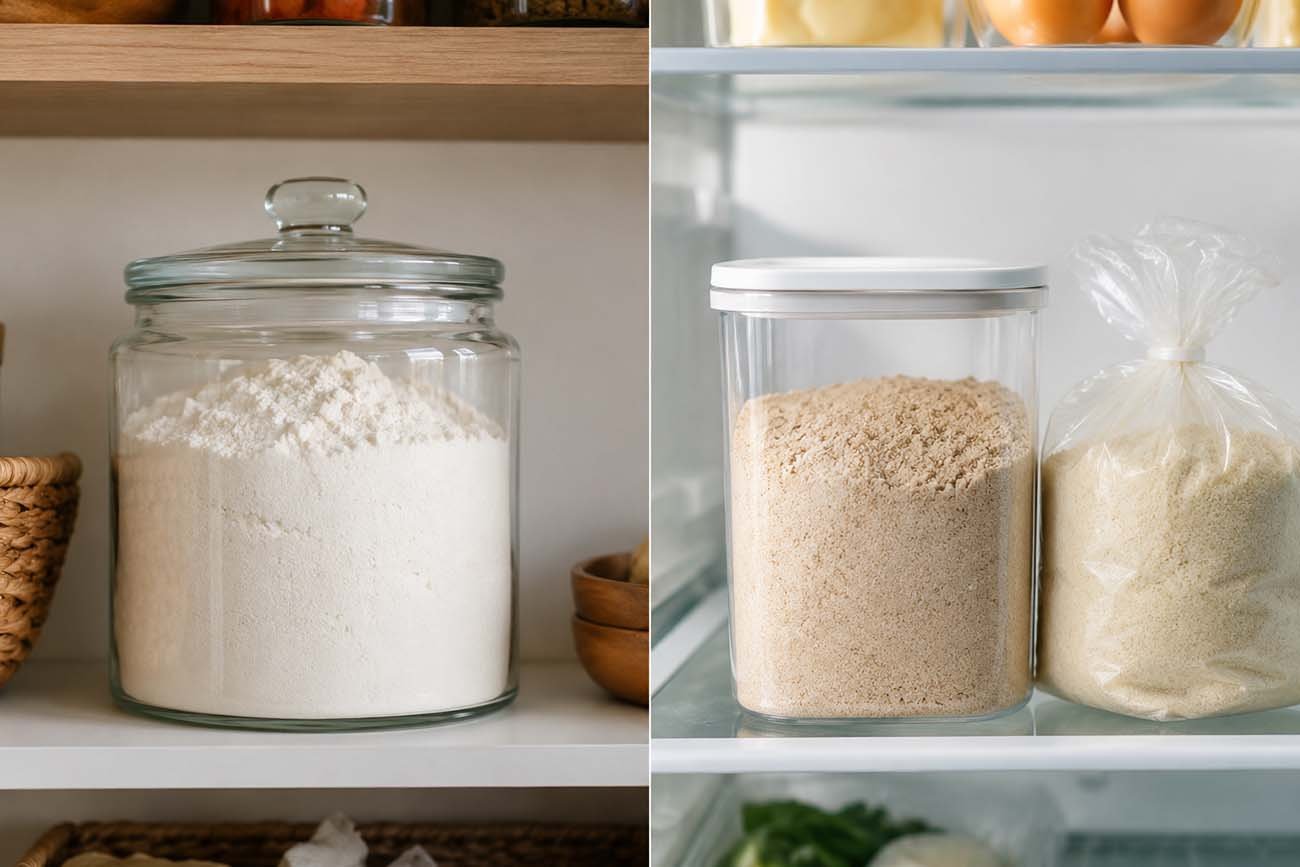
You just transferred a new bag of all-purpose flour to a canister and wondered whether it should go in the pantry or the fridge. Or you opened a bag of almond flour for one recipe and aren’t sure where to keep the rest. The answer depends entirely on what kind of flour you have.
Does flour need to be refrigerated?
The short answer: White all-purpose flour does not need to be refrigerated. It is shelf-stable per USDA classification and keeps up to a year in a cool, dry pantry in an airtight container. Whole wheat flour benefits significantly from refrigeration because its natural oils go rancid within 3 months at room temperature. Almond flour and other nut-based flours should always be refrigerated after opening, and frozen for anything beyond a few months. The rule is simple: the more oil a flour contains, the more it needs cold storage.
For a full overview of how pantry and baking staples compare, visit our Complete Food Storage Guide.
📋 Flour Refrigeration: At a Glance
- White all-purpose, bread, self-rising flour: no refrigeration required. Pantry in an airtight container up to 12 months.
- Whole wheat flour: refrigerate for best results. Goes rancid within 3 months at room temperature. Refrigerated: up to 6 months. Frozen: up to 12 months.
- Almond flour: refrigerate after opening. Room temperature shelf life is only 1 to 2 months. Refrigerated: up to 6 months. Frozen: up to 12 months.
- Coconut flour: refrigerate or freeze after opening for best quality.
- Gluten-free rice-based blends: pantry is acceptable, refrigerator extends life.
- The freezer is the best long-term option for any flour. Bring to room temperature before using in most recipes.
Key Takeaways
- The USDA classifies white flour as shelf-stable. Room temperature pantry storage in an airtight container is the correct and intended storage method.
- Refrigeration is not required for white flour but extends its life from around 12 months pantry to about 1 year refrigerated and up to 2 years frozen.
- Whole wheat flour needs refrigeration because the germ’s natural oils oxidize and go rancid at room temperature within about 3 months.
- Almond flour, coconut flour, and other nut-based flours need refrigeration after opening because their high fat content makes them extremely vulnerable to rancidity.
- An airtight container is non-negotiable regardless of where you store flour. Moisture, pantry odors, and insects are all eliminated by a properly sealed container.
- Bring refrigerated or frozen flour to room temperature before baking to avoid affecting dough hydration and fermentation, particularly in yeasted and sourdough breads.
Does White All-Purpose Flour Need to Be Refrigerated?
No. White all-purpose flour is shelf-stable and does not need refrigeration. The USDA classifies it as a shelf-stable product suitable for room temperature storage. White flour has very little fat content because the oil-rich bran and germ are removed during milling, leaving mostly starch. Without those oils, there is very little for heat and air to oxidize, which is why white flour can sit in a pantry for up to a year without going rancid.
The practical temperature benchmark: all-purpose flour stored at around 70°F lasts about a year. Stored at 40°F or below (refrigerator temperature), it lasts up to 2 years, per guidance from Taste of Home citing USDA data. Most standard kitchen pantries fall somewhere in the 65 to 75°F range, which is within the acceptable window for white flour storage.
The requirements for safe pantry storage are straightforward: an airtight container in a cool, dry location away from heat sources like the stove, oven, or dishwasher. Leaving white flour in its original paper bag is not ideal because paper allows in moisture, pantry odors, and insects over time. Transfer to a hard-sided airtight container and white flour will keep reliably for 6 to 12 months.
Refrigerating white flour is perfectly fine if you have the space, and it extends the shelf life modestly. Freezing extends it further, up to 2 years, with no effect on baking performance. But neither is necessary for routine use.
Does Whole Wheat Flour Need to Be Refrigerated?
Yes, refrigeration is strongly recommended. Whole wheat flour retains the entire grain: the bran, the germ, and the endosperm. The germ contains natural oils that begin oxidizing as soon as the grain is milled. At room temperature, particularly in a warm kitchen, these oils go rancid within about 3 months.
According to King Arthur Baking, whole grain flour stored at cool room temperature has a shelf life of 1 to 3 months. Refrigerated in an airtight container, it extends to around 6 months. Frozen, it lasts up to 12 months. King Arthur recommends the freezer as the first choice for whole grain flour storage, with the refrigerator as the second option when freezer space is limited.
The practical approach for regular bakers: keep a smaller working supply in the refrigerator for weekly use, and store backup quantities in the freezer. This avoids the repeated temperature cycling of pulling a large container in and out of the freezer every time you bake.
Does Almond Flour Need to Be Refrigerated?
Yes, after opening. Almond flour is ground from almonds, which are roughly 50% fat by weight, most of it unsaturated. Those fats oxidize quickly at room temperature, particularly once the bag is open and the flour is exposed to air. An opened bag of almond flour kept at room temperature in a warm kitchen can show signs of rancidity within 4 to 8 weeks.
King Arthur Baking’s guidance on nut flours is explicit: once opened, they should always be stored in the freezer for best shelf life. If you use almond flour frequently and go through it quickly, the refrigerator is an acceptable alternative, extending life to about 6 months. For larger quantities or less frequent use, freeze it and portion out as needed.
Why Oil Content Determines Storage
The refrigeration question for any flour comes down to one factor: oil content. Oxidation is the chemical process that turns fats rancid, and it accelerates with heat, light, and air exposure. Cold temperatures slow oxidation significantly, which is why refrigeration and freezing extend the life of high-fat flours so dramatically.
White all-purpose flour has had its oil-rich components removed, so it has very little fat to oxidize. It is stable at room temperature.
Whole wheat flour keeps its germ, which contains a small but meaningful amount of oil. At room temperature that oil oxidizes over months. In the refrigerator, oxidation slows enough to double or triple the usable window.
Almond flour and coconut flour start with dramatically higher fat content than any wheat flour. Their oils oxidize fast enough at room temperature that refrigeration shifts from a useful upgrade to a practical necessity after opening.
Self-rising flour sits in the same category as white all-purpose for storage purposes, but has an additional consideration: the baking powder it contains loses potency over time regardless of temperature. Refrigeration won’t preserve leavening power. Use self-rising flour within 6 to 12 months for reliable results in baking, and test it before using in recipes where lift matters.
Storage Guide by Flour Type
| Flour Type | Refrigerate? | Pantry Life | Fridge Life | Freezer Life |
|---|---|---|---|---|
| White all-purpose | Not required | 6 to 12 months | 1 year | Up to 2 years |
| Bread flour | Not required | 6 to 12 months | 1 year | Up to 2 years |
| Self-rising flour | Not required | 6 to 12 months | 1 year | Up to 2 years |
| Whole wheat flour | Recommended | 1 to 3 months | Up to 6 months | Up to 12 months |
| Almond flour (opened) | Yes | 1 to 2 months | Up to 6 months | Up to 12 months |
| Coconut flour (opened) | Yes | 3 to 6 months | Up to 12 months | Up to 12 months |
| Oat flour | Recommended | 1 to 3 months | Up to 6 months | Up to 6 months |
| Gluten-free rice-based blends | Optional | 6 to 8 months | 1 year | Up to 2 years |
Shelf life guidance based on USDA FoodKeeper classification and King Arthur Baking storage recommendations. Always store in an airtight container regardless of location. Check for rancidity by smell before using any flour, particularly whole grain and nut-based flours.
How to Store Flour in the Refrigerator or Freezer
Storage How-To by Location
Pantry (white all-purpose, bread, self-rising): Transfer from the original paper bag to a hard-sided airtight container with a tight-fitting lid. Glass, ceramic, or food-grade plastic all work. Store away from the stove, oven, dishwasher, and any heat or steam source. A cool, dark cabinet is ideal.
Refrigerator (whole wheat, almond, coconut, any flour in a warm kitchen): Store in an airtight container placed as far back in the refrigerator as possible, away from the door where temperature fluctuates. According to King Arthur Baking, keeping flour away from the door’s heat and light is important for preserving quality. The flour will pick up refrigerator odors if the container is not properly sealed, so the lid needs to close fully.
Freezer (long-term storage for any flour type): Use a freezer-safe airtight bag or container. Remove as much air as possible before sealing. Label with the flour type and the date. For large quantities, divide into smaller portions so you can take out only what you need without repeatedly exposing the rest to temperature change. Four days in the freezer also effectively kills any flour pests or eggs that may have been present when you bought the bag, per King Arthur Baking.
Before using refrigerated or frozen flour: Bring to room temperature before measuring and adding to most recipes. Cold flour can slow yeast fermentation in bread doughs and affect how batters come together. For most baking, 30 to 60 minutes on the counter is enough. For yeasted or sourdough breads where temperature precision matters, use the flour cold and adjust your water temperature to compensate, or simply allow extra rising time.
Does Refrigerating Flour Change How It Bakes?
For most recipes, no. Flour that has been refrigerated or frozen and then brought to room temperature before use performs identically to flour stored at room temperature. The cold storage does not alter the protein structure or starch composition of flour in a way that affects baking.
The one meaningful exception is yeasted and sourdough breads. Cold flour slows fermentation because yeast activity is temperature-sensitive. If you pull whole wheat flour straight from the refrigerator and mix it into a bread dough without warming it first, expect a longer rise time. This is easy to manage: either warm the flour on the counter before use, or use slightly warmer water to bring the overall dough temperature up to your target.
For cookies, muffins, pancakes, quick breads, cakes, and pastries, temperature-adjusted flour makes no perceptible difference in the final product.
Recipes That Use Flour
Frequently Asked Questions
Can I store all-purpose flour in the fridge?
Yes, refrigerating white all-purpose flour is perfectly fine, though it is not required. It extends the shelf life from about 12 months at pantry temperature to around 2 years at 40°F or below. The main things to watch: use an airtight container so the flour doesn’t absorb refrigerator odors or moisture, and bring it to room temperature before using in yeast breads. For cookies, muffins, and most other baking, you can use it straight from the fridge without any issues.
How do I know if refrigerated flour has gone bad?
Smell it first: fresh flour has a neutral or faintly pleasant aroma, and rancid flour smells sour, musty, bitter, or like old crayons or paint. Whole wheat and almond flour are easier to detect by smell because their oils produce a more pronounced off odor when rancid. White flour that has gone bad may have a subtler off smell but will also appear yellowed or gray. Any visible mold means discard immediately. For more detail on exactly what to look for, see our companion post Does Flour Go Bad?
Does almond flour need to be refrigerated before opening?
An unopened bag of almond flour can be stored in a cool, dark pantry until its best-by date, which is typically several months out from purchase. Once opened, refrigerate it. The sealed packaging protects the flour from air exposure, which is what drives rancidity. Once that seal is broken, the oils in almond flour are exposed to air and will begin oxidizing. Refrigerating after opening slows that process significantly and extends usable life to about 6 months.
Will refrigerating flour cause condensation or clumping?
Condensation is the risk if flour is moved repeatedly between cold storage and a warm kitchen without proper sealing. If the container is not airtight, warm humid air enters when the container is brought to room temperature, then condenses as it cools back down in the fridge, creating moisture inside the container. The solution is a properly airtight container and, ideally, portioning flour into smaller amounts so you aren’t repeatedly pulling the full container in and out. If you notice clumping, that is a sign of moisture exposure, and you should check the seal on your container.
Is it worth refrigerating flour if I bake every week?
For white all-purpose flour used regularly, no: pantry storage in an airtight container is completely fine and more convenient. For whole wheat flour, yes, even if you bake weekly. Its 3-month pantry window is short enough that a warm kitchen can push it to rancidity faster than you’d expect, especially in summer. Refrigerating it eliminates that concern with no impact on your baking. For almond flour, refrigerate after opening regardless of how often you bake.
Can I freeze flour that’s already been open for a while?
Yes, as long as it still smells and looks fine. Freezing does not reverse rancidity that has already started, but it will stop further degradation in flour that is still good. If white flour has been open in the pantry for 6 months and still smells neutral, it can go in the freezer for another year or more. If whole wheat flour has been open for a month and still smells clean, freeze it now. The test before freezing is the same as always: smell it and check for mold or insects. If it passes, it’s worth freezing.
Does refrigerating flour kill bugs?
The refrigerator slows insect activity but does not reliably kill flour pests and their eggs. The freezer is more effective. King Arthur Baking notes that four days in the freezer effectively kills existing pests and their offspring. If you suspect a flour bag may have insect eggs (common even in store-bought flour, as eggs can be present before milling), placing the bag in the freezer for at least four days before transferring to your storage container is a good preventive measure.
What is the best container to refrigerate flour in?
A hard-sided container with a tight, airtight seal. Glass or food-grade plastic both work well. The container needs to close securely enough that no air or moisture can get in when it’s sitting in the refrigerator. Flip-top glass jars with rubber gaskets or plastic containers with locking lids are reliable choices. Avoid storing flour in its original paper bag in the refrigerator: paper is not moisture-proof and will allow the flour to absorb refrigerator odors and humidity over time.
Does oat flour need to be refrigerated?
Yes, refrigeration is recommended for oat flour after opening. Oat flour is a whole grain flour that retains the oat’s natural oils, making it behave similarly to whole wheat flour in storage. At room temperature, oat flour can go rancid within 1 to 3 months. Refrigerated in an airtight container, it lasts up to 6 months. Frozen, up to 6 months as well. If you use oat flour infrequently, freezing the bulk of a bag and pulling out portions as needed is the most practical approach.
Further Reading
Better Living may earn commissions through affiliate links and may occasionally feature sponsored or partner content. If you make a purchase through our links, we may receive a small commission at no cost to you.
