
– Bulgaria’s Kristina Grozeva and Petar Valchanov are back with another tragicomedy rooted in the peculiarities of their home country’s petty mentality, this time fuelled by the global political context
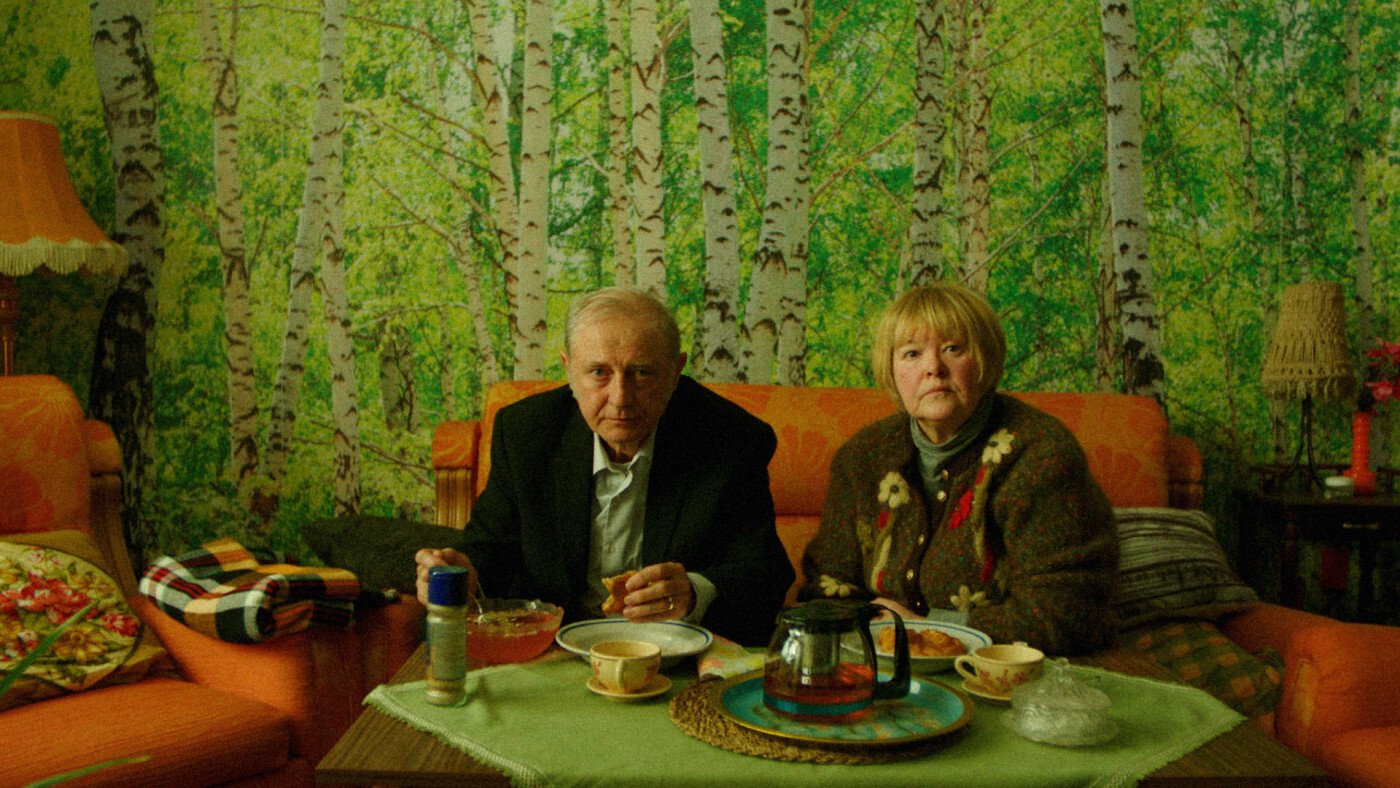
Ivan Savov and Tanya Shahova in Black Money for White Nights
After the rather allegorical Triumph, which might have been difficult to decipher, especially for foreign audiences not familiar with the true story behind it, Kristina Grozeva and Petar Valchanov return to their more common “everyday” satirical style with their fifth feature, Black Money for White Nights, which has just celebrated its world premiere in the Crystal Globe Competition of the Karlovy Vary International Film Festival. Just like in The Lesson and Glory, which earned them a reputation as chroniclers of moral tales, here, too, the conflict is quotidian in nature, but it reaches deeper into the characters’ souls, not merely uncovering individual traits, but also ultimately aiming to arrive at a broader social diagnosis. And let us hope that this diagnosis does not end up equating immorality with certain cultural preferences; otherwise, the film itself risks joining the ranks of dogmatic cinema from the past, often nostalgically cherished by those with the very same sensibilities.
Maternity-ward nurse Marina (Tanya Shahova) and railway dispatcher Gosha (Ivan Savov), a couple in their sixties, have built a comfortable life for themselves thanks to small bribes and workplace scams used to make up for their otherwise meagre public-sector salaries – a detail that pins a label on them in the very introduction. To this profile is added a cultural aura: Marina’s shaggy Siberian hat and Orthodox faith, tinged with superstition, their old-fashioned living-room photo wallpaper with birch trees – a symbol of the Russian soul common in Bulgarian homes during socialism – and her long-held dream of seeing the White Nights in Saint Petersburg, for which they save up and pay dirty cash to a travel agency that vanishes at the outbreak of the war in Ukraine. The rip-off shakes their small family, exposing dirty linen from the past and unveiling secrets surrounding their childlessness, ultimately calling their very union into question. And while Marina seeks redemption out of a deeply ingrained, almost pagan fear of God, Gosha refuses to let it go, only to run headfirst into the impenetrable wall of mafia omnipresence and endemic social erosion.
The protagonists are more archetypal than full-blooded, unpredictable beings – nuanced and organically embodied by the experienced Shahova and Savov, yet somehow constrained within their predefined profiles of conformists shaped by the deceitful communist regime without questioning its heritage in the local mentality. Their clear outlines are made even more pronounced by the contrast with the family of Marina’s younger sister, Lyudmila (Margita Gosheva), who lives modestly but honestly with her taxi-driver husband Kosyo (Ivan Barnev) and their three children, and who can’t fathom why Marina spent so much to go to Russia instead of chasing the White Nights in some truly “white”, more civilised country.
The clash between their values represents the present – but also a long-standing – division in Bulgarian society between Russophiles and Russophobes, whereby the former are invariably the losers, nevertheless clinging to the surface, as they support an outdated system of everyday corruption that has permeated all levels. The question of whether society is truly shaped by these people who accept things as they are is replaced by a ready-made answer, which the film turns into an expansive “variation on a theme”, wrapped in an atmosphere – carefully shaped by DoP Alexander Stanishev’s sensitive camera – oscillating between bittersweet nostalgia and a stilled, mouldering decay.
In the end, Black Money for White Nights emerges as a well-scripted, visually impeccable, rhythmically balanced, engaging and bitterly funny film, albeit one delivered as a statement with little room for individual interpretation.
Black Money for White Nights was produced by Bulgaria’s Abraxas Film and Greece’s Graal Films. Its international sales are handled by Cercamon.
