
– Between a private battle and collective paralysis, Jacqueline Jansen delivers a debut film of great emotional austerity, born out of her own experience of loss during the pandemic
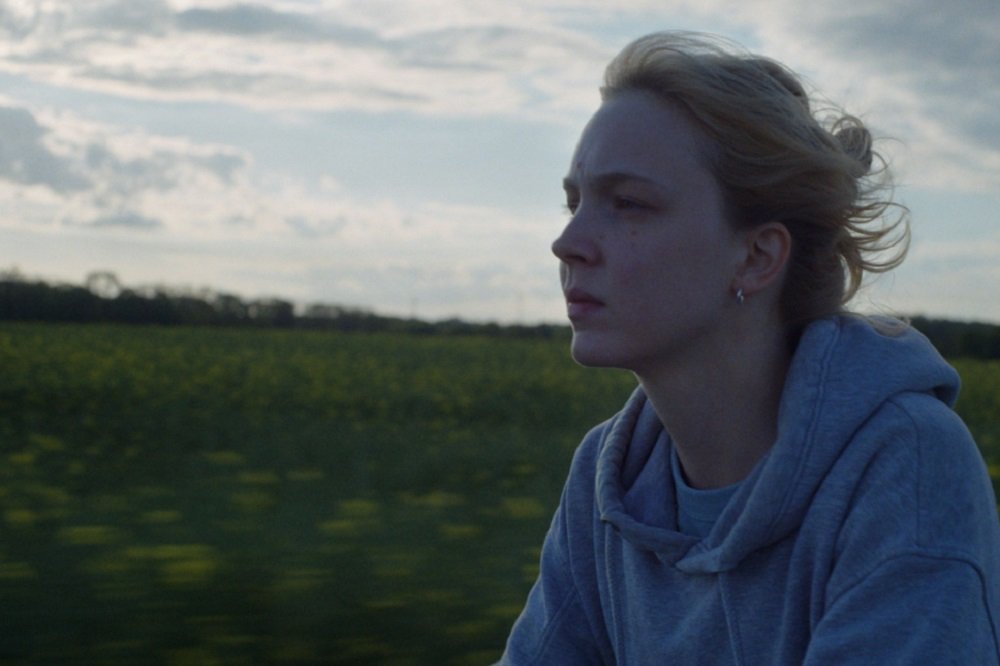
Magdalena Laubisch in Six Weeks On
Following its world premiere in the Monaco Film Festival where it scooped three awards – Best Actress, Best Producer and the FIPRESCI Critics’ Prize – Six Weeks On, the first work by German director Jacqueline Jansen, has continued its tour of international festivals, with selections in Cork, Gijón and, more recently, in competition in Sestri Levante’s 10th Riviera International Film Festival. It’s an itinerary confirming the understated force of this film, which was born out of an urgent personal need and transformed into a story which strikes universal chords.
Written and developed during the early months of the pandemic, Six Weeks On was inspired by the director’s own experience of losing her mother at the outset of the Covid outbreak. Having come to the film world from a different direction, outside of the usual academic routes, Jansen crafts a work of autofiction blending biography and fiction with great modesty. The protagonist, 25-year-old Lore (Magdalena Laubisch, in her first leading role), finds herself not only facing the pain of bereavement but also the emotional and bureaucratic paralysis of a society in which life has been unexpectedly paused.
The film is opened and closed by two hugely impactful scenes, which serve as spectacular parentheses either side of the titular six-week period. During this time lapse, the film follows the journey of a woman who’s desperately trying to strike a balance between social conventions and a personal need to say goodbye to her mother. Around her, the German provinces are frozen by fear, and individuals seem incapable of feeling real empathy or offering genuine support. As the weeks go by, punctuated by restrictions and the limbo-like atmosphere of this healthcare emergency, Lore finds herself struggling more and more with a sense of isolation which hampers her connection with others and with the place in which she was raised. Meanwhile, the emptying of the family apartment takes on powerful symbolic meaning: it’s not just about bidding farewell to the mother, it’s about the painful realisation of the end of an era.
Shot with a budget barely totalling 90,000 euros, and only using natural light, the film’s radical production conditions lend it a precise and consistent aesthetic. Jansen has chosen to shoot in the city where she was raised, availing herself of nigh-on documentarian photography (courtesy of Markus Ott) which eliminates any distance between the characters and viewers. Domestic interiors, government offices and silent provincial streets become places pervaded by tension, where, rather than openly exploding, pain slowly deposits itself on everyday acts.
As well as focusing on one individual’s experience of grief, Six Weeks On reflects on modern-day society’s ambiguous relationship with death, which is often confined to a private, silent dimension. Without indulging in facile consolations, Jacqueline Jansen asks whether any universally “right” way to deal with loss actually exists. The farewell ceremony Lore organises in her mother’s bedroom is one of the film’s most moving moments, as it temporarily transforms that intimate and vulnerable domestic space into a place in which to share emotions, attempting to remedy the collective inability to come to terms with death openly.
With Six Weeks On, Jansen delivers an astonishingly mature, stripped back and sensitive debut film, elevated by its honest outlook and formal simplicity.
Six Weeks On was produced by German firm Filmweh.
(Translated from Italian)
