
The highest temperature ever recorded in Spain is 47.6°C and occurred on August 14, 2021, in La Rambla (Córdoba). This figure comes from the official measuring systems of the Spanish State Meteorological Agency (AEMET), which follow consistent criteria, and from sites not exposed to direct sunlight, since other readings that do not meet validity standards may exist. After two heatwaves so far this summer and with the steady rise in scorching days, the question is: how close is Spain to a 50-degree record?
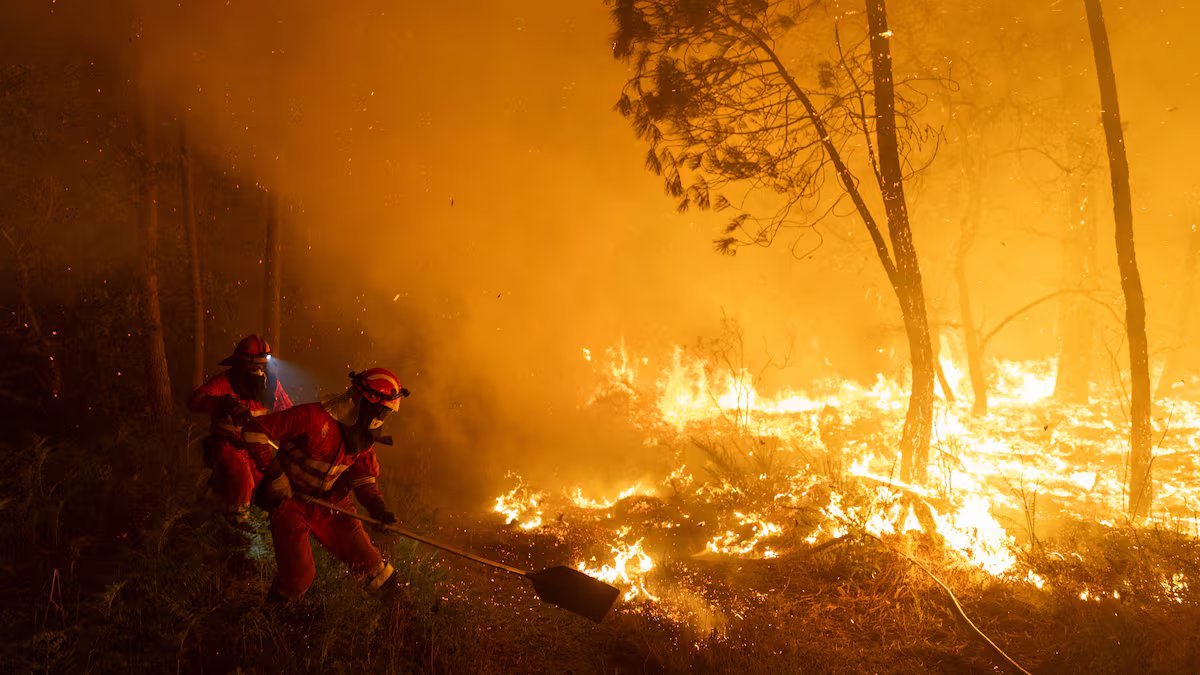
“We must prepare for more extreme scenarios,” stresses Elena Pita, director of the Spanish Office for Climate Change, who emphasizes the importance of forward planning to anticipate problems that today may seem unlikely. As has already been shown, heat has many knock-on effects: from serious health consequences to intensified wildfires.
In Spain’s case, according to Rubén del Campo, AEMET’s spokesman, “given that the frequency and intensity of heatwaves are increasing, it is not out of the question that in the coming years or decades, during an intense heat peak, a temperature of 50 degrees could occur.”
The official world record for the highest temperature stands at 56.7°C, measured on July 10, 1913, in Death Valley (California). However, there are doubts about that record. At the same time, more recent Death Valley measurements awaiting validation reached 54.4°C on August 16, 2020, and July 9, 2021. In Europe, the highest verified mark is 48.8°C, recorded by the World Meteorological Organization (WMO) in Sicily (Italy) on August 11, 2021. But in North African countries, thermometers have reached 50°C. In Morocco, according to its meteorological services, this symbolic threshold was surpassed for the first time on August 11, 2023, in Agadir, placing the country record at 50.4°C.
After the havoc caused by high temperatures across Europe, countries such as France are also asking when this worrying threshold might be breached. “Global warming does not make every summer apocalyptic, but it increases the likelihood of events once considered almost impossible,” says meteorologist Guillaume Séchet. As he points out for French territory, “the symbolic 50-degree threshold still belongs to the future. But unfortunately that future looks much closer than we imagined just a few years ago.” For Europe as a whole, it is nearer. As French climatologist Christophe Cassou of the National Centre for Scientific Research (CNRS) notes, “it is absolutely possible to have 50 degrees on the continent; the question is not whether it will happen, but when.”
Beyond the milestone of reaching a round, emphatic number, the issue is preparing for temperature peaks previously unseen at these latitudes. As long as emissions continue to accumulate in the atmosphere, the trend will worsen. In October 2023, the City of Paris organized a crisis exercise called “Paris at 50 degrees” in two districts of the city (the 13th and the 19th) to evaluate the response to an extreme heatwave. The exercise was based on scientific studies that consider a scenario of 50°C peaks in the French capital unlikely in the first half of the century, but the chance of an exceptional occurrence increases from 2050 onward if the international climate commitments agreed upon in the same city in 2015 are not met.
According to a report prepared after the drill, in the face of such extreme temperatures, it is essential to strengthen risk culture to better prepare and to increase urban resilience by developing networks of solidarity and local support that promote mutual aid. The report also highlights the value of the exercise itself in drawing attention to the need to anticipate these hellish heat events. Barcelona has announced a similar drill to test how to confront a 50-degree spike in the city, planned for the first quarter of 2027.
The director of the Spanish Office for Climate Change believes that the possibility of these more extreme scenarios requires stress tests and protocols to analyze how they would affect infrastructure and critical services. She also considers it necessary to assess consequences for health and the economy. “Urban planning is also very important, because many prevention measures are linked to how to manage the most vulnerable housing,” she emphasizes. As she stresses, the office provides the protocols and information, but each locality must prepare for a more extreme climate.
As meteorologist Del Campo explains, “if 50 degrees is reached in Spain, it will be a one-off and very likely in some of the warmest localities of our country, in parts of the Guadalquivir Valley, even the Lower Guadiana, or in situations with summer west winds, perhaps inland in Mediterranean regions, although, of course, these are all suppositions.”
There is no doubt about the rise in maximum temperatures in Spain. According to AEMET’s spokesman, if we focus on summer, this increase amounts to around three-tenths of a degree per decade. “So since the 1960s, the national average of maximum temperatures has practically risen by about two degrees,” he says.
Regarding future projections, the regionalized scenarios produced by AEMET consider that, under a medium-emissions pathway, by mid-century the average of summer maximum temperatures could rise by roughly two degrees compared with current temperatures. “If we are now saying it has risen by about two degrees in roughly 65 years, then in about 30–40 years the average of summer maximum temperatures in Spain could rise another two degrees,” he indicates. Under a high-emissions scenario, the difference would be greater. By mid-century the average of summer maximum temperatures could rise by about three, even four, degrees. “We would already be entering extremely hot summers, because we would have temperatures three degrees higher than today, which are already two degrees higher than those of the 1970s and 1980s,” the meteorologist warns.
Sign up for our weekly newsletter to get more English-language news coverage from EL PAÍS USA Edition
