
– The “intimate conversations” launched by the organisation with screenwriters, producers and directors raise legitimate questions about a growing trend towards pro-defence propaganda
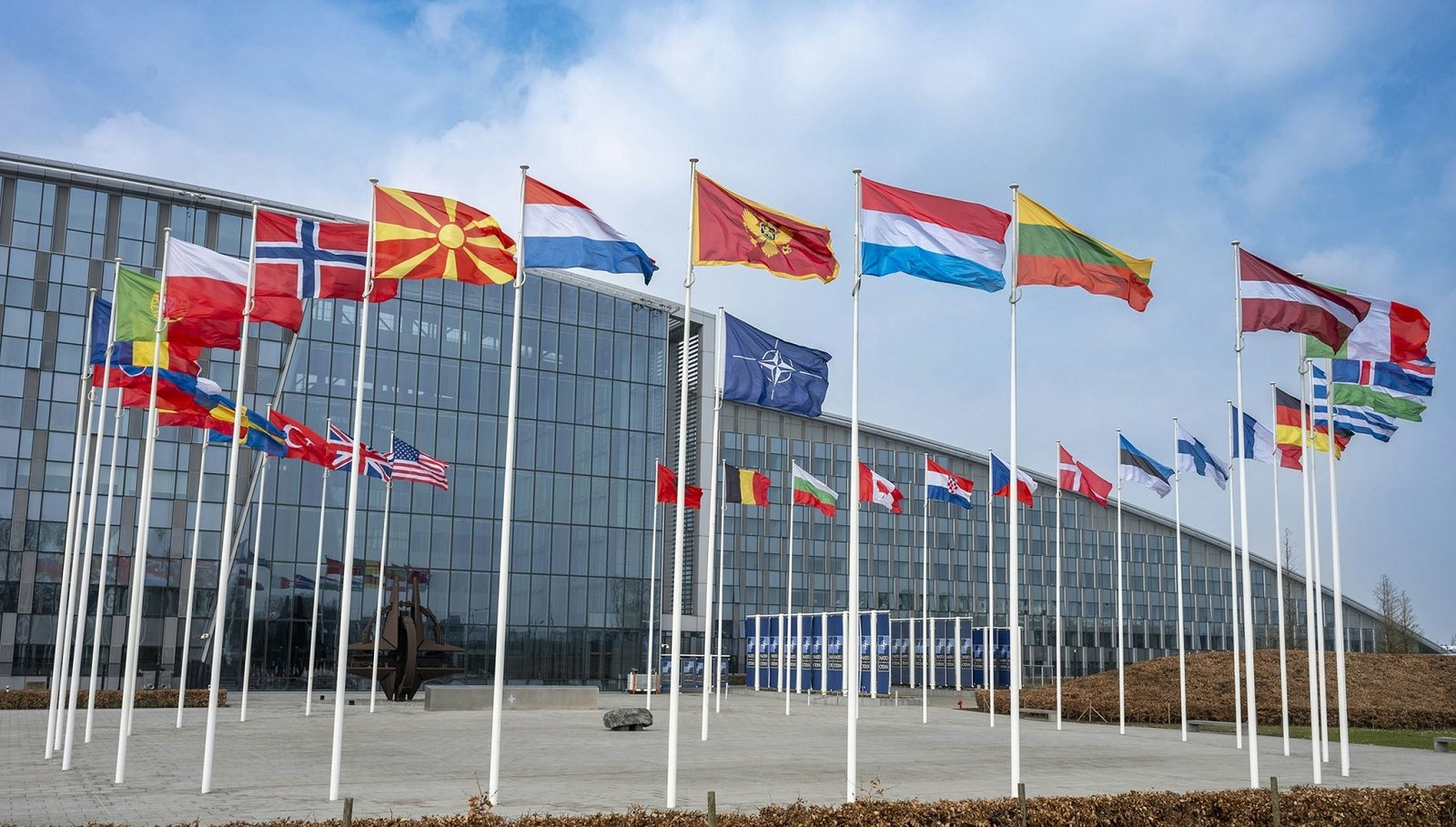
The NATO headquarters in Brussels (© NATO)
“Cinema is a revolutionary tool, it reveals how society wants to see itself”, wrote Louis Delluc in 1919. Cinema is undoubtedly a tool for constructing mass imagination, and it is no coincidence that the United States understood this clearly in the aftermath of World War II. It is well known that as part of the Marshall Plan, the penetration of Hollywood cinema was part of the deal in exchange for bread and flour, cement and support to rebuild a Europe devastated by war and destabilised by the tensions of what would become the Cold War – a very real war, not only through its proxy conflicts, but also through the battle to conquer the emotional, sentimental, and imaginary dimensions of everyday life.
NATO now appears to be reviving that same strategy. As revealed by The Guardian on 3 May, the Alliance has held closed-door meetings with screenwriters, producers and showrunners in Los Angeles, Brussels and Paris, with a fourth planned in London next June. The goal, it seems, is to seed new narratives justifying higher defence budgets, sustaining the Alliance amid its many pressures, and normalising the idea of raising defence levels as an everyday necessity.
There is nothing inherently wrong with wanting to understand how supranational institutions work: the popularity of TV series like Borgen, Parliament, The Diplomat or House of Cards shows audiences have a genuine appetite for it. But several elements of this campaign warrant scrutiny.
The meetings were held under the Chatham House Rule, meaning participants can discuss what was said but cannot mention who said it or who attended. This gives NATO a degree of plausible deniability: its messaging can reach creative communities while the chain of influence stays largely hidden.
Pan-European associations of directors, screenwriters and authors based in Brussels were not informed of the meetings at all.
The intermediary organisations also raise legitimate questions. One of the meetings was arranged by the Center for Strategic and International Studies (CSIS), a Washington think tank co-founded by a military admiral during the Cold War and substantially funded by Pentagon contractors. A public talk from the event features one of the participants describing herself as “a NATO nerd in my heart of hearts”. Any critical distance from the rest of the speakers was entirely absent.
Screenwriter Faisal A Qureshi bluntly explained the risk, as reported by The Guardian: creatives who enter this unattributable world of military briefings “can get seduced into thinking they now have some secret knowledge, that there exists a world of greys where morality is stretched and human rights abuses are acceptable when done for the greater good.”
There is another study which makes the strategy explicit (and worrying). The Centre for European Reform, another think tank based in Brussels, London and Berlin, which defines itself as “Atlanticist and Europhile”, published a report in March with a title that could hardly be more blunt: How to build public support for defence spending in Europe. It calls on governments to “embark on a communications campaign to raise levels of threat awareness (…) Governments should use unconventional approaches to deliver these messages and build consensus around defence investments (…). Governments should also engage with cultural institutions and provide funding for the arts to contribute to the public conversation on defence, and mobilise public figures including royals, sportspeople and youth leaders.”
In a climate where authors increasingly self-censor and public funds, producers and storytellers shy away from uncomfortable stories, this is the moment to address a legitimate question: is propaganda once again becoming an existential threat to the freedom and integrity of cultural expression?
