
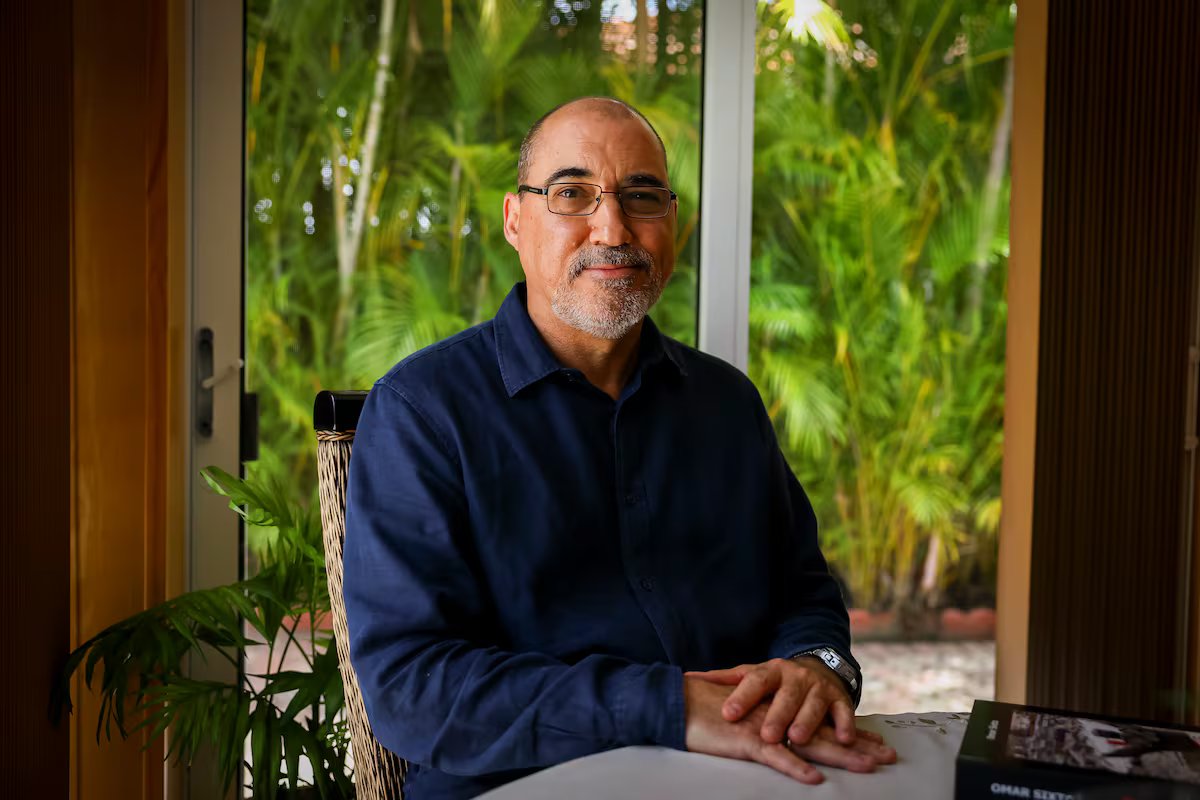
The Cuban-American businessman Omar Sixto (Havana, 1969) left the island 30 years ago and first settled in Madrid, Spain to pursue his history studies; later he moved to the United States, but he still maintains an emotional and intellectual bond with Cuba. A few months ago he published the essay Se acabó la diversión. La economía cubana: el salto del capitalismo al socialismo (1959-1965) [The fun is over. The Cuban economy: the jump from capitalism to socialism (1959-1965)], a detailed portrait of how far-reaching decisions—expropriations, nationalization, walking out on international financial institutions—were made very quickly and led Cuba to integrate into the Soviet production system until the USSR’s collapse.
For Sixto, that period produced “the failure” that Cuba is experiencing today. Like so many exiles living in Florida, he is watching events on the island with a mixture of sorrow and outrage: Cuba is a country on the brink of collapse that, since January, has received only one Russian ship with fuel because of the oil blockade imposed by U.S. President Donald Trump. The seed of this book lies in his years as a history student in Havana, during perestroika, when researching the economy “was almost forbidden.”
Although it is his military clothing and tactical equipment company that “puts food on the table,” Sixto sees his book as his own “small contribution so that, someday, Cubans on the island can return to civilization,” he says during a video interview from Miami. He is also connected as an external adviser to the newly created Cuban-American Chamber of Commerce, which seeks capital to help Cubans inside the island. In his view, a “humanitarian takeover” of Cuba is necessary to deliver basic infrastructure. Sixto, who says he is not affiliated with any party, is disappointed by Trump’s “inaction,” and fears the president may end up striking a deal with the regime.
Question. Why focus on the first six years of the Revolution?
Answer. It was an economy dependent on the United States, as almost all economies in the world were, as Mexico’s economy is today. That is a vulnerability, but not inherently bad. From January 1, 1959, Fidel Castro didn’t just change the rules of the game—he completely changed the game. That transformation took shape in those years. I stop in 1965 because that is when the important role Ernesto Guevara played in the destruction of the economy began to wane. In 1959, the first thing Fidel Castro and his group sought was to consolidate power. To do that they had to take economic power away from the class that would oppose them, and that is what they did. First they took property from the wealthy, then they took money from everyone. In 1960 they carried out the first massive confiscations of U.S. capital, of banks, and then they began with Cubans. Everything changed: within two years, a happy, music-loving country was in uniform and marching, and in three years it had nuclear weapons and the world was on the brink of nuclear war. It was a radical change in very few years.
Q. A happy country, you say? Your book documents the enormous inequalities that existed and the massive support the Revolution had.
A. When you move a society into a mood, it creates a wave: everyone wanted change in Cuba. The economy was much better than Spain’s at that point; Spaniards were still emigrating to Cuba. There were problems and suffering, as in all countries. I say it was a happy country because it worked. I say happy compared with what Cubans experienced afterward, because even under [Fulgencio] Batista’s dictatorship it was fairly lenient; it did not have a structured policy of repression comparable to Castroism. The only bombs that exploded in cinemas, theaters and restaurants were placed by Fidel Castro’s people.
Q. What does that span of time reveal for analyzing Cuba’s present?
A. It shows how they disarmed an economy that worked and tried to assemble one that they saw from the start did not work. And what was their solution? Keep trying, turning one screw here and another one there. By 1963 there was already a structural economic crisis. They survived thanks to Soviet subsidies, and remained parasitic on the Soviet Union until 1989. When the USSR ended, they were left adrift and introduced tourism, especially with the Spanish. They survived a few years on that until 1999, when [leftist Venezuelan leader] Hugo Chávez fell from the sky for them, and later [his successor Nicolás] Maduro until January 3. That short period is the cornerstone of today’s failure.
Q. In your book it seems that the shift to socialism was less a design responding to technical economic considerations than an abrupt jump driven by ideological motivations.
A. It began after they received the first embrace from [Soviet revolutionary Anastas] Mikoyan in Havana and then from [USSR leader] Nikita Khrushchev in New York. That’s when they said, ‘we have the backing, let’s move forward.’ On Guevara’s side it was ideological motivation; he was so ideologized that they eventually removed him because he was disruptive—very pro-China, very extreme. Cuban official history, the version I was taught at university and school, claims socialism was a necessary plan to achieve development and that everything was planned. That wasn’t the case. They brought in capable people early on to draft development plans and none worked.
Q. Why not?
A. There is no logical explanation for why a country would hurl itself into the abyss to the rhythm of a guaracha. There were some very good people—for example the economist [Rufo] López-Fresquet—which is why they removed him and put Ernesto Guevara in his place. At first there were still remnants of the previous Cuba and talented people in lower posts. The technicians and engineers had to leave, because they were expelled.
Q. Cuban authorities have just announced the biggest package of economic reforms in decades. Do you think these measures are viable?
A. They are measures to buy time. For them, every day is a victory. They won’t work. Some, I imagine, are preparing for the chaos of collapse, and that is the operation behind the 176 measures [to open up to the market]. It happened in the Soviet Union and Eastern Europe, where part of the elite took ownership of a ruined company. In Cuba, picture a state-owned cattle ranch: now it’s destroyed, with two old cows left. But how much land does it have? At the moment of change and a market economy, that land will be worth a lot of money.
Q. What options do you see?
A. The best solution would be to see the entire Cuban people, nonviolently, out in the streets facing them. The social pact has disappeared entirely, so there is no going back. Unless, since the regime is so adept at negotiating and the occupant of the White House loves to negotiate, there is a dirty deal that is neither a transition nor anything other than a pact of complicity like Venezuela’s. That could happen. It would hurt us a great deal.
Q. Do you agree with Marco Rubio’s strategy on Cuba?
A. Within the U.S. government there are two strands. Rubio’s is better prepared, more diplomatic and more knowledgeable of the reality, and in the Cuba case it used to have the upper hand. The other strand is JD Vance’s, closer to the MAGA project, aimed at the hard voter—the resentful worker who lost a job to a Chinese or Mexican factory. Trump’s problem is he has two ears: one day he listens to one side, the next day to the other. Cuba has no oil, and for him it’s not a fundamental problem so long as the U.S. coasts aren’t full of rafters. Today the faction that’s winning is the one saying, ‘leave that problem alone, it’s not ours. If they bother us, we’ll finish them off. But if not, don’t waste time or money on this.’
Q. Is there a plan?
A. I don’t think the United States has one, and if it did, the Pentagon’s attention and the money to do something in Cuba are focused on Venezuela. When humiliation weighs more than fear, that’s when people take to the streets. What I can’t understand is the indecision here; I don’t forgive it either, because each passing day means months more of reconstruction and hundreds of lives lost. Every day that passes complicates things further.
Q. Do you think nothing will happen?
A. Cuba’s situation is irreversible; the problem is how long it has lasted, since January 3 and long before that. At the end of January, when Trump issued the executive order declaring Cuba an unusual and extraordinary threat to the national security of the United States, the first possibility we all thought of was the extraction of this character [President Miguel Díaz-Canel]. That would have been a shock that could have moved the foundations of that entire dictatorship. It didn’t happen. Trump then turned his attention to Iran, and the Iranians mocked him, and he is still spinning his wheels. The most effective thing for me—though it is a dream—would be not an invasion but a humanitarian takeover of Cuba: let the U.S. government allow us to load ships with real humanitarian aid. We are not talking only about water tanks, but field hospitals, electrical generators, fuel for the equipment that needs to be moved. You can charter an oil tanker here in no time, we could fill it together and give it away. Money is not the problem.
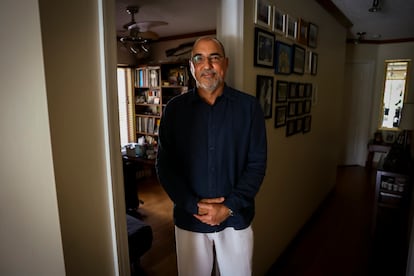
Q. The Cuban-American Chamber of Commerce has just been created in exile. What is its goal? What is your connection to it?
A. The Chamber of Commerce is mainly dedicated to raising capital. It’s a very good idea because it involves people who have many millions of dollars; they are older people who lost their country when they were young and are preparing a humanitarian plan, not an investment plan. First you have to lift people up. I will meet with them at the end of the month. My personal role won’t be large, but advising on a project to rescue Cubans will be valuable; I am available for that.
Q. How much money is estimated to be required?
A. We don’t know. We don’t know how this will end. Money only comes out when it’s needed.
Q. There are estimates that just fixing the electricity grid would cost $10 billion.
A. For a company that operates in that sector, that’s not so much. These are concessions over 30 or 40 years. Look at Japan and all of Europe with the Marshall Plan. In 20 years, where were they? Cuba was devastated when it finished its war [of independence, in 1898]. By 1920 the dance of millions was already underway and Cuba was the world’s leading sugar exporter. In 1940 it had the most advanced and progressive constitution. Cuba is a small country; reconstruction is not impossible. The social fabric will be much harder. I say the tree of the Cuban nation became bent because of many years—67 years. A humanitarian invasion would be the most effective solution.
Q. There is distrust about the exile community’s intentions.
A. There is a new tendency, coming from Havana, that says people here want to reclaim houses there and drag people out on the streets. I have an apartment that was expropriated from me, but I probably acquired it from someone from whom it was taken in 1959. I don’t want anything. However, if someone murdered or tortured, then yes—I want to see justice and punishment. But someone who stole a little should return what is tangible. I understand that someone who owned 100,000 hectares might want to reclaim it, but if I were a new Cuban state, I would not give it back for free. There must be a tax, because the state will need money to rebuild everything else; you have to pay something because the entire place must refounded, and you won’t simply recover what’s yours. I’ve also told this to the Chamber of Commerce.
Q. And where does democracy fit in?
A. That is fundamental. Democracy and liberty are the first two steps to establish a legal system that maintains respect for the law, respect for private property, respect for human rights, freedom for businesses and a financially responsible state that collects taxes, spends them well and does not squander them. It’s extremely difficult, but without democracy there is nothing. From here, not a peso will go if there is no democracy. There is no good dictator, neither [Nayib] Bukele nor [Miguel] Díaz-Canel.
Sign up for our weekly newsletter to get more English-language news coverage from EL PAÍS USA Edition
