
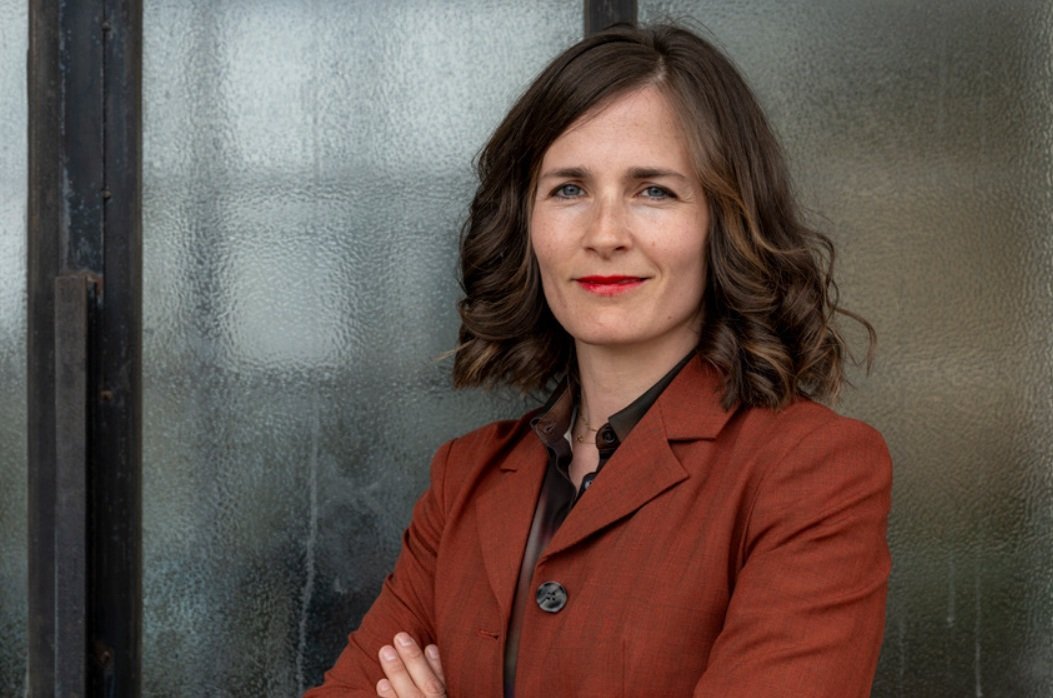
– We chatted with the head of the IDM Film & Music Commission Südtirol, delving into the role of the industry initiative devised in league with the Bolzano Film Festival Bozen
(© Daniele Fiorentino)
Having now reached its third edition, the MASO – Short Film Training Programme is part of a wider, growing, industry-focused ecosystem nurtured by the Bolzano Film Festival Bozen (which ran from 10-19 April), which is increasingly geared towards facilitating synergies between local institutions and international networks. Devised by the festival directed by Vincenzo Bugno and by the IDM Film & Music Commission Südtirol, the initiative is a key pillar of their industry-focused services, with a specific focus on developing emerging short films. Using a model combining training, mentoring and networking, MASO looks to promote new voices and build bridges between different territories, helping to reinforce the South Tyrol’s role as a dynamic hub for audiovisual creation.
This year’s selected projects were Alhamraa (Germany/Syria, directed by Waref Abu Quba), Can You Touch Me? (Malaysia/Singapore, by Mickey Lai), Cherries (Greece, by Alexandros Tsilifonis), Lackings – Le carenze (Italy/Norway, by Federica Poiana), St. Egedes Islands (Norway, by Amalie Magdalena With Vedelsby), Still (Italy, by Gabriele Fusaro), Unicorn Carrierbag (Austria, by Matteo Sanders) and Winter Journey (France, by Antoine Stehlé).
We chatted with IDM head Renate Ranzi about the programme, the journey embarked upon by the selected teams, and the training approach employed.
Cineuropa: In the blink of an eye, MASO is now at its third edition, boasting more than 240 candidates from 45 countries. What key attributes have made the programme so attractive internationally speaking?
Renate Ranzi: Ever since its launch, MASO has met with surprising levels of interest, and this is primarily due to the strength of local and international partner networks who believed in the project from the get-go, just like us. We now collaborate with 15 partners who play a decisive role in the programme’s credibility and international reach.
We’re committed to nurturing our relationships with all of them and facilitating a real ecosystem of exchange and networking: this collaborative approach is one of the things which makes MASO so attractive to professionals from all over the world.
Getting down to the nuts and bolts of it, what form does the support you lend to the selected teams take, and how do you juggle creative development with production-focused mentoring?
The MASO journey involves alternating online meetings with two in-person workshops, which are central to the programme. During these meet-ups, we work in depth on the projects by way of ongoing discussions not only between the selected teams and their tutors but also between the teams themselves, encouraging much-needed horizonal exchange. There are two distinct phases in terms of creative development and production-based mentoring: in the first workshop – unfolding during FilmCamp in Øverbygd, Norway – we mainly focus on writing and developing the screenplay, while in the second workshop – during the Bolzano Film Festival Bozen – we help the teams prepare for the production process, working on practical, strategic and production-related matters.
What kinds of projects are you looking for at present, and how has the profile of your candidates changed since the programme’s first two editions?
We believe that providing young, emerging talent with new opportunities for development is essential. We don’t need candidates to be established professionals: what we really value are new voices, fresh ideas and the ability to bring a powerful, authentic approach to each project. The variety of our candidates grew over our first two editions, but we still have the same objective: to identify teams who have something significant to say and to help them along a journey which can make a real difference to their creative and professional development.
We saw some greatly varied pitches – in geographical and thematic terms – during MASO’s Industry Day. How important is this diversity to you and what impact does it have on the final selection?
Geographical and cultural diversity are key factors for MASO. Thanks to our partners, who offer scholarships to producers hailing from various European regions, we’re able to encourage real exchange between territories which are often seen as “peripheral” compared to the large industry-centred areas. Many of the teams selected don’t come from cities like Paris, Rome or Berlin, and that adds real value in our eyes: it means we can welcome alternative outlooks, stories rooted in less represented contexts, and new perspectives. We also have a specific slot for non-European international projects, because we feel it’s fundamental to broaden the programme’s horizon even more and encourage wider discussions between participants.
What are the most significant achievements of MASO’s past projects to date, in terms of production, festivals and distribution?
The projects selected in the event’s first edition have already taken a fundamental step forwards: almost all of them have made applications to the leading funds, confirming the increasing professionalisation of the teams involved. It’s a really positive sign, because it indicates that the path taken by MASO is helping participants to structure their projects in a solid and competitive way. These short films aren’t ready yet, so we can’t talk about their results in terms of festival recognition or their distribution, but we’re really optimistic: we’re seeing a concrete evolution within the teams and this leads us to believe we’ll be seeing the first results very soon.
MASO#3 will host workshops in Norway and the South Tyrol: what role does the international and travelling side of the initiative play in your participants’ training experience?
The travelling side is a key part of the programme: it allows participants to discover lesser known territories and locations, demonstrating that it’s also possible to develop and produce projects outside of better-known circuits. Bringing our workshops to different contexts — ranging from Norway to the South Tyrol — broadens the teams’ outlooks, encourages new professionals connections, and gives a clear overview of alternative production ecosystems which are often less explored yet bursting with opportunities.
(Translated from Italian)
