
– Ivan Ostrochovský’s careful unraveling of biopolitical control centres on the friendship between a white female doctor and a Romani nurse in 1980s Czechoslovakia
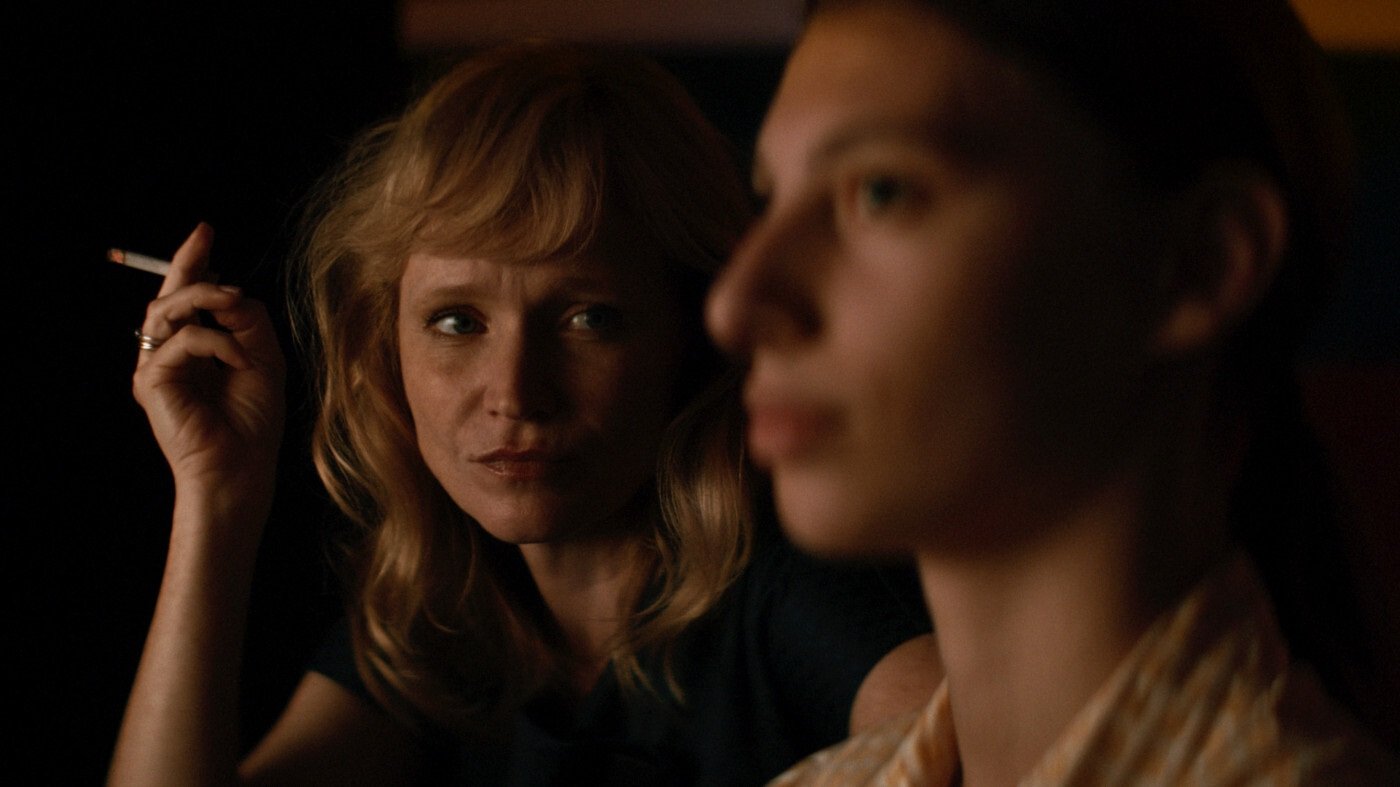
Aňa Geislerová and Simona Boledovičová in Only Beautiful Things to Look At
The retrospective gaze knows best, but in the moment, people rarely do. In his third fiction feature, Only Beautiful Things to Look At, Žilina-born Ivan Ostrochovský takes up this idea by following the historical sterilisation of Romani women in late-1980s rural Czechoslovakia. His protagonist is fully embedded in the system, occupying a precarious position as a doctor serving on a review board that approves sterilisations as well as performing them. Only through an external perspective is she able to make sense of what she has been asked to do.
Written by Marek Leščak and Ostrochovský, the film had its world premiere in Karlovy Vary’s Competition and has already presented itself as a strong Slovak entry at this year’s edition of the festival. The film is not the director’s only title screening at Karlovy Vary, since his documentary Igor and After is selected in the Special Screenings – Classics section.
Through gynaecologist Ingrid’s (Aňa Geislerová) eyes, sterilisation is initially framed as an optional procedure, also intended to stem the flow of abortion requests from Romani women. Slowly, she comes to terms with the coercive power of medical institutions operating through economic means – by paying the “volunteers” – and the absence of informed consent. Her emotional journey towards understanding her role in a eugenics practice is largely instigated by a friendship with 19-year-old Agáta (Simona Boledovičová, who shines in this crucial role), a nurse who initially hides her Romani identity.
As a woman in the medical field – already emphasised as a rarity – Ingrid’s focus is squarely on performing to the best of her ability, with the camera (lensed by Juraj Chlpík) constantly trained in close-up on her eyes, hair and lips. Ostrochovský imbues the opening of Ingrid’s story with a very dark colour palette and naturalistic symbolism: trees and insects, and eventually animals and flowers. It never reaches the point of feeling truly abstract enough to function metaphorically. However, these elements do allow the film to move beyond a sense of conventionality, coupled with an eerie orchestral score built around a droning foundation (music by Michal Novinski).
Only by getting close to Agáta – with an honest sprinkling of maternal care – is Ingrid able to distance herself from her work and take in the gravity of her job, with the young woman quite literally brightening and opening up the world around her. Although the friendship between the two never quite reaches the depth that viewers might crave, their scenes together are honest, at their best when they both feel vulnerable enough to be playful.
Despite Ingrid’s efforts to break down the barrier that exists, a tension remains in light of the inherent power dynamic, which persists until the film’s deus ex machina–lite closing. It becomes hard, at times, to empathise with her naivety or ignorance of such a grave situation when it does not feel fully earned. The lingering question that viewers might therefore have is whether Ingrid could have realised earlier, on her own, the role that she plays in this series of injurious procedures. Regardless, the film’s emotional reward for her resistance does eventually arrive, and the payoff is warm and welcome.
Only Beautiful Things to Look At was produced by Punkchart Films (Slovakia) and Negativ (Czech Republic), co-produced by Proton Cinema (Hungary), Slovak Television and Radio and Czech Television.
